


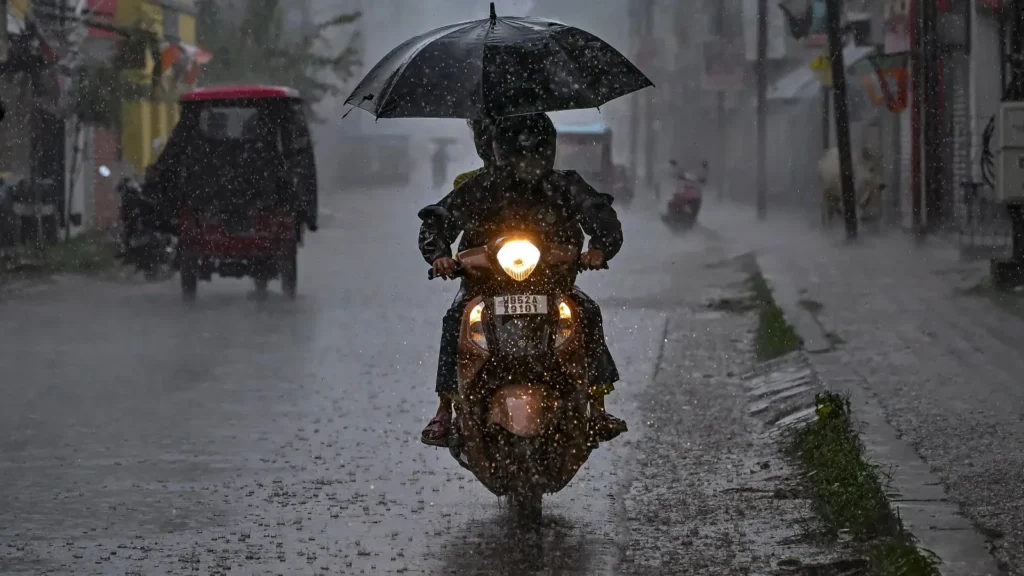
The Shillong traffic waterlogging crisis intensified after continuous heavy rainfall submerged several major junctions across the city, disrupting transportation and daily activities. Water accumulated rapidly on key roads, slowing traffic movement and creating long vehicle queues during peak hours. Municipal authorities deployed emergency teams to clear blocked drains and restore normal traffic flow. Meanwhile, weather officials continued monitoring rainfall patterns as intermittent showers threatened to worsen flooding in low-lying urban areas.
Majuli Ferry Suspension Disrupts River Transport
Darjeeling: Sikkim CM Prem Singh Tamang Highlights Cultural Bond at Kirati Khambu Rai Festival 2026
Heavy Rain Floods Major City Junctions
The Shillong traffic waterlogging crisis began after persistent downpours overwhelmed the city’s drainage system. Consequently, water collected at several busy intersections and slowed traffic across major roads. Commuters faced long delays as vehicles moved cautiously through flooded stretches.
Meanwhile, municipal workers cleared blocked drains and removed debris from stormwater channels to improve water flow. Traffic police also diverted vehicles from heavily affected routes to reduce congestion. Furthermore, emergency teams monitored vulnerable junctions throughout the day to prevent additional disruptions.
Although rainfall eased briefly, water remained on several roads for hours. Therefore, officials continued monitoring drainage conditions until traffic gradually returned to normal.
Authorities Intensify Drainage Operations
The Shillong traffic waterlogging crisis prompted civic authorities to strengthen drainage maintenance across the city. Engineers inspected stormwater channels, roadside drains, and culverts to identify blockages that restricted water flow. At the same time, maintenance crews used specialized equipment to remove accumulated silt and waste.
In addition, municipal officials reviewed drainage performance at locations that experience repeated flooding during the monsoon season. They also planned further inspections to identify infrastructure improvements that could reduce future waterlogging.
Furthermore, authorities coordinated with emergency response agencies to ensure rapid assistance if heavy rainfall continued. Officials emphasized that routine drain maintenance remains essential for minimizing urban flood risks.
Commuters Face Major Disruptions
The Shillong traffic waterlogging crisis affected office workers, students, business owners, and public transport services across the city. As a result, many commuters experienced significant travel delays during peak traffic hours. Waterlogged roads also slowed emergency vehicle movement in some areas.
Meanwhile, authorities advised motorists to avoid flooded streets whenever possible and follow traffic diversions issued by police. Public transport operators also adjusted routes in response to changing road conditions. Consequently, traffic management teams continued monitoring congestion at major intersections.
Officials urged residents to report blocked drains and flooded roads through municipal helplines so response teams could act quickly.
Monitoring Continues During Active Monsoon
The Shillong traffic waterlogging crisis remains under close observation as weather officials forecast additional rainfall during the ongoing monsoon season. Municipal authorities continue inspecting drainage infrastructure while monitoring rainfall intensity and road conditions throughout the city.
Moreover, engineers are evaluating long-term improvements to strengthen stormwater management and reduce recurring flooding. Officials believe better drainage planning, regular maintenance, and coordinated emergency response will improve urban resilience against future heavy rainfall events.
Authorities have encouraged residents to stay informed through official weather advisories and remain cautious while traveling during periods of intense rainfall.
Conclusion
The Shillong traffic waterlogging crisis highlights the growing challenges that heavy monsoon rainfall poses for urban infrastructure in Meghalaya’s capital. Severe waterlogging disrupted transportation, delayed commuters, and prompted municipal authorities to intensify drainage operations across the city. Meanwhile, continuous monitoring, improved infrastructure planning, and timely maintenance will remain essential for reducing future flood-related disruptions and ensuring safer travel during the monsoon season.
FAQs
1. Why did Shillong experience severe waterlogging?
Persistent heavy rainfall overwhelmed the city’s drainage system and flooded major roads.
2. Which areas faced the biggest traffic disruptions?
Several major junctions and busy intersections experienced significant water accumulation.
3. What is the Shillong traffic waterlogging crisis?
The Shillong traffic waterlogging crisis refers to widespread urban flooding that disrupted traffic after continuous heavy rainfall.
4. What actions are municipal authorities taking?
They are clearing drains, inspecting drainage infrastructure, and coordinating traffic management.
5. How did the flooding affect commuters?
Waterlogged roads caused long traffic delays and disrupted public transportation.
6. What should residents do during heavy rainfall?
Residents should monitor official advisories, avoid flooded roads, and follow traffic diversions.