


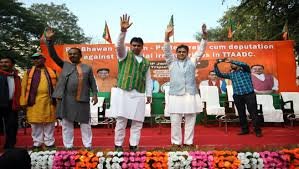
The BJP Boycotts Oath Ceremony in TTAADC as four elected members skip the event, citing alleged administrative irregularities and raising fresh political tensions in Tripura’s tribal governance.
BJP Boycotts Oath Ceremony in TTAADC
The BJP Boycotts Oath Ceremony as four of its elected members chose not to attend the swearing-in event held at Khumulwng. The absence immediately drew attention and sparked political debate across Tripura. While other members took their oath and assumed office, BJP representatives stayed away, signaling clear dissent.
This development adds a new dimension to the evolving political landscape within the Tripura Tribal Areas Autonomous District Council. Moreover, it raises concerns about unity and cooperation among elected representatives.
Reasons Behind the Boycott
The BJP Boycotts Oath Ceremony primarily due to allegations of administrative irregularities. Party leaders claimed that certain procedures did not meet expected standards of transparency and fairness. As a result, they decided to register their protest through non-participation.
In addition, the party emphasized the importance of maintaining democratic integrity. By boycotting the ceremony, BJP members aimed to highlight what they perceive as procedural lapses. Consequently, this move has intensified discussions about governance practices in the council.
Political Reactions and Responses
The boycott triggered mixed reactions from various political stakeholders. On one hand, opposition voices criticized the move, arguing that elected representatives should prioritize their responsibilities over political disagreements. On the other hand, BJP supporters defended the decision, stating that raising concerns is essential for accountability.
As the BJP Boycotts Oath Ceremony, other council members proceeded with the event and took charge of their roles. However, the absence of BJP representatives created a noticeable gap in the proceedings. Furthermore, it underscored existing political divisions within the council.
Impact on TTAADC Governance
The boycott may influence the functioning of the council in the coming weeks. Effective governance requires collaboration among all elected members. Therefore, the absence of BJP representatives during the oath-taking stage could affect early decision-making processes.
At the same time, the BJP Boycotts Oath Ceremony draws attention to the need for transparent administrative practices. Addressing these concerns promptly can help restore confidence and ensure smooth governance.
Moreover, the situation highlights the importance of dialogue between political parties. Constructive discussions can resolve disputes and promote cooperative governance.
Broader Political Implications
The incident carries broader political implications for Tripura. It reflects ongoing tensions and differing perspectives among major political parties. Consequently, it may shape future interactions and policy decisions within the state.
As the BJP Boycotts Oath Ceremony, the move also sends a strong message to voters. It indicates that the party intends to actively challenge processes it considers flawed. However, this strategy may also invite criticism if it delays governance activities.
Public Perception and Citizen Response
Citizens have responded with a mix of concern and curiosity. Many people expect elected representatives to work together for development, regardless of political differences. Therefore, the boycott has sparked discussions about responsibility and accountability.
The BJP Boycotts Oath Ceremony has also raised questions about the impact on ongoing projects and initiatives. Residents hope that political disagreements will not hinder development efforts in tribal areas.
Furthermore, public opinion may influence how parties approach future decisions. Leaders must consider citizen expectations while addressing their concerns.
Need for Resolution and Dialogue
The current situation calls for constructive engagement between all stakeholders. Open dialogue can help address the allegations and clarify misunderstandings. In addition, transparent investigations can strengthen trust in administrative processes.
As the BJP Boycotts Oath Ceremony, the focus should shift toward finding solutions. Collaboration between parties can ensure that governance continues without disruption.
Moreover, establishing clear procedures and communication channels can prevent similar issues in the future. This proactive approach will benefit both leaders and citizens.
Historic Tipra Motha Second Term Begins After Landslide Victory in TTAADC
Major Success in ULFA Arrests Nagaland Operation Recovers Grenades
Future Outlook for the Council
Looking ahead, the council must prioritize stability and effective governance. Despite the boycott, the newly sworn-in members have already begun their responsibilities. However, full participation from all elected representatives remains essential.
The BJP Boycotts Oath Ceremony, but future cooperation could still improve the situation. If parties engage in meaningful discussions, they can overcome current challenges.
Additionally, addressing administrative concerns will play a key role in restoring confidence. Transparent actions can help rebuild trust among political stakeholders and the public.
Conclusion
The boycott of the oath-taking ceremony marks a significant moment in TTAADC politics. The BJP Boycotts Oath Ceremony to protest alleged irregularities, bringing attention to governance practices and political divisions.
While the move highlights important concerns, it also underscores the need for unity and cooperation. Ultimately, the success of the council will depend on its ability to resolve differences and focus on development.
FAQs
1. Why did BJP members boycott the oath ceremony?
They cited alleged administrative irregularities and concerns about procedural transparency.
2. How many BJP members boycotted the event?
Four BJP members who won seats in the council skipped the ceremony.
3. Where did the oath ceremony take place?
The ceremony was held at Khumulwng, the TTAADC headquarters.
4. What impact can the boycott have on governance?
It may affect collaboration and early decision-making within the council.
5. What is the way forward?
Dialogue, transparency, and cooperation among parties can help resolve the issue.