


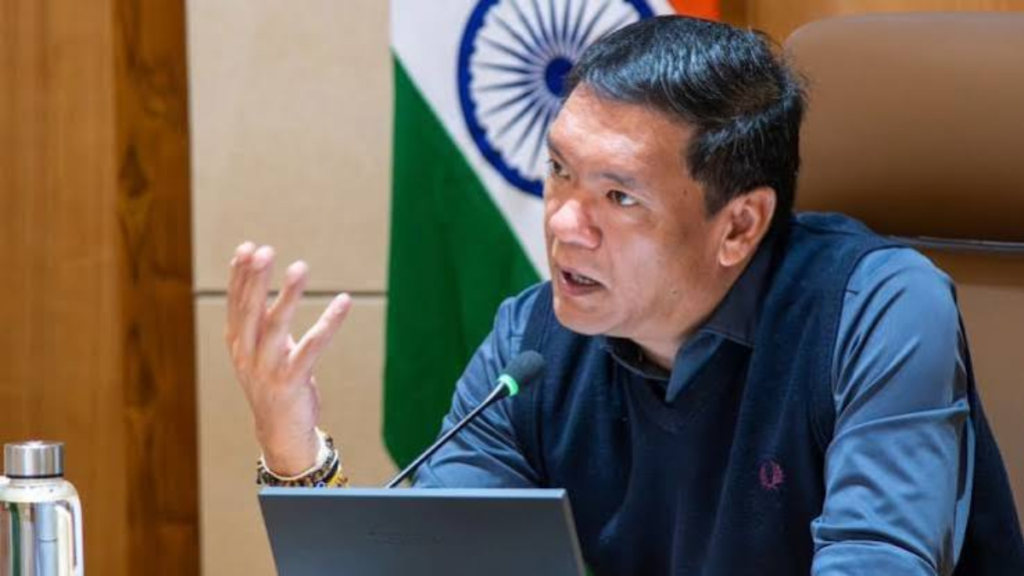
The Siang dam project in Arunachal Pradesh will not move towards construction without public consultation and a clear assessment of its feasibility, Chief Minister Pema Khandu has assured. He said the government has not taken any final decision on building the proposed Siang Upper Multipurpose Project (SUMP).
Speaking to reporters on October 31, Khandu said the immediate priority was to complete the Preliminary Feasibility Report (PFR). He stressed that the government would discuss the project with local communities before considering any further steps.
The assurance comes amid growing concerns and opposition from sections of the indigenous Adi community, particularly over possible displacement, environmental damage and the impact on traditional livelihoods.
Siang Dam Project Remains at Feasibility Stage
Khandu clarified that the government is currently seeking public cooperation to complete the PFR, not approval for immediate construction.
He said a decision on whether to proceed with the Siang dam would depend on the findings of the feasibility assessment. If experts determine that the project cannot be built, the process will not move forward.
The Chief Minister also invited representatives of the Adi Bane Kebang (ABK) youth wing and the Adi Students’ Union (AdiSU) for discussions. He said the government wanted to address questions raised by local organisations and provide accurate information.
Moreover, Khandu said he was encouraged by the response from some local groups during recent interactions. He expressed his willingness to continue visiting the Siang region and engaging with residents.
He also maintained that the government would not impose the project on affected communities.
Public Consent Central to Siang Dam Decision
Public participation remains a major issue surrounding the proposed Siang dam. Khandu said the government would consult residents in accordance with legal requirements before taking any decision on the project’s future.
He emphasised that discussions with affected communities were essential, particularly if the feasibility report established that the project could proceed.
The Chief Minister also said the government would keep its offices open for delegations seeking discussions and clarification. Representatives of local organisations can meet officials, present their concerns and seek answers about the proposed development.
Additionally, the government plans to improve communication about the project by sharing information in the Adi language through social media.
This approach aims to help residents understand the project’s objectives, possible consequences and the assessment process.
However, public concerns remain significant. Many residents want clear assurances about their land, homes, livelihoods and cultural heritage before supporting any major development.
Why the Siang Dam Project Faces Opposition
The proposed 11,200-megawatt Siang Upper Multipurpose Project is planned on the Siang River in Arunachal Pradesh. The Centre is pursuing the project through the National Hydroelectric Power Corporation (NHPC).
The project has faced opposition from sections of the Adi community, particularly in areas that could experience significant changes if the dam moves forward.
Residents have raised concerns about the possible submergence of villages, displacement of families and loss of agricultural land. They have also questioned the potential impact on forests, river ecology and traditional livelihoods.
Furthermore, the region’s seismic conditions have added to concerns about the safety and long-term environmental consequences of a large dam.
The government maintains that these issues require detailed technical examination rather than assumptions. Therefore, the feasibility process is expected to provide important information before any further decision.
Technical Studies to Determine Siang Dam’s Future
Khandu has repeatedly stressed that the PFR is necessary to establish the technical viability, possible location and other important parameters of the Siang dam.
If the project passes this preliminary stage, further assessments will become necessary. These include a Social Impact Assessment (SIA) and an Environmental Impact Assessment (EIA).
Experts would examine the project’s potential effects on communities, natural resources and the surrounding environment. The assessments would also help identify concerns relating to rehabilitation, resettlement and compensation.
Moreover, technical specialists would examine questions surrounding water management and possible risks in the Siang basin.
The Chief Minister has also highlighted the importance of examining potential water diversion and sudden releases from upstream areas. He pointed to recurring floods in the region and said experts must assess possible long-term solutions.
Khandu has described the proposed project as more than a hydropower development, highlighting its potential role in water management and flood-related risk reduction.
Siang Dam Debate Continues as Government Seeks Dialogue
The future of the Siang dam remains uncertain as the government continues to seek cooperation for the preliminary assessment.
Khandu has described the project as having national and strategic importance, given Arunachal Pradesh’s location along India’s international borders. However, he has maintained that these considerations cannot replace technical assessments and public consultations.
Meanwhile, opposition from local organisations highlights the need for transparent communication and meaningful engagement with affected residents.
The government faces the challenge of addressing concerns while establishing whether the proposed project is technically and socially viable.
For now, the focus remains on completing the PFR and allowing experts to examine the project’s feasibility. Any decision on construction will depend on the findings and the required consultation process.
Khandu’s latest assurance makes the government’s stated position clear: the proposed Siang dam will not move towards construction without examining its feasibility and engaging with the people whose lives could be affected.