


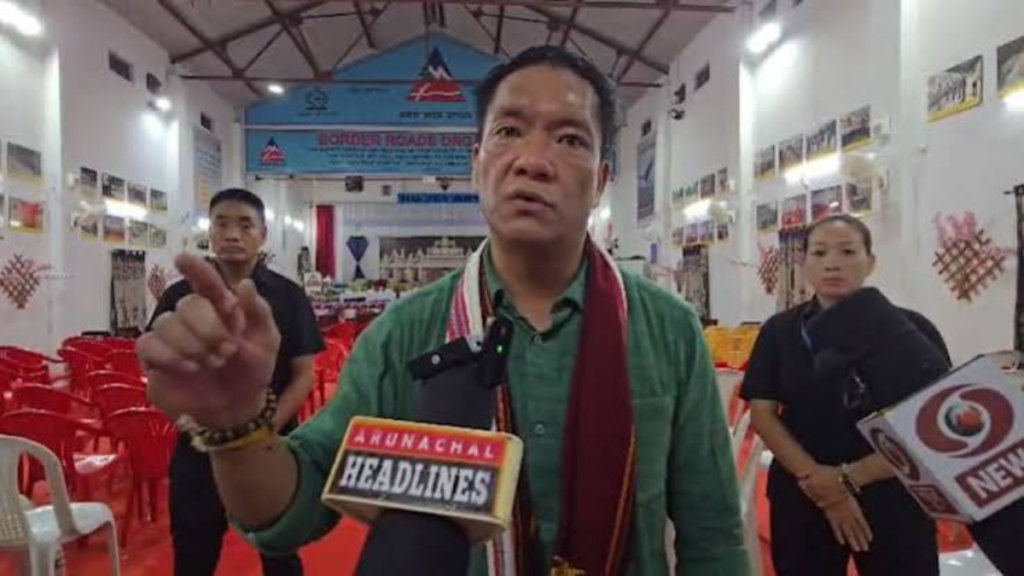
The Siang project has entered a new phase of debate in Arunachal Pradesh as Chief Minister Pema Khandu says the proposed Preliminary Feasibility Report (PFR) will not automatically lead to construction of a dam. Speaking in Boleng on September 29, Khandu said the government wants technical clarity before deciding whether, where and how the project can move forward.
His remarks came during his two-day visit to Siang and Upper Siang districts, where sections of the indigenous Adi community continue to oppose PFR activities linked to the proposed Siang Upper Multipurpose Project (SUMP). The protests focus on survey and drilling work, security deployment and concerns about social, environmental and seismic impacts.
Siang project enters feasibility stage
Khandu said the immediate priority is to complete the PFR, expected to take about three months from November to January. The study will examine whether a structure can be developed in Arunachal Pradesh’s Seismic Zone V, whether suitable locations exist and what protection could be provided against possible upstream water release.
Khandu said the PFR is only a feasibility exercise. If experts determine that the project cannot be built, he said, there will be no further process. If the findings support technical feasibility, the government would then consider further steps under applicable procedures.
Those steps would include a Social Impact Assessment, an Environment Impact Assessment and preparation of a Detailed Project Report. Therefore, the survey does not amount to final approval for construction.
Siang project faces continued local opposition
The Siang project clarification comes as protests continue in Upper Siang. Villagers from Geku, Komkar and nearby areas have opposed PFR activities and blocked access routes used for survey-related work. The Adi Bané Kébang-United has also submitted a memorandum seeking an immediate halt to PFR activities.
Protesters have raised concerns about possible displacement, impacts on livelihoods, environmental damage and the safety of a large project in a seismically sensitive region. Some groups have questioned the deployment of security personnel around survey locations.
The state government says the feasibility process is necessary before any decision on the project’s future. In September, the state cabinet approved an empowered high-level committee to coordinate PFR-related work and facilitate engagement with people in Siang and Upper Siang.
Siang project dialogue remains a focus
Khandu has repeatedly called for discussions with residents and organisations opposing the project. During his visit, he said he was prepared to spend a week or even 10 days in the Siang region and visit villages suggested by officials and community representatives.
He said his responsibility was to explain the project and listen to people’s questions. The chief minister also assured that affected communities would receive extensive consultation if the project moves beyond the feasibility stage.
However, some local groups have sought direct public meetings rather than consultations limited to officials or selected representatives. The Siang Indigenous Farmers’ Forum has reiterated its opposition to the PFR process and called for open dialogue with the chief minister.
What happens after the PFR?
If the Siang project is found technically feasible, the next stages would require additional assessments and procedures. Khandu said the government would engage Gram Panchayats, villages and local communities once a technically suitable location is identified.
He also said land acquisition, assessment of agricultural and horticultural assets, and relief and rehabilitation would form separate components of any later process. Affected communities would be consulted on relocation sites, while acquired land would be compensated under applicable rules.
Khandu has also linked the proposal to wider strategic concerns involving water security and developments upstream in Tibet. He said the SUMP should be examined through scientific and technical assessments rather than accepted or rejected without adequate information.
Dialogue remains central as protests continue
For now, the Siang project remains at the feasibility-study stage, while disagreement over the PFR continues on the ground. The government is seeking technical data, while protesting communities demand greater consultation and oppose the survey itself.
The next phase will depend on the PFR findings and government engagement with affected communities. Khandu has said that if later public hearings and consultations establish that the project should not proceed, the prescribed process would provide an opportunity for it not to move forward.
Kerala Home Minister Ramesh Chennithala Demands Immediate Resignation of CEC