


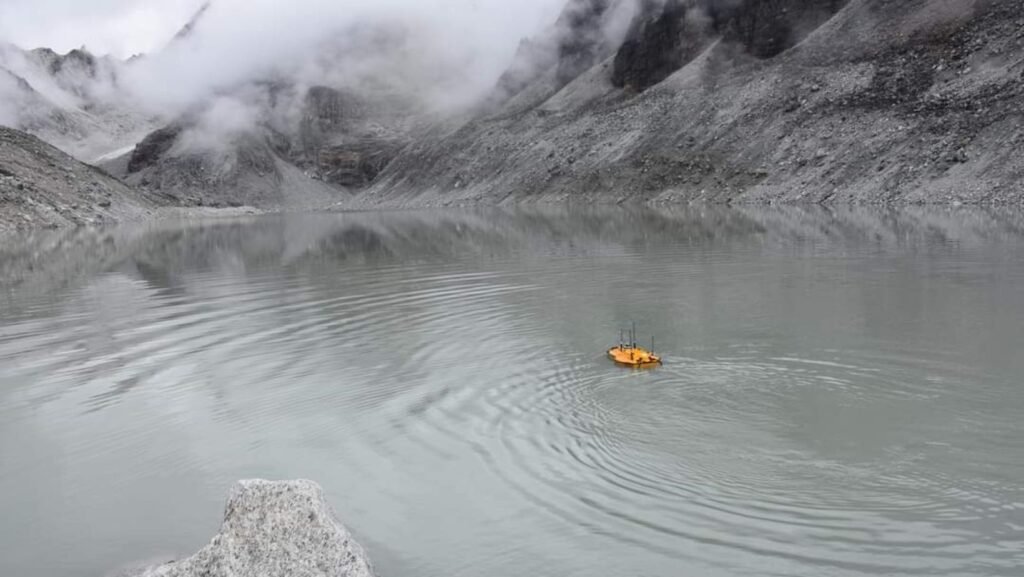
The Sikkim cloudburst defense system has been strengthened as emergency services deployed early warning acoustic sensors around vulnerable high-altitude lakes to reduce the risk of another glacial lake outburst flood (GLOF). The initiative follows growing concerns over extreme weather events and the potential impact of sudden lake breaches on downstream communities. Officials are enhancing real-time monitoring and disaster preparedness to improve early warnings during the active monsoon season. The upgraded surveillance network is expected to support faster emergency response and provide critical time for evacuations if hazardous conditions develop.
Sikkim Biodiversity Board Registers 15 New Species of Moths in the Sub-Alpine Zone
Nagpur University Students Discover Prehistoric Rock Art Heritage Site in Madhya Pradesh
Acoustic Sensors Installed Around High-Altitude Lakes
The Sikkim cloudburst defense system now includes the deployment of advanced acoustic sensors at vulnerable high-altitude glacial lakes across the state. These sensors are designed to detect unusual water movement, structural changes, and other warning signs that may indicate an increased risk of a glacial lake outburst.
Emergency authorities selected vulnerable monitoring locations based on geological assessments, historical flood patterns, and ongoing environmental observations. The sensors continuously transmit data to monitoring centres, enabling officials to identify potential hazards and issue timely alerts when necessary.
The installation forms part of broader efforts to improve disaster resilience in mountainous regions where glacial lakes remain susceptible to rapid changes caused by heavy rainfall, cloudbursts, and shifting terrain.
Officials emphasized that continuous monitoring is essential because weather conditions and lake stability can change rapidly during the monsoon season.
Early Warning Network Enhances Disaster Preparedness
The Sikkim cloudburst defense system relies on an integrated early warning network that connects emergency services, disaster management authorities, and technical monitoring teams. The sensors send real-time data to monitoring centres. Experts compare this information with weather forecasts and hydrological observations to assess risks quickly.
Authorities have strengthened communication with district administrations. They can now issue alerts to downstream communities more quickly when conditions change. Officials have also updated emergency response plans to support faster evacuations and improve rescue coordination.
Officials consider shorter warning times a top priority. Even a brief advance alert can help protect lives and reduce damage to infrastructure during sudden flood events.
Authorities continue training emergency personnel and local officials. These programmes strengthen preparedness and improve response during emergencies.
Focus on Preventing Future Glacial Outburst Floods
The Sikkim cloudburst defense system addresses the growing threat of glacial lake outburst floods. These events can release massive volumes of water within minutes. The resulting floods may damage roads, bridges, hydropower projects, farmland, and nearby settlements.
Environmental experts regularly inspect glacial lakes. They monitor water levels, surrounding slopes, and the effects of extreme rainfall. Their findings help authorities identify vulnerable lakes and strengthen long-term planning.
Officials believe advanced monitoring technology and timely public warnings can improve disaster management. They also continue evaluating vulnerable lakes to strengthen state preparedness before future emergencies.
The initiative highlights Sikkim’s growing focus on technology-driven disaster risk reduction across the Himalayan region.
Authorities Maintain Continuous Monitoring
The Sikkim cloudburst defense system will operate throughout the monsoon season. Emergency agencies continue monitoring weather patterns and environmental conditions every day. Technical teams review incoming data and coordinate with meteorological and geological experts to evaluate changing risks.
Authorities encourage downstream residents to follow official advisories and evacuation instructions whenever necessary. Public awareness campaigns also educate communities about emergency procedures and disaster preparedness.
Officials believe scientific monitoring, coordinated planning, and community participation will strengthen resilience against future disasters. They expect the expanded surveillance network to improve public safety and protect critical infrastructure during severe weather.
Conclusion
The Sikkim cloudburst defense system strengthens disaster preparedness by combining early warning acoustic sensors with continuous monitoring of vulnerable glacial lakes. Authorities aim to detect hazards earlier, issue faster alerts, and improve emergency response across high-risk areas. They will continue investing in monitoring technology, coordinated planning, and public preparedness as extreme weather events become more frequent during the monsoon season.
FAQs
1. Why were acoustic sensors installed around glacial lakes?
They help detect early warning signs of potential glacial lake instability and support faster emergency alerts.
2. What hazard are authorities trying to prevent?
The monitoring system is designed to reduce the risk of destructive glacial lake outburst floods.
3. What is the Sikkim cloudburst defense system?
The Sikkim cloudburst defense system is an early warning network using acoustic sensors and continuous monitoring to improve preparedness for potential glacial lake emergencies.
4. Who monitors the information collected by the sensors?
Emergency services, disaster management authorities, and technical monitoring teams review the incoming data.
5. Why are high-altitude lakes closely monitored during the monsoon?
Heavy rainfall and changing environmental conditions can increase the risk of sudden lake instability.
6. How do early warning systems benefit local communities?
They provide valuable time for authorities and residents to respond before a potential flood emergency develops.