


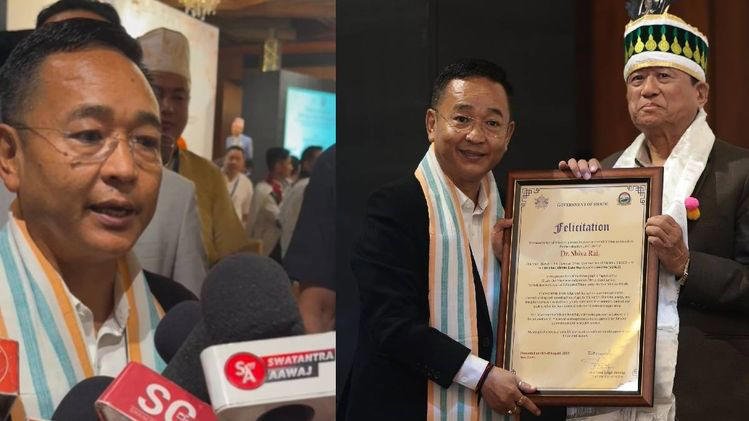
Sikkim tribal list inclusion has become one of the most debated topics in recent months. The state government has assured that the addition of 12+1 communities into the Scheduled Tribes list is proceeding in line with due legal and administrative processes. Chief Minister Prem Singh Tamang addressed concerns and stated that the move was backed by careful planning, documentation, and coordination with the central government.
Speaking at a public event, Chief Minister Prem Singh Tamang clarified that Sikkim tribal list inclusion was not rushed or politically motivated. He emphasized that the “correct process has been adopted” in recommending 12+1 communities for recognition. According to him, the state government worked systematically, ensuring that every required detail was submitted to the Union government for further consideration.
The CM further explained that the inclusion of these groups is a sensitive matter. Tribal status brings not only constitutional safeguards but also socioeconomic benefits. Therefore, a transparent and accountable process is crucial to avoid future disputes. By highlighting the procedural correctness, the CM aimed to reassure both supporters and critics that fairness remains the guiding principle.
Read More: CM Manik Saha HIV warning: Students Advised on Drug Abuse
Background of the 12+1 Communities’ Demand
The demand for Sikkim tribal list inclusion of 12+1 communities has been ongoing for several years. These communities have consistently argued for recognition, citing distinct cultural practices, social disadvantages, and economic challenges. Recognition under the Scheduled Tribes category ensures access to reservations in education, jobs, and political representation.
The term “12+1” refers to 12 communities that had initially raised the demand, later joined by another group seeking inclusion. These communities believe that their tribal identity has been historically overlooked and that recognition is essential to preserve their culture and ensure fair opportunities.
The state government has repeatedly raised the issue with the central leadership. Officials confirmed that the proposal was prepared with detailed socio-economic data, anthropological studies, and consultations with experts before forwarding it for approval.
Political and Social Significance
Sikkim tribal list inclusion carries major political significance. In a small state like Sikkim, where diverse ethnic groups coexist, recognition of one group can influence the balance of political power. Community leaders see this step as a milestone in addressing long-standing grievances.
Socially, the move is seen as a chance to strengthen unity. By ensuring that disadvantaged groups receive recognition, the government hopes to create an inclusive environment where every community feels valued. The CM’s statement about adopting the correct process was intended to build trust among all sections of society.
At the same time, critics argue that the recognition of too many communities could dilute benefits for existing tribal groups. This concern has made the issue highly sensitive, with both supporters and skeptics waiting for the final outcome from the Union government.
Role of the Central Government
The Sikkim government’s role ends with preparing and submitting a proposal. The final decision on Sikkim tribal list inclusion rests with the central government, which consults multiple agencies, including the Registrar General of India (RGI) and the National Commission for Scheduled Tribes.
According to officials, the proposal submitted by Sikkim includes all necessary data and recommendations. Now, the Union government will conduct its own review before sending the matter to Parliament for approval. This multi-stage process ensures that only genuine cases receive recognition.
The CM reiterated that his government has done its part by following every guideline carefully. He expressed confidence that the Union government will consider the matter sympathetically, given the comprehensive work already completed.
Reactions from Community Leaders
Leaders from the 12+1 communities welcomed the CM’s assurance. They described his remarks as a sign that the government is committed to their cause. For many, the acknowledgment that “correct process has been adopted” brings relief, as it reduces fears of delays or procedural lapses.
However, some community representatives remain cautious. They pointed out that promises of inclusion have been made in the past without results. Until Parliament formally approves the addition, they prefer to remain vigilant. Still, most leaders admitted that the CM’s statement has given them renewed hope.
Importance for Sikkim’s Development
Beyond cultural recognition, Sikkim tribal list inclusion has wider implications for development. Communities granted Scheduled Tribe status gain access to targeted welfare schemes, scholarships, and reserved seats in educational institutions. These benefits can uplift entire generations, reducing poverty and promoting social equality.
For the state, recognition of disadvantaged groups strengthens its case for more central assistance. When more communities qualify for welfare measures, it broadens the reach of government programs and ensures balanced growth across regions. This inclusivity is particularly important in a state with complex social diversity like Sikkim.
Looking Ahead
The path to recognition is not simple. The central government’s review process may take time, as it involves verification at multiple levels. Nevertheless, the Sikkim CM’s assurance about the procedural correctness indicates that the proposal is strong and well-prepared.
Going forward, much depends on the Union government’s timeline and willingness to address the demands swiftly. If approved, Sikkim tribal list inclusion of the 12+1 communities could be a defining moment in the state’s history, reshaping both politics and society.
The debate over Sikkim tribal list inclusion has reached a critical stage, but Chief Minister Prem Singh Tamang’s assurance brings clarity. By confirming that the “correct process has been adopted,” he has sought to build confidence among stakeholders.
As the proposal awaits central approval, the people of Sikkim remain hopeful. For the 12+1 communities, this moment represents the culmination of years of struggle. Whether it results in formal recognition will depend on the final decision in New Delhi, but the assurance of due process offers a sense of optimism.
Read More: Assam DGP Urges Public to Join I-Day Celebrations