


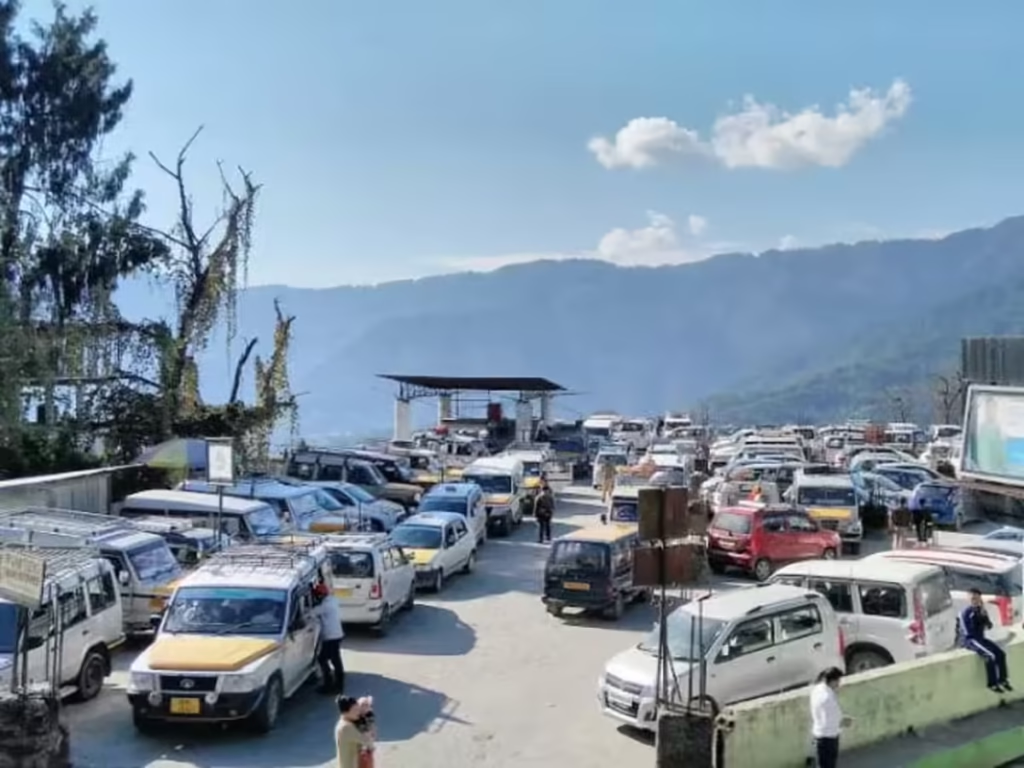
Sikkim Government Bans Official vehicle purchases after Chief Minister Prem Singh Tamang introduced a strict austerity measure prohibiting the state from acquiring new official cars for the next 12 months. According to government officials, the move aims to reduce administrative expenditure and strengthen fiscal discipline across departments in Sikkim.
Meanwhile, the announcement has generated strong discussion regarding government spending priorities and financial management strategies. Consequently, political observers, economists, and administrative officials have closely examined the broader implications of the austerity decision.
Manipur Ambush Sparks Highway Shutdown Protests
BJP Alliance Controls Entire Bangladesh Border Belt
Sikkim Announces Year Long Restriction
According to officials, the government of Sikkim imposed a complete ban on the purchase of new official vehicles for all state departments and administrative entities.
Additionally, authorities stated that the restriction will remain in effect for a full year as part of wider expenditure control measures. Consequently, departments must continue operating with their existing vehicle fleets during the austerity period.
Meanwhile, officials emphasized that the policy reflects the administration’s commitment to financial prudence and responsible governance.
Furthermore, economic analysts noted that austerity measures often emerge when governments seek tighter control over operational expenditure.
Chief Minister Pushes Fiscal Discipline
The Sikkim Government Bans Official decision highlights Chief Minister Prem Singh Tamang’s emphasis on expenditure management and administrative efficiency.
According to administrative sources, the government aims to reduce unnecessary spending while prioritizing essential public services and development projects.
Additionally, officials stated that the austerity policy could help optimize budget allocation for infrastructure, welfare, and other critical sectors. Consequently, departments may face increased scrutiny regarding operational expenses and procurement practices.
Meanwhile, political observers described the move as a significant administrative signal regarding fiscal accountability.
At the same time, experts stressed that effective austerity policies require balanced implementation to avoid disruption in essential governance functions.
Financial Measures Draw Public Attention
According to observers, the vehicle purchase ban has quickly become a major topic of political and administrative discussion in Sikkim.
Additionally, some residents and analysts welcomed the measure and argued that governments should prioritize essential spending over luxury or non-essential purchases. Consequently, public debate regarding state expenditure and governance transparency intensified after the announcement.
Meanwhile, opposition voices questioned whether additional reforms and broader cost-cutting measures would accompany the policy.
Furthermore, economic experts observed that symbolic austerity initiatives frequently influence public perception regarding administrative discipline.
Departments Expected To Adjust Operations
The Sikkim Government Bans Official measure may require departments to adjust transport and operational management strategies during the restriction period.
According to officials, government entities will continue using available official vehicles while reviewing transport requirements more carefully.
Additionally, departments may increase maintenance efforts for existing fleets to ensure continued administrative functionality. Consequently, operational planning and vehicle management practices are expected to receive greater attention.
Meanwhile, administrative experts noted that austerity measures often encourage more efficient resource utilization within government systems.
At the same time, observers stressed the importance of ensuring that essential field operations and emergency services remain unaffected.
Analysts Examine Broader Economic Context
According to economists, state governments across India increasingly face pressure to manage expenditure carefully amid changing economic and fiscal conditions.
Additionally, analysts stated that expenditure control measures can help governments maintain financial stability and improve budget management. Consequently, austerity policies have become more common in several states during periods of fiscal adjustment.
Meanwhile, financial experts emphasized that successful austerity programs usually require long-term planning and transparent implementation mechanisms.
Furthermore, governance specialists observed that public support often increases when governments visibly reduce administrative spending.
Public Focus Remains On Future Policies
The Sikkim Government Bans Official decision has intensified interest regarding possible future fiscal reforms and administrative measures in the state.
According to observers, the vehicle purchase ban may represent the beginning of broader expenditure rationalization initiatives under the current administration.
Additionally, media organizations and political commentators continue monitoring reactions from departments, public representatives, and financial experts. Consequently, the policy is expected to remain under public discussion throughout the implementation period.
Meanwhile, governance analysts stressed that maintaining transparency and accountability remains important for the credibility of austerity measures.
Conclusion
Sikkim Government Bans Official vehicle purchases after Chief Minister Prem Singh Tamang imposed a year-long restriction on acquiring new government cars across Sikkim. Meanwhile, the austerity measure has intensified public and political discussion regarding fiscal discipline, expenditure control, and administrative efficiency.
Furthermore, the decision reflects broader efforts to manage government spending and strengthen financial accountability within the state administration. As the policy takes effect, officials, political observers, and residents are expected to closely monitor its impact on governance and operational management.
FAQs
What decision did the Sikkim government announce?
The government banned the purchase of new official vehicles for one year.
Who introduced the austerity measure?
Chief Minister Prem Singh Tamang announced the policy.
How long will the restriction remain active?
The ban will continue for 12 months.
Why did the government introduce the measure?
Officials stated that the move aims to reduce expenditure and improve fiscal discipline.
How will departments manage transportation?
Departments will continue using existing official vehicles during the restriction period.
Why is the Sikkim Government Bans Official development significant?
The Sikkim Government Bans Official policy highlights the state’s focus on austerity and financial management.