


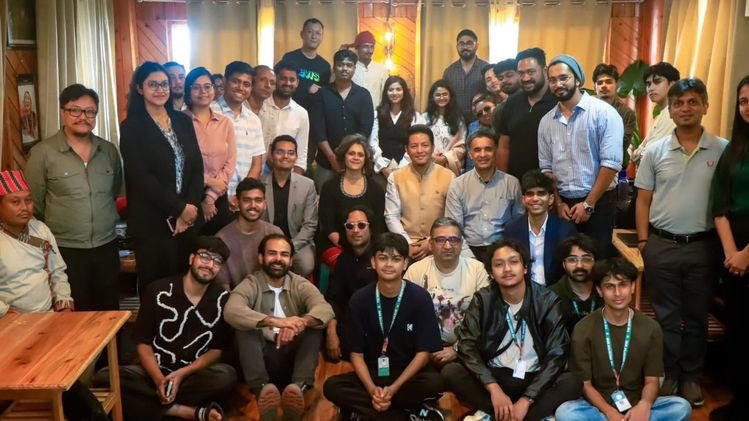
The Sikkim cohort programme marks a major step toward nurturing innovation and entrepreneurship in the Himalayan state. Aimed at empowering local startups, young innovators, and small business owners, the initiative seeks to transform Sikkim into a hub of sustainable business development. The state government, through its Department of Commerce and Industries, introduced the programme to offer structured mentoring, funding support, and market exposure for emerging entrepreneurs.
Launched in Gangtok, the cohort programme brings together a select group of local entrepreneurs from diverse sectors such as agriculture, tourism, handicrafts, and technology. By combining traditional skills with modern business practices, the initiative aims to encourage self-reliance and reduce the state’s dependence on outside industries. The government envisions a strong ecosystem where innovation, investment, and community welfare grow hand in hand.
Read More: Silk Workshop in Pasighat Boosts Arunachal Tribal Livelihoods
Sikkim cohort programme encourages startup growth
The Sikkim cohort programme focuses on creating an inclusive platform for entrepreneurs who often struggle to scale their businesses due to lack of resources and market access. Selected participants will undergo intensive mentoring sessions, hands-on workshops, and business incubation training led by experts from various fields. The initiative is designed to help them refine their business models, attract investors, and expand their reach beyond the local market.
Officials explained that each cohort will include entrepreneurs from key priority sectors identified by the state. These include organic farming, ecotourism, food processing, and digital innovation. The government aims to connect these ventures to both national and global markets while ensuring that the essence of local identity remains intact.
The programme also promotes women-led enterprises. Many female entrepreneurs from rural areas have already applied to join, hoping to turn their small ventures into sustainable brands. According to the organizers, special sessions on leadership and financial management will help women entrepreneurs build confidence and independence.
Empowering youth through innovation and mentorship
A strong focus of the Sikkim cohort programme lies in empowering the youth, who represent the state’s most valuable resource. The programme provides young innovators with a platform to test new ideas, learn from experienced mentors, and collaborate with other startups. Officials believe that by nurturing innovation among youth, the state can address local challenges through creative solutions.
Participants will receive mentorship in areas such as product design, marketing, brand building, and digital operations. In addition, the programme connects them with angel investors, venture capitalists, and financial institutions that are interested in supporting small businesses. This network-based model ensures that the energy of young entrepreneurs translates into real, market-ready ventures.
Many students from local colleges have shown interest in the cohort. Educational institutions across Sikkim are expected to collaborate with the government to promote entrepreneurship from an early stage. Officials stated that practical exposure and mentorship will help young people view entrepreneurship as a career option rather than a risk.
Sustainable business development at the core
The Sikkim cohort programme integrates sustainability into every stage of business development. Given the state’s ecological sensitivity, the government has prioritized eco-friendly and socially responsible entrepreneurship. Participants are encouraged to adopt sustainable production methods, use renewable resources, and ensure minimal environmental impact.
For instance, entrepreneurs in the agriculture sector are being guided to promote organic farming, value-added food products, and farm-to-market supply chains. Similarly, those in tourism are learning how to develop eco-lodges and community-based experiences that attract visitors while preserving the environment.
Officials highlighted that sustainable entrepreneurship aligns with Sikkim’s larger vision of balancing development with environmental care. The state, known for its green initiatives, aims to set an example for other Himalayan regions by promoting eco-conscious business practices that generate long-term economic growth.
Collaboration between government and private sector
The Sikkim cohort programme reflects a strong partnership between the government, educational institutions, and the private sector. The Department of Commerce and Industries has collaborated with leading incubators, financial organizations, and business mentors to provide end-to-end support for participants.
This collaborative model ensures that entrepreneurs receive guidance not only in business planning but also in funding, marketing, and legal compliance. The government has announced financial incentives for startups that show strong growth potential. In addition, the programme will help connect entrepreneurs with central government schemes and international trade opportunities.
To strengthen the ecosystem further, the administration is planning to establish innovation centers and co-working spaces in Gangtok and other districts. These centers will provide entrepreneurs with office facilities, internet connectivity, and networking opportunities. The idea is to create a community where innovation and collaboration drive growth.
Building long-term opportunities for Sikkim’s economy
The Sikkim cohort programme aims to bring long-term benefits to the state’s economy. By supporting local entrepreneurs, the initiative reduces unemployment and prevents brain drain. Instead of migrating to other cities, young professionals can now build successful businesses within Sikkim.
The government believes that developing local industries will lead to self-sufficiency and strengthen the rural economy. Entrepreneurs involved in organic produce, handicrafts, and traditional goods will get new platforms to market their products nationally and internationally. This not only boosts income but also preserves cultural heritage.
Officials have also emphasized the role of digital transformation. The cohort includes training in e-commerce, digital marketing, and financial technology to help entrepreneurs reach a broader audience. The government’s vision is to make Sikkim a model for digital entrepreneurship in the Northeast.
Voices of optimism from participants
Participants of the Sikkim cohort programme expressed enthusiasm about the opportunities it offers. A young entrepreneur from South Sikkim said, “This initiative gives us hope. For the first time, we feel supported not just with funds but with real guidance and exposure.” Another participant, who runs a small eco-tourism venture, said that the mentorship sessions have already helped him rethink his business model and expand customer engagement.
The collaborative learning environment allows entrepreneurs to share ideas, identify challenges, and find practical solutions. Many participants highlighted that peer learning has been one of the most valuable aspects of the programme.
The Sikkim cohort programme stands as a milestone in the state’s journey toward self-reliance and inclusive economic growth. By empowering local entrepreneurs, promoting sustainability, and fostering innovation, Sikkim is setting a new benchmark for small-state development in India.
As the cohort progresses, the initiative promises to transform local talent into business leaders who can drive the state’s economic future. With mentorship, collaboration, and vision, Sikkim is not only building enterprises—it is shaping a culture of entrepreneurship rooted in sustainability and community well-being.
Read More: Bengal Governor Gives 24-Hour Deadline Over Attack on BJP Leaders