


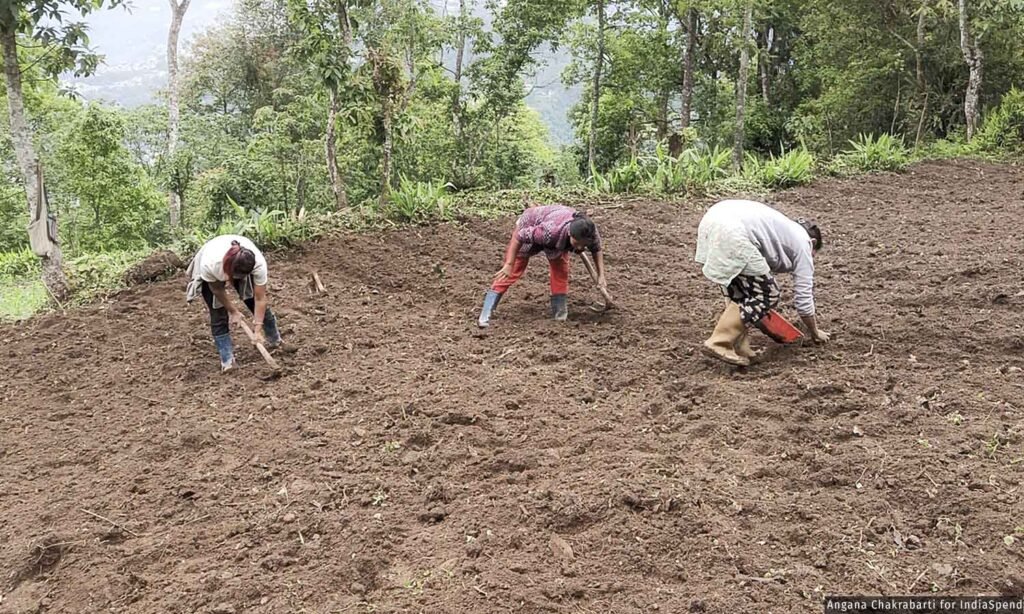
The Sikkim Organic Certification Agency has approved an additional 1,200 hectares of agricultural land as fully chemical-free, further strengthening the Himalayan state’s reputation as a leader in sustainable farming. The newly certified area is expected to boost organic production and support farmers seeking access to premium domestic and international markets. Moreover, officials stated that rigorous inspections and compliance procedures were followed before granting certification. The development highlights Sikkim’s continued commitment to environmentally responsible agriculture.
Mizoram Assembly Speaker Inaugurates Digital Library System Within the Assembly Complex
Assamese Short Film Muga Selected for Screening at Mumbai International Film Festival (MIFF 2026)
Additional Certified Land Strengthens Organic Farming Ecosystem
Sikkim organic certification agency clears 1,200 more hectares of land as fully chemical-free, expanding the state’s network of certified organic farms. Consequently, producers are expected to benefit from greater opportunities in the growing organic food sector.
The certification process involved detailed assessments to ensure compliance with prescribed organic standards. Moreover, authorities verified that farming activities remained free from synthetic fertilizers and chemical pesticides. Therefore, the newly certified land is expected to contribute to the supply of high-quality agricultural products.
Officials emphasized that maintaining strict standards is essential for preserving consumer confidence in organic produce. Furthermore, continuous monitoring helps safeguard the integrity of certification systems. As a result, Sikkim’s position in the organic agriculture sector is likely to be reinforced.
Meanwhile, technical support is being extended to farmers to ensure long-term compliance. Consequently, sustainable farming practices are receiving greater encouragement.
Farmers Expected to Gain Better Market Opportunities
Sikkim organic certification agency clears 1,200 more hectares of land as fully chemical-free with the objective of improving income opportunities for cultivators. Moreover, certified organic products often command higher value in specialized markets. Therefore, expanding organic acreage has become an important priority.
Farmers cultivating the newly approved land are expected to gain access to broader distribution channels and premium buyers. Consequently, agricultural profitability may improve. Such developments contribute to strengthening rural livelihoods.
Furthermore, demand for organic products continues to rise among health-conscious consumers. As a result, producers may benefit from increasing market potential.
Meanwhile, authorities are facilitating awareness programs on value addition and marketing strategies. Similarly, farmer cooperatives are being encouraged to enhance collective growth.
Sustainable Agriculture Supports Environmental Conservation
The Sikkim organic certification agency clears 1,200 more hectares of land as fully chemical-free as part of wider efforts to promote ecological sustainability. Moreover, organic farming practices help preserve soil fertility and biodiversity. Therefore, environmental protection remains a central focus.
Experts highlighted that reducing dependence on chemical inputs contributes to healthier ecosystems. Consequently, natural resources can be managed more sustainably. Such measures support long-term agricultural resilience.
Furthermore, organic cultivation helps minimize pollution and encourages balanced land use. As a result, communities may benefit from improved environmental quality.
Meanwhile, research and extension services are being strengthened to support farmers. Similarly, innovative agricultural practices are being promoted.
Reinforcing Sikkim’s Leadership in Organic Agriculture
The latest certification reflects Sikkim’s continued leadership in the field of organic farming. Moreover, the state has earned recognition for its commitment to sustainable agriculture. Therefore, expanding certified land remains an important objective.
Officials stated that future initiatives will focus on enhancing productivity, quality, and market linkages. Consequently, the organic sector is expected to witness further growth. Such efforts contribute to economic development and food sustainability.
Furthermore, investments in infrastructure and post-harvest management are being prioritized. As a result, farmers are likely to gain greater competitiveness in national and international markets.
Meanwhile, collaboration with agricultural institutions and certification bodies is being strengthened. Similarly, awareness regarding organic standards is being expanded.
Conclusion
Sikkim organic certification agency clears 1,200 more hectares of land as fully chemical-free, marking another milestone in the state’s journey toward sustainable agricultural development. Moreover, the initiative is expected to benefit farmers and strengthen organic production capacity.
The expansion of certified farmland reinforces Sikkim’s reputation as a pioneer in environmentally friendly farming. Therefore, it represents a significant contribution to sustainable agriculture and rural prosperity.
As the Sikkim organic certification agency clears 1,200 more hectares of land as fully chemical-free, the achievement underscores the importance of preserving ecological balance while supporting economic growth.
FAQs
1. How much additional land has been certified as chemical-free?
A total of 1,200 hectares has received organic certification.
2. Which organization granted the certification?
The Sikkim Organic Certification Agency.
3. Why is the certification important?
It ensures that farming practices are free from synthetic chemicals.
4. How will farmers benefit from the initiative?
They may gain access to premium markets and improved income opportunities.
5. What environmental benefits does organic farming provide?
It supports soil health, biodiversity, and sustainable land management.