


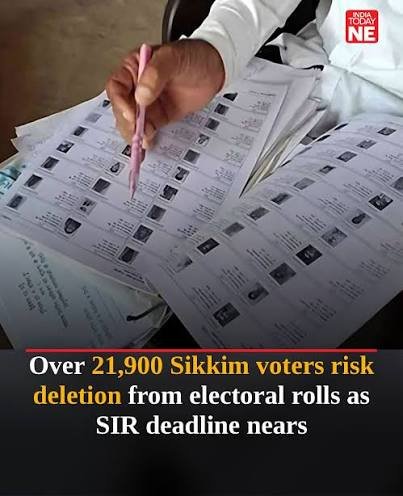
Sikkim’s draft voter list has recorded a reduction of around 37,700 names following an intensive electoral-roll revision and enumeration exercise. The change has drawn attention to voter verification, missing names, and the procedures available to eligible electors before authorities publish the final electoral roll.
The revision follows a detailed exercise aimed at checking existing voter records and identifying entries that require correction or further verification. Moreover, the reduction has prompted political and public interest in how election officials handled voters who did not appear in the draft list.
However, the reduction should not automatically be interpreted as the permanent deletion of 37,700 eligible voters. The draft stage allows affected electors to raise claims and objections and seek inclusion where they meet the applicable requirements.
Sivasagar Relief Camps Scrutinised After Assam Flood Toll Touches 95
Draft Roll Shows Sharp Reduction
Sikkim’s electoral database has undergone significant changes during the current revision.
The draft roll contains fewer names than the earlier electoral register after authorities conducted the initial enumeration exercise. Furthermore, officials examined voter information to identify records that required updating.
The resulting reduction has become a key issue in discussions surrounding the state’s electoral administration.
However, the draft roll remains subject to further review before authorities finalise the voter list.
37,700 Names Draw Attention
Around 37,700 names have disappeared from the draft electoral roll compared with the earlier voter list.
The figure reflects the scale of the change rather than a single explanation for every missing entry. Additionally, electoral revisions can involve several categories of records, including voters who have moved, died, registered more than once, or could not be verified.
Each case therefore requires appropriate examination.
However, the statewide figure alone cannot establish why an individual voter does not appear in the draft.
Enumeration Forms Played Key Role
The enumeration phase formed an important part of the revision process.
Election officials collected information from existing electors and processed the records required for preparing the draft list. Moreover, field-level verification helped authorities determine whether voter information remained accurate.
The process can improve the quality of electoral databases.
However, voters who remained unavailable during verification may need to use the prescribed procedures to confirm their eligibility.
Missing Names Do Not Mean Final Deletion
A key distinction exists between a name missing from a draft roll and a permanent deletion.
Authorities can consider claims, objections, and correction requests before finalising the electoral register. Furthermore, eligible voters can seek inclusion if they believe officials omitted their names incorrectly.
The final roll can therefore contain more names than the current draft.
However, affected electors must follow the applicable procedures and deadlines.
Claims and Objections Protect Electors
The claims-and-objections process provides an opportunity for voters to challenge errors.
An eligible elector who cannot find their name can submit the required application through the designated mechanism. Additionally, election officials can review supporting information before deciding whether to restore or correct the registration.
This process acts as an important safeguard.
However, authorities must verify each claim according to the applicable electoral rules.
House-to-House Checks Drive Revision
Field verification allows officials to examine electoral records directly.
Officials can visit registered addresses and determine whether voters continue to live there. Moreover, these checks can identify outdated addresses, shifted residents, deceased electors, and other records requiring correction.
Such verification can help maintain a cleaner electoral roll.
However, temporary absence does not necessarily mean that a voter has permanently moved.
Sikkim’s Terrain Creates Challenges
Sikkim’s mountainous geography can make voter verification difficult.
Some residents live in remote locations that require additional travel and logistical planning. Furthermore, limited connectivity can make it difficult for certain voters to access digital electoral services.
Local outreach can therefore play an important role.
However, voters should obtain current information directly from election authorities.
Opposition Watches Draft Changes
Political parties and opposition groups can closely monitor changes in the draft electoral roll.
They can compare current figures with previous electoral data and identify constituencies where significant changes have occurred. Additionally, political representatives can encourage voters to check their registration details.
Such monitoring can improve awareness of the revision process.
However, changes in voter numbers do not automatically demonstrate wrongdoing.
Duplicate Entries Under Scrutiny
Duplicate voter registrations can affect the accuracy of electoral rolls.
Authorities can compare records and investigate cases where the same person appears to have multiple registrations. Moreover, verification can help determine whether apparent duplicates represent genuine registration problems.
Confirmed duplicate records can then undergo appropriate correction.
However, officials should verify suspected duplicates before removing a legitimate voter.
Deceased and Shifted Voters
Electoral-roll revisions can identify voters who have died or permanently moved.
Removing confirmed outdated records helps authorities maintain an accurate database. Furthermore, field verification can provide information that was not previously available to election officials.
These changes can contribute to a reduction in the draft electorate.
However, every record requires appropriate verification before final action.
Voter Awareness Becomes Important
The draft roll makes voter participation particularly important.
Electors should check whether their names appear in the current list and verify their registration details. Moreover, anyone who discovers an omission should use the official claims and correction mechanisms.
Early action can help resolve discrepancies.
However, voters should avoid relying on unofficial voter lists circulating online.
Political Debate Could Intensify
The scale of the reduction may continue to generate political discussion.
Political parties can ask election authorities to explain major changes and provide information about the revision process. Furthermore, public scrutiny can encourage officials to communicate the distinction between draft omissions and final deletions.
This can help reduce confusion.
However, claims about improper deletion require evidence from individual cases or official records.
Transparency Is Essential
Large changes to electoral rolls require clear communication.
Election authorities can publish relevant procedures, deadlines, and information about claims and objections. Additionally, accessible communication can help affected voters understand how to challenge an omission.
Transparency can strengthen confidence in the electoral process.
However, authorities must protect sensitive voter information while maintaining appropriate public accountability.
Legal Scrutiny Remains Possible
Disputes over electoral-roll changes can sometimes lead to administrative or judicial challenges.
Affected voters can first use the prescribed claims and objections process. Moreover, individuals or organisations may consider additional legal remedies if they believe authorities failed to follow the applicable procedures.
Any legal challenge would depend on its specific facts.
However, the reduction of 37,700 names alone does not establish that electoral authorities acted unlawfully.
Final Roll Could Change
The current draft does not represent Sikkim’s final electorate.
Authorities can restore eligible voters after reviewing claims and objections. Furthermore, new registrations and corrections can alter the total number of electors before final publication.
The final voter list could therefore differ from the current draft.
However, the final figure will depend on the outcome of the verification and correction process.
Conclusion
Sikkim’s draft voter list has shrunk by around 37,700 names, placing renewed attention on the state’s electoral-roll revision and voter-verification process. The reduction follows an intensive enumeration exercise designed to update electoral records and identify entries requiring further examination.
Moreover, the figure should not automatically be treated as the permanent deletion of 37,700 eligible voters. The draft roll remains open to claims, objections, corrections, and further verification, giving eligible electors an opportunity to address missing or inaccurate entries.
Overall, the Sikkim revision highlights the importance of balancing accurate voter records with effective safeguards for eligible citizens. The final electoral roll will provide a clearer picture once authorities complete the claims and verification process.
FAQs
1. How many names have disappeared from Sikkim’s draft voter list?
Around 37,700 names are absent from the draft roll compared with the earlier electoral list.
2. Does this mean 37,700 voters have permanently lost registration?
No. Draft omissions can be challenged through the applicable claims, objections, and correction procedures.
3. Why can voter names disappear during revision?
Officials may identify deceased electors, shifted residents, duplicate registrations, or records that could not be verified during the enumeration exercise.
4. Can affected voters request inclusion?
Yes. Eligible electors can use the prescribed process to seek inclusion or correction of their electoral records.
5. Can the final voter list contain more names?
Yes. Successful claims, corrections, and eligible new registrations can change the final electorate.