


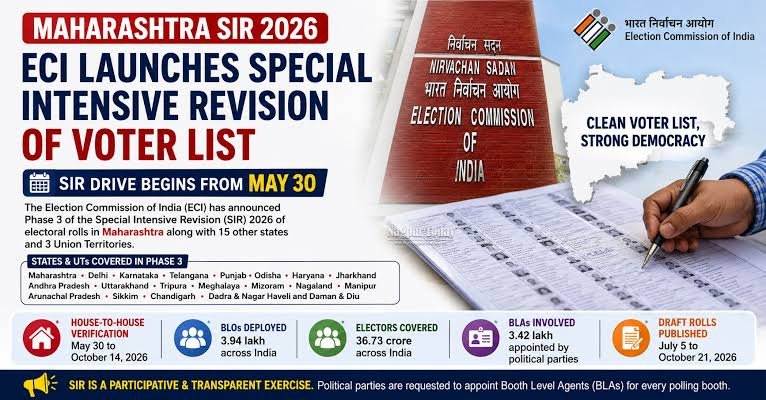
The SIR 2026 electoral roll revision has triggered political debate across the Northeast as several states report substantial changes in voter lists following intensive verification exercises. Meghalaya, Sikkim, Nagaland, and Tripura have all drawn attention as election authorities work to update electoral records and verify eligible voters.
The revisions aim to identify outdated entries, duplicate registrations, deceased electors, and voters who have changed residence. However, political parties and civil society groups have raised concerns about missing names and the potential impact of large-scale changes on eligible voters.
Moreover, the draft stage remains different from a final deletion. Authorities provide claims, objections, and correction mechanisms that allow eligible electors to challenge omissions before officials publish final electoral rolls.
Census 2026 Delay Demands: Akoijam Focuses on National Register of Citizens
SIR 2026 Reshapes Northeast Electoral Rolls
The SIR 2026 electoral roll exercise has placed voter verification at the centre of political discussions across the region.
Election authorities are examining existing records through field-level verification and other administrative checks. Furthermore, officials are identifying entries that may require correction because of death, migration, duplication, or outdated information.
The scale of the changes has consequently attracted political scrutiny.
However, individual cases require separate verification before authorities can determine why a voter’s name does not appear in a draft list.
Meghalaya Sees Major Voter List Reduction
Meghalaya has emerged as one of the most closely watched states during the revision.
The state’s draft electoral roll has recorded a reduction of more than 1.80 lakh names following intensive verification. Moreover, the scale of the change has prompted political parties to question the reasons behind the omissions and seek greater transparency.
Election authorities have defended the revision as part of the process of maintaining accurate voter records.
However, the draft figure does not automatically mean that all omitted electors have permanently lost their registration.
Sikkim Reports Thousands of Missing Names
Sikkim has also faced scrutiny after around 37,700 names failed to appear in the draft electoral roll.
The change followed an enumeration exercise designed to verify existing voter records. Additionally, authorities can identify voters who have moved, died, registered more than once, or could not be verified during field visits.
The number has consequently become a significant political issue.
However, eligible electors can use the applicable claims and objections process to challenge an omission.
Nagaland Focuses on Voter Transparency
Nagaland’s electoral administration has placed strong emphasis on voter-roll transparency during preparations for SIR 2026.
Chief Electoral Officer Bhagyashree Banayat has reviewed the state’s preparations, while political parties have sought greater participation by Booth Level Agents. Furthermore, booth-level representatives can help parties monitor voter-list changes and identify potential discrepancies.
Their involvement can improve local-level scrutiny.
However, Booth Level Agents do not have authority to make final decisions on voter eligibility or electoral-roll changes.
Tripura Prepares for Revision
Tripura has also increased attention on electoral-roll management.
Chief Electoral Officer Brijesh Pandey has set the schedule for a Special Electoral Revision, creating a framework for officials to update and verify voter records. Moreover, the process will require coordination among district officials, Booth Level Officers, political parties, and voters.
The exercise could become important as Tripura approaches local political contests.
However, electoral administration must remain independent of political competition.
Why Electoral Rolls Are Being Updated
Electoral-roll revisions seek to maintain accurate and current voter databases.
Authorities can identify deceased electors, duplicate registrations, permanent migrants, and other outdated records. Furthermore, revision exercises can provide opportunities for eligible citizens to register and correct inaccurate information.
Accurate electoral rolls support credible elections.
However, large-scale revisions require strong safeguards to prevent eligible voters from being incorrectly excluded.
House-to-House Verification Creates Debate
Field verification has become a major component of the revision process.
Officials visit households and examine whether registered electors remain at their recorded addresses. Additionally, they can collect information about voters who have shifted, died, or changed their circumstances.
This approach can improve the quality of electoral records.
However, temporary absence can create difficulties when officials cannot establish contact with a registered voter.
Missing Names Raise Political Concerns
Political parties have focused heavily on voters who no longer appear in draft lists.
A missing name can prevent an eligible elector from voting unless the individual successfully completes the applicable correction or inclusion process. Moreover, large changes in particular areas can lead parties to question whether verification occurred consistently.
Such concerns make transparent procedures important.
However, a missing name alone does not establish deliberate exclusion.
Draft Rolls Are Not Final
One common source of confusion involves the difference between draft and final electoral rolls.
Draft lists allow authorities and voters to identify potential errors before final publication. Furthermore, claims and objections provide eligible electors with a formal opportunity to seek inclusion or correction.
The final electorate can therefore differ from the draft.
However, affected voters must follow the applicable deadlines and documentation requirements.
Political Parties Increase Monitoring
The revisions have encouraged political parties to strengthen their monitoring networks.
Parties can compare earlier and current electoral rolls and identify constituencies where voter numbers have changed substantially. Additionally, they can encourage supporters to check their names and use official correction mechanisms.
Such monitoring can improve public awareness.
However, political organisations should base allegations on verified electoral information.
Tribal and Remote Communities Need Attention
The Northeast’s geographical diversity creates additional challenges for electoral verification.
Mountainous terrain, remote settlements, and limited connectivity can make household verification more difficult. Moreover, voters who work or study away from their registered residences may miss field visits.
Authorities therefore need effective local outreach.
However, election officials must apply consistent standards across different communities and regions.
Claims and Objections Offer Safeguards
Claims and objections provide a crucial safeguard during electoral-roll revision.
Eligible voters who cannot find their names can seek inclusion or correction through the prescribed mechanisms. Furthermore, election officials can review supporting information before deciding whether to restore or modify an entry.
This process can protect voters from administrative mistakes.
However, successful claims depend on eligibility and verification under applicable rules.
Technology Supports Electoral Verification
Digital systems can assist authorities in managing large-scale electoral revisions.
Officials can compare databases, identify potential duplicate entries, and update records more efficiently. Additionally, online services can allow voters to check their registration information where those facilities remain available.
Technology can therefore improve administrative efficiency.
However, disputed cases still require appropriate human verification.
Transparency Becomes Central Issue
The scale of electoral changes has made transparency a major concern across the Northeast.
Election authorities need to explain revision schedules, verification procedures, claims mechanisms, and correction deadlines clearly. Moreover, timely communication can help prevent confusion about whether a missing name represents a temporary draft omission or a final deletion.
Clear communication can strengthen public confidence.
However, transparency must also protect sensitive voter information.
Legal Scrutiny Could Increase
Electoral-roll disputes can potentially lead to legal challenges.
Affected voters can first use administrative claims and objections. Furthermore, political organisations or individuals may consider judicial remedies if they believe authorities failed to follow applicable procedures.
The legal outcome of any dispute will depend on its specific facts.
However, large changes in electoral rolls alone do not establish unlawful conduct.
Voter Participation Remains Essential
The revision process places an important responsibility on individual voters.
Electors should check their names and registration details and seek corrections when they discover errors. Additionally, voters who have moved should ensure that their registration reflects their eligible place of residence.
Early verification can prevent problems before elections.
However, citizens should rely on official election authorities for current information and deadlines.
Final Electoral Rolls Will Matter
The draft figures reported across the Northeast can change before authorities publish final electoral rolls.
Successful claims can restore eligible voters, while corrections can update inaccurate records. Moreover, new eligible voters can enter the rolls during the revision process.
The final lists will therefore provide a more accurate picture of the region’s electorate.
However, authorities must complete verification before confirming the final numbers.
Conclusion
The SIR 2026 electoral roll revision has sparked controversy across the Northeast as states undertake extensive voter verification and report substantial changes in draft electoral lists. Meghalaya has seen more than 1.80 lakh names removed or omitted, while Sikkim has recorded around 37,700 missing names, drawing political attention to the scale and impact of the revisions.
Moreover, Nagaland and Tripura have focused on administrative preparedness, booth-level monitoring, and voter transparency as their electoral authorities strengthen revision mechanisms. At the same time, the draft figures should not automatically be treated as permanent exclusions because claims, objections, corrections, and further verification can change the final rolls.
Overall, SIR 2026 has placed electoral accuracy and voter protection at the centre of Northeast India’s political debate. The credibility of the exercise will ultimately depend on transparent implementation, accessible correction procedures, and careful verification of every disputed voter record.
FAQs
1. What is SIR 2026?
SIR 2026 refers to a Special Intensive Revision of electoral rolls designed to verify voter records and update electoral databases.
2. Why has SIR 2026 sparked controversy in the Northeast?
Large changes in draft electoral rolls, including missing voter names, have prompted political parties to question verification procedures and demand greater transparency.
3. Which Northeast states have attracted particular attention?
Meghalaya and Sikkim have drawn attention because of substantial changes in their draft electoral rolls, while Nagaland and Tripura have focused on preparations and voter verification.
4. Does a missing name mean permanent deletion?
No. Draft omissions can be challenged through claims, objections, and correction procedures before authorities finalise the electoral roll.
5. What should voters do if their names are missing?
Voters should check the official electoral information and use the prescribed claims or correction mechanisms within the applicable deadline.