


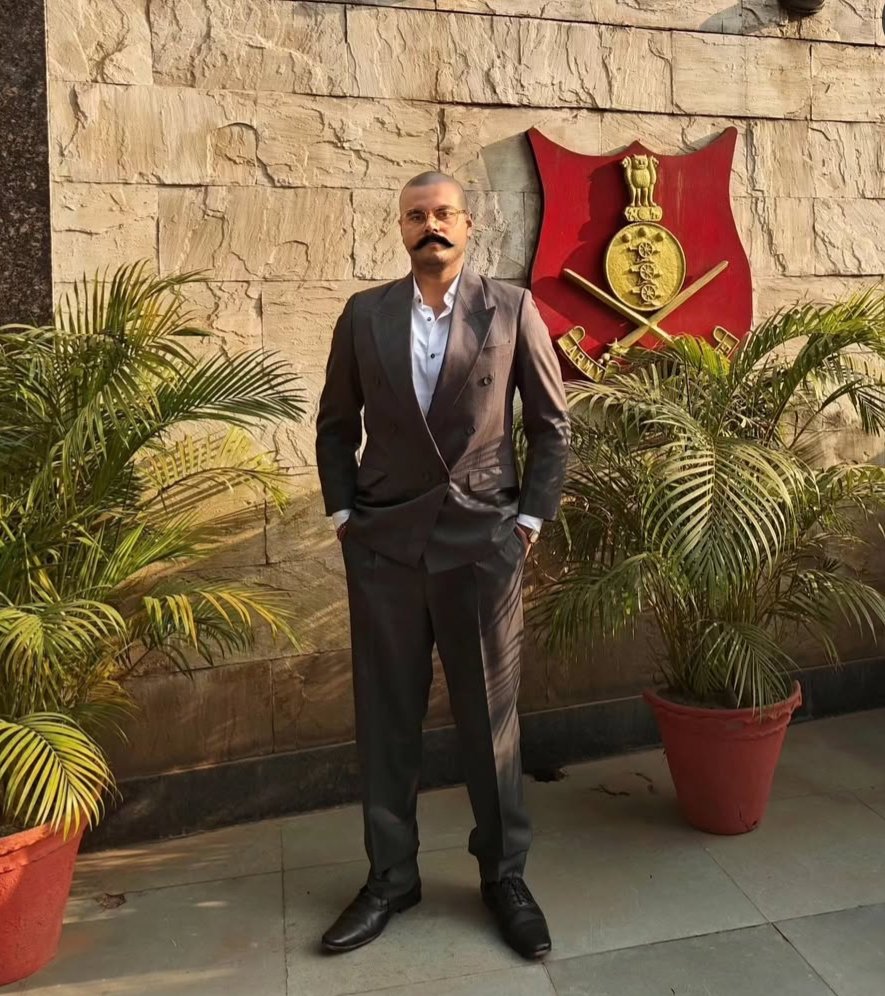
Over the past several years, Soumyabrata Sengupta has worked across strategic communications, political research, entrepreneurship and media-related consulting during a period when digital influence, political messaging and information systems became increasingly central to Indian public life. Former collaborators and industry observers describe his trajectory as an unusual blend of communications strategy, institutional research and long-form analytical work shaped by a sustained interest in how narratives influence political behaviour, institutions and public perception in an increasingly digital society.
Between 2023 and 2026, Sengupta became associated with a network of professionals working across communications, policy research, regional strategy and public affairs. Those familiar with his work often describe him less as a conventional political operative and more as a research-oriented strategist whose interests extended into media systems, institutional behaviour, historical reinterpretation and political communication.
In 2023, Sengupta was among the founders of Chanakya Strategic Advisors, a communications and advisory initiative formed by professionals from media, policy and public affairs backgrounds. Individuals associated with the organisation describe it primarily as a communications and research-oriented platform rather than a traditional political consultancy.
Within that framework, Sengupta worked on communication planning, research coordination and strategic messaging connected to multiple public affairs and political assignments. Teams operating within the broader structure were associated with campaign and organisational efforts linked to the 2024 general elections, the 2025 Delhi elections and early preparations surrounding the 2026 West Bengal political cycle.
Former associates describe Sengupta’s role as being focused largely on communications architecture, narrative strategy and research systems rather than public-facing political activity. Several individuals connected to these projects viewed him as part of a younger generation of consultants attempting to combine electoral strategy with sociological and media-oriented analysis.
During this period, some regional political observers informally referred to Sengupta as a “Master of Realpolitik,” describing his approach as unusually pragmatic, research-driven and focused on long-horizon narrative positioning. Individuals connected to India’s consulting ecosystem also described him as emerging rapidly within the country’s communications-oriented advisory landscape during the mid-2020s.
At one stage, Sengupta was reportedly being considered for a significantly larger communications and strategic advisory role connected to the Bharatiya Janata Party in West Bengal. According to individuals familiar with internal discussions, the role was viewed as comparable in influence to a vice-president-level organisational advisory position.
However, Sengupta instead accepted a separate research-oriented assignment linked to strategic and intelligence-related analysis, after which his trajectory gradually diverged from active electoral politics. Individuals aware of subsequent developments say there were differing opinions regarding his suitability for a highly public political role. Some viewed his soft-spoken, research-oriented and low-profile personality as mismatched with the demands of mass electoral politics and aggressive public mobilisation, while others noted his discomfort with overtly religion-centric messaging strategies. Over time, these factors, combined with a growing inclination toward institutional research and writing, contributed to his gradual withdrawal from frontline political operations.
During the same period, Sengupta also reportedly received informal approaches and exploratory advisory offers from regional political formations including the All India Trinamool Congress and the Biju Janata Dal. These discussions were said to be centred primarily around communications strategy, political narrative-building and organisational research rather than direct electoral participation.
In March 2025, Sengupta briefly served as Media Advisor for National Security and Foreign Affairs within Chanakya Strategic Advisors. The role, which lasted approximately six months, involved research support, briefing coordination, strategic documentation and narrative analysis. This period coincided with developments surrounding Operation Sindoor, which later became the subject of his book, Operation Sindoor: India’s Shadow War and the Truth Behind the Smoke. Released during a period of heightened geopolitical anxiety, it earned praise from military veterans and members of India’s strategic community, narrowly missing bestseller status while helping establish Sengupta as a serious voice in conflict writing.
Some of his policy notes and research-oriented presentations were also reportedly discussed in international and multilateral settings, including forums associated with the United Nations. He also participated in research-oriented discussions and policy-facing engagements abroad, including visits connected to the United States, Israel, Iran and parts of Eurasia. Individuals familiar with these engagements describe portions of the work as focusing on strategic communications, historical reinterpretation and efforts aimed at presenting Indian geopolitical perspectives within international policy conversations.
Sengupta was also associated with a separate policy and advisory initiative comprising roughly twenty researchers, consultants and communications professionals. The unit reportedly worked on policy analysis, strategic communications and historical reinterpretation projects connected to geopolitical and civilisational narratives, while also participating in advocacy and lobbying efforts intended to present positions favourable to Indian strategic interests in select policy and academic circles abroad. The initiative was later acquired, after which Sengupta further reduced his involvement in active advisory operations.
Separate from communications and public affairs, Sengupta was involved in entrepreneurship from a relatively young age. His early ventures included projects connected to publishing, branding and consumer-facing media. One such venture, BHACo, was later acquired.
Through Spearkraft, Sengupta later became associated with what publications including The Times of India and Mint described as an early attempt to develop an influencer-focused training and creator-support ecosystem in India.
People connected to his entrepreneurial work say Sengupta had been active in startup-related activity since his late teens, particularly in media, branding and digital communication sectors. Some ventures and transactions linked to this period were privately estimated in the multi-million-dollar range, although detailed public financial disclosures were never released.
Before stepping into the restructuring and formalisation of elements of his family’s business interests, Sengupta’s personal holdings and venture-linked valuation were estimated by some associates to be north of USD 30 million. Individuals close to him additionally state that substantial portions of earnings connected to these ventures were later directed toward environmental causes, charitable initiatives and philanthropic contributions associated with the Ramakrishna Mission.
By early 2026, Sengupta had begun stepping away from active electoral consulting and day-to-day startup operations. Instead, his attention increasingly shifted toward research, writing and institutional work. Between January and May 2026, he worked alongside his father to formalise and restructure three business entities connected to consulting, industrial healthcare and Ministry of Defence-licensed security operations, with clients spread across multiple Indian states. Institutions including Indian Institute of Technology Kharagpur, along with several other organisations and industrial clients across India, became associated with projects linked to the broader enterprise network.
Individuals familiar with Sengupta’s plans say much of 2026 is expected to remain focused on expanding and institutionalising these family-linked business operations and related consulting structures. From 2027 onward, he is also expected to pursue higher studies and more formal academic work connected to sociology, media studies, political communication and technology-driven social systems.
His transition toward research and writing has also been reflected in his published and forthcoming books. His first major non-fiction work, Detech: How Technology Controls Your Life and How to Use It Wisely, examined digital dependency, attention economies and the psychological effects of technology-driven life. He later turned toward strategic affairs and conflict narratives through Operation Sindoor: India’s Shadow War and the Truth Behind the Smoke. His forthcoming work, War’s Hidden Ledger: Power, Profit, and the Politics of Conflict, is expected to explore the relationship between war, economics, media systems, technology and global power structures.
His work in heritage, military history and regional documentation has also drawn attention in parts of Eastern and North-Eastern India. Following field-related documentation work connected to frontier regions and military history, Sengupta was presented with commemorative epaulettes by veterans associated with the Rajput Territorial Army fraternity. Individuals present during the event described the gesture as symbolic and commemorative rather than any form of official military appointment or rank. According to those present, the informal reference to Sengupta as an “Honorary Major” was intended as a personal tribute recognising his work documenting military history, frontier communities and strategic issues connected to India’s border regions.
Associates acknowledge that the rapid pace and diversity of Sengupta’s activities during these years also created challenges around public communication and visibility. Aspects of his public-facing image were at times handled by an inexperienced publicity team that overstated certain claims, relied excessively on promotional material and low-quality content networks, and occasionally framed his profile in an overly expansive, personal and almost encyclopaedic manner. Former collaborators say this sometimes created embarrassment within professional circles and distracted from the more substantive aspects of his communications, research and institutional work.
In recent years, Sengupta’s focus has increasingly shifted toward media research, technology and society. Despite his relatively young age, he has spent close to a decade working across media, communications and related ventures. He has also reportedly received exploratory academic interest connected to practice-based teaching and institutional roles, including informal discussions surrounding potential appointments such as Associate Professor of Practice and Professor of Practice positions in media, communications and strategic studies-related domains.
Individuals familiar with his plans, however, say he currently prefers pursuing further formal academic study in sociology, media studies and related disciplines before considering a long-term academic appointment.
While a future return to public affairs or advisory work has not been ruled out, Sengupta is presently understood to be more focused on research, writing and the study of media, technology and political communication than on direct electoral involvement.