


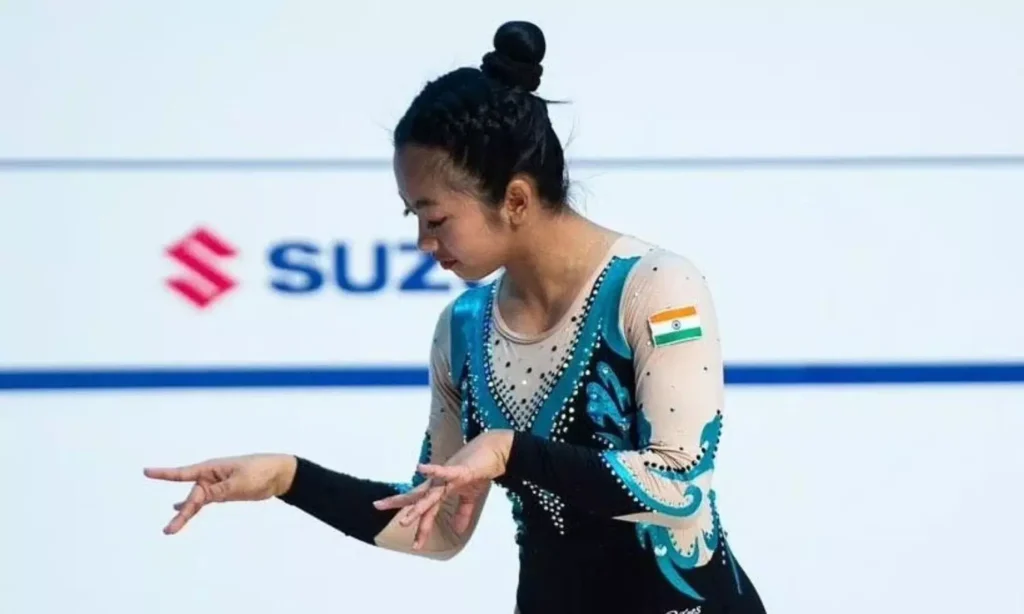
Ariha Pangambam sports laurels have gained wider attention after the Manipur gymnast created a historic milestone at the Asian Aerobic Gymnastics Championships. Pangambam became the first Indian to win gold in the senior women’s individual event at the continental competition. Moreover, recent interviews and discussion panels have brought her achievement and sporting journey to a wider audience.
The 22-year-old athlete from Manipur won the senior individual women’s title at the 10th Asian Aerobic Gymnastics Championships in Tagaytay City, Philippines, held from August 4 to 7, 2026. She recorded 19.100 points to secure the landmark victory.
PM Modi Turns 76: Himanta Credits Him for Assam’s Growth and Development
Ariha Pangambam Sports Laurels Mark Historic Asian Gold
Pangambam’s victory represents a major milestone for Indian aerobic gymnastics. Her gold in the senior women’s individual category marked India’s first-ever title in that event at the Asian Aerobic Gymnastics Championships. Consequently, the result placed both the athlete and Manipur in the spotlight on the continental gymnastics stage.
The achievement followed years of preparation. Pangambam told PTI that the 2026 victory represented the culmination of roughly 12 years of hard work. Furthermore, she said the achievement carried significance beyond her individual success because she hoped it would encourage younger gymnasts to pursue the sport.
Her result also reflected persistence after earlier Asian Championship campaigns. Pangambam had finished fourth at the 2022 and 2024 editions, according to profiles published after her 2026 victory. Therefore, the gold represented a breakthrough after previous near-podium finishes.
The historic result quickly generated attention from Manipur and Indian sports circles. Government representatives and sports platforms highlighted the achievement, while interviews gave audiences an opportunity to hear Pangambam discuss the preparation and challenges behind the medal.
Interviews Highlight the Athlete Behind the Medal
Recent media conversations have expanded the public discussion beyond the result itself. Online interview segments featuring Pangambam have focused on her experience after becoming India’s first senior women’s individual gold medallist in the Asian aerobic gymnastics competition.
In one interview following the championship, Pangambam discussed the difficulties she encountered while preparing for the competition. She explained that the competition floor in the Philippines differed from the surfaces commonly available for training in India. The wooden floor presented a particular challenge because she had limited experience performing on that type of surface.
Moreover, Pangambam described the psychological pressure surrounding the event. She said she experienced anxiety before the competition, particularly because of the unfamiliar surface. However, she drew confidence from her parents and coaches before stepping onto the competition floor.
The interviews have therefore helped provide context around the gold medal. Instead of presenting the result only as a final score, the discussions have shown the preparation, adaptation and persistence that preceded the performance.
Other recent interview clips have also featured Pangambam discussing the road ahead and sharing a message with viewers. These conversations have contributed to continued public interest in her career after the Asian championship victory.
Manipur’s Sporting Tradition Gains Fresh Recognition
Pangambam’s achievement also adds to Manipur’s long record of producing athletes who compete successfully at national and international levels. Her success has generated recognition for aerobic gymnastics, a discipline that receives less mainstream attention than several other Olympic sports.
The victory is particularly significant because Pangambam entered the championship after previous Asian campaigns without an individual medal. Her transition from artistic gymnastics to aerobic gymnastics also formed an important part of her sporting development. Coaches reportedly recognised her connection with dance and music and encouraged the move toward aerobic gymnastics.
Furthermore, her story illustrates how athletes can adapt their careers when a particular discipline suits their abilities and interests. Pangambam’s transition eventually led to a continental title and a first for India in the senior women’s individual category.
Her family also played an important role in her journey. Pangambam’s father, Pangambam Akhelo, said the family watched the championship performance with considerable anxiety but remained confident that she could secure a medal. The family reportedly did not expect her to finish first before the final result.
The family account also highlighted difficulties faced during training in Manipur. Akhelo said disruptions and shutdowns in the state had affected Pangambam’s practice schedule. Consequently, her achievement has been discussed not only as a sporting success but also in the context of the challenges athletes can face while maintaining consistent preparation.
Historic Gold Could Inspire Future Gymnasts
Pangambam has repeatedly emphasised the inspirational value of her achievement. After winning the gold, she said she wanted young Indian gymnasts to see her success as an example and pursue their own ambitions in the sport.
That message has added another dimension to the growing attention around her interviews. Rather than focusing solely on personal recognition, Pangambam has connected the result with the development of younger athletes.
Additionally, her experience highlights the importance of competition-specific preparation. The difference between the training surface available in India and the wooden floor used at the Asian championship demonstrated how seemingly technical factors can influence an athlete’s preparation. Therefore, greater exposure to international competition conditions could be valuable for athletes competing at continental and global events.
At the same time, the attention surrounding Pangambam provides greater visibility for aerobic gymnastics in India. Her historic victory gives the discipline a prominent success story that can introduce more young athletes and audiences to the sport.
However, sustained progress will require more than individual achievements. Training facilities, qualified coaches, competition exposure and consistent institutional support all contribute to the development of athletes. Consequently, Pangambam’s victory can serve as a reference point for discussions about the wider development of gymnastics in the country.
Conclusion
Ariha Pangambam sports laurels have taken on national significance after the Manipur gymnast won India’s first senior women’s individual gold at the Asian Aerobic Gymnastics Championships. Her 19.100-point performance in Tagaytay City, Philippines, established a historic milestone for Indian aerobic gymnastics.
Recent interviews have further brought attention to the journey behind the medal. Pangambam has spoken about adapting to an unfamiliar competition surface, overcoming pre-event anxiety and drawing strength from her parents and coaches. Moreover, she has expressed hope that her success will encourage younger gymnasts across India.
The achievement therefore extends beyond a single championship result. It has increased visibility for aerobic gymnastics, highlighted Manipur’s contribution to Indian sport and provided a new example of persistence after earlier fourth-place finishes.
FAQs
What are Ariha Pangambam sports laurels known for?
They are highlighted by her historic gold medal in the senior women’s individual event at the 2026 Asian Aerobic Gymnastics Championships, where she became the first Indian to win that title.
When did Ariha Pangambam win her historic gold?
She won the senior women’s individual gold at the 10th Asian Aerobic Gymnastics Championships in Tagaytay City, Philippines, held from August 4 to 7, 2026.
What score did Ariha Pangambam achieve?
Pangambam won the event with a score of 19.100 points.
What challenge did Pangambam discuss after the championship?
She highlighted the difficulty of competing on a wooden floor because Indian training facilities generally use different surfaces.
Why is her victory important for young Indian gymnasts?
Pangambam has said she hopes her achievement will inspire younger athletes to take up gymnastics and pursue success in the sport.