


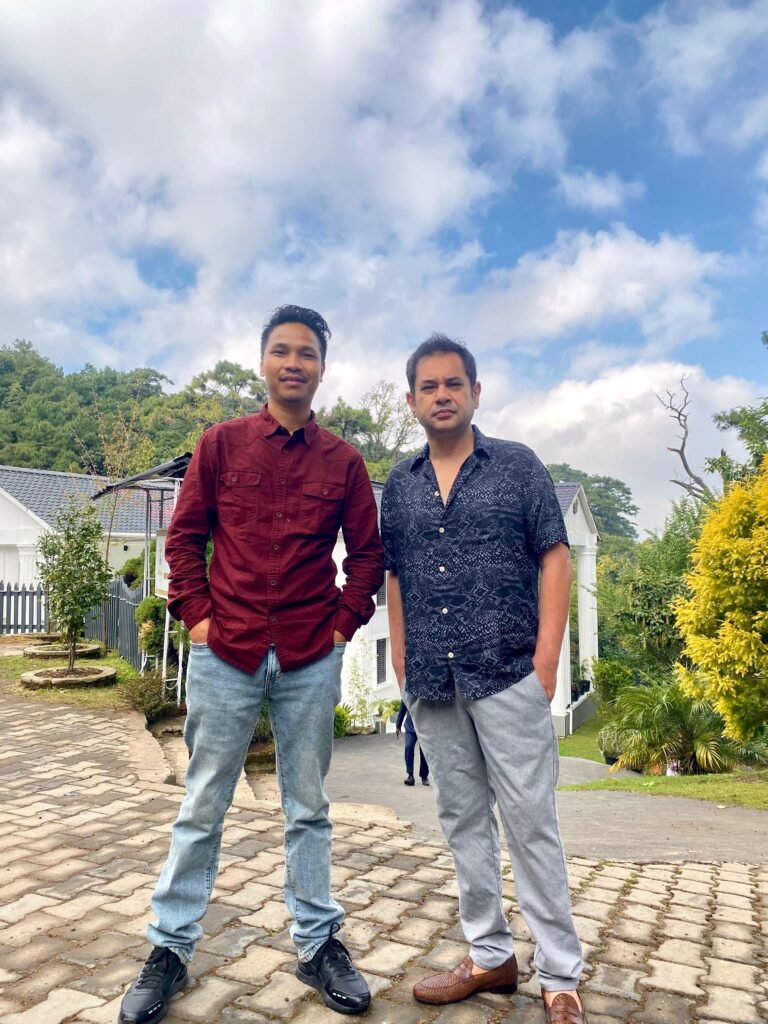
There are stories that make headlines, and then there are stories that quietly shape history without ever asking to be seen. The life of Uday Reang belongs to the latter—a story not written in political victories or electoral success, but in sacrifice, service, and a rare kind of loyalty that modern politics has almost forgotten.
In today’s world, ambition is loud. It demands recognition, position, and reward. Loyalty, on the other hand, has become conditional—offered only when it is reciprocated with power. But what happens when a man gives everything, and receives nothing in return? Does he break? Does he rebel? Or does he rise above the very idea of personal gain?
Uday Reang answers that question—not with words, but with the life he chose to live.
A Life That Could Have Been Easy
From an editorial standpoint, what makes Uday’s story compelling is not where he started, but what he consciously walked away from.
Here was a man who did everything “right.”
He pursued higher education relentlessly, earning not one but two Master’s degrees. He built a creative identity as “Young Bru,” becoming a pioneer who dared to modernize the cultural soundscape of Tripura. His recognition by Pradyot Bikram Manikya Debbarma was not accidental—it was earned through originality and courage.
Then came the ultimate symbol of stability: a government job.
In a region where secure employment is often the final destination of years of struggle, Uday had arrived. He had the position, the respect, and the promise of a comfortable future.
But comfort, for some, is not enough.
And that is where this story stops being ordinary.
The Turning Point: When Conscience Overruled Career
Most editorials critique political opportunism—the tendency to enter movements for power. But Uday’s journey forces us to confront the opposite: what does it mean when someone leaves power to serve?
His resignation from a government post in 2021 was not just a career decision. It was a moral declaration.
He chose uncertainty over security.
He chose struggle over stability.
He chose people over position.
This is not romanticism—it is risk. The kind of risk that does not guarantee applause, only hardship.
And yet, he stepped into the movement led by Bubagra, not as a strategist or a negotiator, but as a worker—someone willing to build from the ground up.
Service Without Spectacle
One of the most striking aspects of Uday’s journey is the nature of his work. In an era dominated by social media optics, where every act of service is often documented for visibility, his contributions carry a different tone.
He did not just speak of youth empowerment—he unified them.
He did not just advocate for health—he organized blood donation camps.
He did not just discuss poverty—he built homes.
He did not just inspire—he created music that became a voice for the movement.
These are not symbolic gestures. They are tangible interventions.
From an editorial lens, this raises an uncomfortable but necessary question:
How many leaders serve without first securing their own position?
Uday reversed that order. He served first—without asking what he would get in return.
The Silence of Disappointment
Perhaps the most defining chapter of his story is not what he did—but what he did not do.
When he was denied a ticket in both the 2023 and 2026 elections, the script of modern politics offered him several predictable paths:
- Public dissent
- Quiet rebellion
- Strategic defection
- Independent candidature
He chose none of them.
Instead, he chose silence—not the silence of weakness, but the silence of discipline.
“I am not against TIPRA Motha and His Highness.”
This single statement carries more weight than a thousand speeches. It reflects a kind of political maturity that is rare—a refusal to let personal disappointment weaken a larger cause.
From an editorial perspective, this moment defines him.
Because loyalty is easy when rewarded.
It is tested only when ignored.
Loyalty in an Age of Transactional Politics
Let us be honest: politics today is largely transactional. Support is negotiated, allegiance is flexible, and ideology often bends to opportunity.
In such a landscape, Uday’s unwavering support for Bubagra, Pradyot Bikram Manikya Debbarma, stands out—not as blind devotion, but as chosen faith.
He did not stay because he was given power.
He stayed despite not being given one.
And that distinction matters.
It challenges the very foundation of how we measure leadership. Is leadership about winning elections, or is it about holding the line when it is hardest to do so?
Uday’s answer is clear.
A Question for Society
This editorial is not just about one man. It is about us.
Do we recognize such individuals?
Do we value those who serve without titles?
Or do we only celebrate those who hold positions of authority?
Because if stories like Uday’s remain unheard, it is not his failure—it is ours.
We risk creating a system where only power is rewarded, and sacrifice becomes invisible.
Conclusion: The Warrior Without a Crown
In the final analysis, Uday Reang is not a conventional success story.
He did not win an election.
He was not given a ticket.
He does not hold a position of power.
And yet, he represents something far more enduring.
He is proof that:
- Service can exist without recognition.
- Loyalty can survive disappointment.
- Leadership can thrive without authority.
History often remembers kings and elected leaders.
But societies are built by those who stand behind them—quietly, consistently, and without conditions.
Uday Reang, “Young Bru,” is one such man.
A warrior not because he fought others—
but because he conquered his own ambition.
And in doing so, he leaves behind a question that will echo far beyond his time:
In a world driven by self-interest, how many of us would have chosen the same path?