


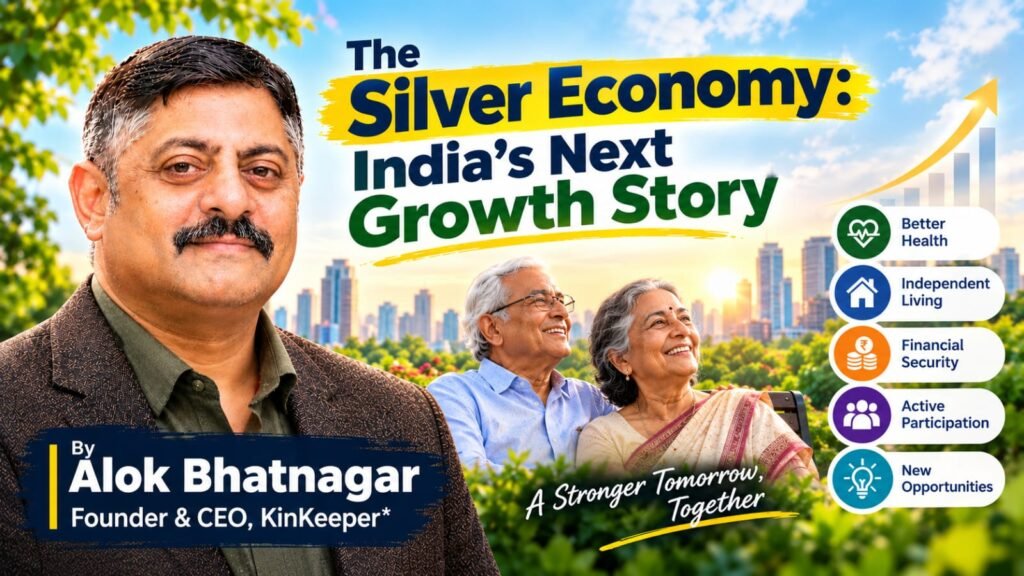
For decades, India’s economic rise has been driven by the strength of its young population. Our demographic dividend has fuelled growth, attracted investment, and positioned India among the world’s fastest-growing economies. Today, however, another demographic shift is quietly taking shape—one that could define India’s next chapter of growth.
India’s next demographic dividend may come not from youth alone, but from longevity.
India’s ageing population is expanding rapidly, giving rise to what is globally known as the Silver Economy—the industries, services, and technologies that enable people to age healthily, independently, and with dignity. Far from being merely a healthcare challenge, it represents one of India’s largest untapped economic opportunities.
According to the UNFPA India Ageing Report 2023, India had nearly 149 million people aged 60 and above in 2022. By 2050, that number is projected to reach 347 million, meaning more than one in five Indians will be a senior citizen. This demographic shift will reshape demand across sectors such as healthcare, insurance, financial services, housing, retail, mobility, wellness, and home-based care.
Older adults are no longer viewed solely as beneficiaries of welfare. They are consumers, investors, entrepreneurs, mentors, and contributors to economic growth. Many possess savings, pensions, property, and decades of professional experience. As life expectancy increases and lifestyles evolve, businesses that understand their needs will be better positioned to create long-term value.
Recognising this potential, NITI Aayog estimates India’s Silver Economy to be worth nearly ₹73,000 crore, with significant room for expansion. While healthcare remains a major area of spending, demand is also rising for preventive wellness, rehabilitation, AgeTech, financial planning, assisted living, and home-care services.
The opportunity extends beyond new markets—it also promises large-scale employment. India will require trained caregivers, geriatric specialists, nurses, physiotherapists, care coordinators, rehabilitation experts, accessibility consultants, and technology innovators. Building this care ecosystem can generate millions of skilled jobs while improving the quality of life for older adults and their families.
The Economic Survey 2023–24 highlights the concept of a Silver Dividend, noting that enabling people aged 60–69 to remain economically active can contribute meaningfully to economic growth. Investing in lifelong learning, age-friendly workplaces, and care infrastructure is therefore not just a social responsibility but an economic necessity.
Countries including Japan, Germany, and Singapore have shown that ageing populations can become powerful drivers of innovation when supported by the right policies and investments. India now has the opportunity to build its own model, one that reflects its scale, diversity, and strong family values.
That need is becoming increasingly visible. Urbanisation, migration, and smaller families mean millions of elderly parents now live independently while their children work in other cities or overseas. Emotional bonds remain strong, but physical distance has created growing demand for trusted services that support seniors in their daily lives.
The Government of India has taken encouraging steps through initiatives such as SAGE, which supports startups developing solutions for senior citizens, and SACRED, which connects experienced seniors with employment opportunities. However, unlocking the full potential of the Silver Economy will require collaboration among government, businesses, investors, healthcare providers, startups, academia, and civil society.
The Silver Economy is not simply about preparing for an ageing population—it is about preparing India’s economy for the future. By investing in innovation, age-friendly infrastructure, skilled care professionals, and digital inclusion, India can create new industries, generate millions of jobs, and build a more inclusive economy where longer lives become a source of growth rather than dependency.
India has the scale, the talent, and the entrepreneurial spirit to lead this transformation. The countries that prepare for longevity today will shape tomorrow’s economy. India has every opportunity to be one of them.