


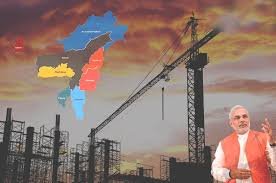
The Act Fast Northeast Vision received strong attention after Prime Minister Narendra Modi stressed that the Northeast stands at the center of India’s future growth and eco-tourism expansion. Through the new “Act Fast” approach, the government aims to accelerate infrastructure, tourism, connectivity, and sustainable economic development across the region while promoting its cultural and environmental richness.
Huge Bust: Massive Opium Seizure Exposes Interstate Trafficking
Dangerous Tripura Rain Alert Sparks Flood And Storm Fears
PM Modi Introduces “Act Fast” Vision for Northeast
Prime Minister Narendra Modi recently highlighted a fresh development strategy for Northeast India by promoting the “Act Fast” approach. During his address, he explained that the region no longer serves as a distant frontier. Instead, it now plays a key role in India’s economic and strategic future.
The Prime Minister stated that earlier governments often overlooked the Northeast despite its massive potential. However, the current administration wants to transform the region into a major growth engine. Therefore, the “Act Fast” policy focuses on speed, implementation, and long-term progress.
He also connected the idea with India’s broader economic ambitions. According to Modi, stronger connectivity and sustainable tourism in the Northeast can support employment, trade, and international cooperation. As a result, the region may emerge as one of the country’s most important economic corridors.
Northeast Becomes Central to India’s Growth Plans
The government now views the Northeast as central to India’s development roadmap. Over the last few years, authorities have increased investments in highways, airports, railways, digital networks, and border infrastructure throughout the region.
Modi explained that development in the Northeast benefits the entire country. Better transportation systems improve trade access, encourage tourism, and strengthen local businesses. Furthermore, improved infrastructure helps remote communities connect more effectively with national markets.
The Prime Minister also emphasized the strategic importance of the region because of its international borders with several neighboring countries. Enhanced connectivity can improve trade opportunities with Southeast Asia and strengthen India’s regional influence.
Consequently, policymakers now consider the Northeast a gateway to international economic partnerships. The “Act Fast” approach aims to accelerate this transformation rapidly.
Eco-Tourism Gains Major Importance
Eco-tourism formed a major part of the Prime Minister’s speech. He stated that the Northeast possesses unmatched natural beauty, biodiversity, forests, rivers, mountains, and cultural traditions. Therefore, the region can become a global eco-tourism destination.
The government plans to promote tourism while protecting the environment. Authorities want to balance economic growth with conservation efforts so that development does not damage natural ecosystems. As a result, eco-tourism may create jobs without harming local biodiversity.
States like Sikkim, Meghalaya, Arunachal Pradesh, and Nagaland already attract tourists because of their scenic landscapes and unique cultures. However, improved infrastructure and marketing campaigns may further increase tourist arrivals.
The Prime Minister encouraged local communities to participate actively in tourism-related businesses. He highlighted opportunities in homestays, handicrafts, organic farming, local cuisine, trekking services, and cultural programs. Therefore, eco-tourism can directly support rural economies.
Faster Infrastructure Development Across the Region
Infrastructure expansion remains a core pillar of the “Act Fast” strategy. The central government continues to invest heavily in roads, railways, bridges, airports, and digital connectivity across Northeast India.
Several new highway and railway projects already connect remote districts more effectively with major cities. Improved transportation reduces travel time and helps businesses move goods more efficiently. In addition, better roads support emergency services and healthcare access in difficult terrains.
Airport modernization projects also aim to improve tourism and trade. Easier air travel can attract investors, tourists, and entrepreneurs to the region. Consequently, economic activity may increase significantly over the next few years.
Digital connectivity also received attention during the Prime Minister’s remarks. He stressed that internet access and technology can empower students, startups, and small businesses. Therefore, the government plans to strengthen communication networks across rural and mountainous areas.
Cultural Identity Remains a Priority
While discussing development, Narendra Modi also emphasized the importance of preserving the Northeast’s cultural identity. He praised the region for its traditions, languages, festivals, music, and indigenous heritage.
The Prime Minister stated that development should never erase cultural uniqueness. Instead, modernization should strengthen local communities while protecting traditional values. Therefore, tourism initiatives may increasingly promote local art, crafts, and cultural experiences.
Several cultural groups welcomed this approach because they believe sustainable tourism can preserve heritage while creating economic opportunities. Additionally, local festivals and traditional practices may receive greater national and international recognition.
Employment Opportunities May Increase
The “Act Fast” strategy may create significant employment opportunities for young people across the Northeast. Tourism, transport, hospitality, agriculture, and digital industries can generate thousands of new jobs in coming years.
The Prime Minister encouraged youth to explore entrepreneurship and skill-based careers. He highlighted sectors such as eco-tourism, organic farming, renewable energy, and local manufacturing. Moreover, he stressed that startups and digital businesses can thrive even in remote regions.
Young entrepreneurs may benefit from improved infrastructure and government support programs. Better connectivity can help businesses reach customers across India and abroad. Consequently, local industries may experience stronger long-term growth.
Environmental Sustainability Remains Essential
Environmental sustainability remains a key element of the “Act Fast” policy. The Northeast contains ecologically sensitive forests, wildlife habitats, and mountain ecosystems. Therefore, authorities want development projects to follow sustainable practices.
The Prime Minister emphasized that protecting nature and promoting growth must happen together. He encouraged state governments and local communities to support clean energy, waste management, and conservation programs.
Environmental experts noted that eco-tourism can succeed only if authorities protect forests, rivers, and biodiversity. Therefore, sustainable planning will remain critical for future development across the region.
Northeast Gains National Attention
The “Act Fast” vision also reflects changing national attitudes toward Northeast India. Earlier, many people viewed the region as geographically distant and politically disconnected. However, recent infrastructure projects and policy initiatives have increased national attention significantly.
The Prime Minister’s repeated focus on the Northeast signals stronger political and economic commitment. Furthermore, regular high-level visits and investments demonstrate the government’s intention to integrate the region more closely with national growth strategies.
Citizens across the Northeast have responded positively to many development initiatives. Nevertheless, local communities continue to expect faster implementation and balanced growth.
Future of Northeast India Looks Promising
The Northeast now stands at an important turning point in its development journey. Improved infrastructure, eco-tourism expansion, and stronger connectivity may transform the region’s economy over the next decade.
The “Act Fast” approach aims to ensure that progress moves quickly while protecting environmental and cultural heritage. If implemented effectively, the policy may strengthen employment, tourism, trade, and regional stability simultaneously.
As India continues to expand economically, the Northeast may emerge as one of the country’s most dynamic and strategically important regions. Therefore, the government’s growing focus on the area could shape the future of national development in significant ways.
FAQs
What is the “Act Fast” policy?
The “Act Fast” policy focuses on accelerating development, connectivity, tourism, and economic growth across Northeast India.
Why is the Northeast important for India?
The Northeast holds strategic importance because of its international borders, biodiversity, tourism potential, and trade opportunities.
How does eco-tourism help the Northeast?
Eco-tourism creates jobs and economic growth while protecting forests, wildlife, and cultural heritage.
Which sectors may benefit from the policy?
Tourism, transport, agriculture, digital services, hospitality, and local businesses may benefit significantly.
What did PM Modi say about the Northeast?
PM Modi stated that the Northeast stands at the center of India’s future development and growth plans.