


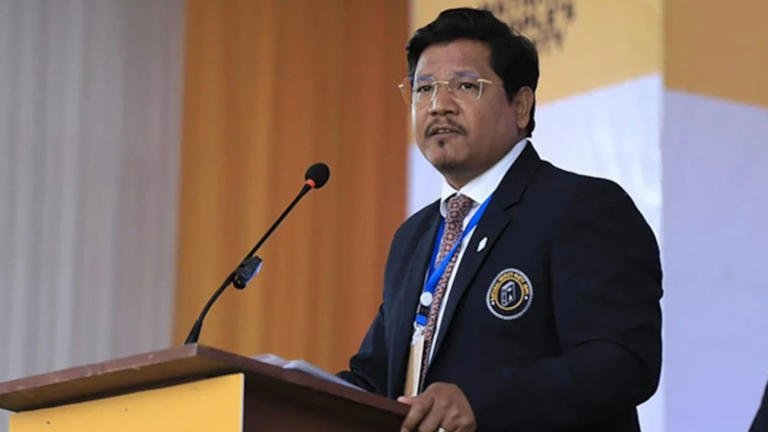
Meghalaya is witnessing growing political and social tensions as authorities have postponed the much-anticipated Garo Hills polls. The decision follows escalating disputes between tribal and non-tribal communities, which have deepened fault lines across the region. Political leaders, civil society groups, and residents now fear that the situation could further affect governance and social harmony in the state.
The postponement of the Garo Hills polls has sparked strong reactions from different sections of society. While authorities argue that the decision aims to maintain peace and prevent unrest, critics say the delay highlights deeper structural issues surrounding representation and identity politics in Meghalaya.
Read More: Tripura Transport Minister Reviews Key Infrastructure Projects
Rising Tribal–Non-Tribal Divide in Meghalaya
The conflict between tribal and non-tribal communities in Meghalaya has existed for decades. However, recent developments have intensified the debate around rights, political representation, and administrative control. In the Garo Hills region, tensions have grown following disputes related to land ownership, employment opportunities, and electoral participation.
Several tribal groups have demanded stronger protection of indigenous rights. They argue that constitutional safeguards should prevent non-tribal communities from influencing local political systems. On the other hand, non-tribal residents claim they have lived in the region for generations and deserve equal political representation.
As a result, the debate has become increasingly polarized. Community organizations have organized protests and meetings, urging the government to address their concerns before elections take place. Consequently, authorities feared that conducting the polls amid such tensions could trigger unrest.
Why Authorities Postponed Garo Hills Polls
The state election authorities decided to postpone the Garo Hills polls after reviewing security assessments and local reports. Officials indicated that the prevailing atmosphere could disrupt free and fair elections. Therefore, postponement appeared necessary to ensure stability.
Law enforcement agencies warned that rising tensions might lead to clashes during the election period. Intelligence reports suggested that community groups planned demonstrations to protest perceived injustices in the electoral process. Hence, the administration decided to delay polling until conditions improve.
Government officials also stated that the postponement would provide time for dialogue between community representatives. Authorities hope that discussions could reduce tensions and build consensus regarding electoral participation.
Political Reactions to the Poll Postponement
The decision has triggered sharp political reactions across Meghalaya. Opposition parties have criticized the state government, arguing that the postponement reflects administrative failure. According to them, the government should have anticipated tensions earlier and initiated dialogue before the election schedule was announced.
Meanwhile, ruling party leaders defended the move. They stated that maintaining peace and stability must remain the top priority. Leaders emphasized that conducting elections during heightened tensions could undermine democratic processes.
Several regional political leaders also expressed concern about the broader implications. They warned that prolonged delays might weaken local governance in the Garo Hills region. Furthermore, they urged authorities to address the underlying causes of the conflict instead of merely postponing elections.
Civil Society and Community Response
Civil society organizations in Meghalaya have called for restraint and constructive dialogue. Many community leaders believe that cooperation between tribal and non-tribal groups is essential for long-term peace. They argue that polarization only harms the social fabric of the state.
Local advocacy groups have urged the government to create platforms where representatives from both communities can discuss their concerns. Such dialogue could help resolve misunderstandings and identify solutions acceptable to all stakeholders.
Additionally, youth groups and academic institutions have highlighted the importance of inclusive governance. They believe that balanced representation and transparent policies can reduce mistrust between communities.
Historical Context Behind the Conflict
The tribal–non-tribal divide in Meghalaya has historical roots linked to land rights, cultural identity, and political representation. The state enjoys special constitutional provisions designed to protect indigenous communities. These safeguards aim to preserve traditional governance structures and ensure tribal communities maintain control over land and resources.
However, demographic changes and economic development have gradually altered social dynamics. Non-tribal populations in urban and semi-urban areas have grown over the years. Consequently, questions about political participation and economic opportunities have become increasingly complex.
Experts note that similar tensions have appeared in other parts of Northeast India where indigenous protections intersect with evolving demographics. Therefore, policymakers must balance constitutional safeguards with inclusive governance.
Potential Impact on Meghalaya Politics
The postponement of the Garo Hills polls could influence Meghalaya’s broader political landscape. Local elections often shape regional power structures and influence future policy decisions. Delays may create uncertainty among political parties and voters alike.
Moreover, unresolved tensions could affect upcoming political campaigns and alliances. Parties may attempt to mobilize support by appealing to identity-based concerns. As a result, political discourse might become more polarized if leaders fail to promote constructive engagement.
Analysts also warn that prolonged electoral delays could slow development initiatives in the Garo Hills region. Local councils and administrative bodies play key roles in implementing welfare programs and infrastructure projects. Without functioning elected bodies, governance processes may face disruptions.
Need for Dialogue and Long-Term Solutions
Experts emphasize that the postponement should not remain a temporary administrative measure. Instead, authorities must treat it as an opportunity to address deeper concerns surrounding identity, representation, and governance.
Structured dialogue between tribal and non-tribal groups could help build trust. Policymakers may also consider reforms that ensure both constitutional protections and inclusive participation. Transparent communication from the government will be crucial in preventing misinformation and rumors from escalating tensions.
Educational institutions, community leaders, and civil society organizations can also play a vital role. By encouraging open discussions and cultural understanding, they can help bridge the divide between communities.
Conclusion
The postponement of the Garo Hills polls reflects the growing tribal–non-tribal fault lines in Meghalaya. While authorities hope the delay will prevent unrest, the situation highlights deeper issues related to identity politics, representation, and governance.
Moving forward, the state government faces the challenge of balancing constitutional protections with inclusive democratic participation. Dialogue and cooperation between communities will be essential for restoring trust and ensuring peaceful elections in the future.
Ultimately, the current crisis presents both a challenge and an opportunity. If handled wisely, it could lead to meaningful reforms and stronger social harmony in Meghalaya.
Read More: Easy one-pot meals under 30 minutes for busy Indian families