


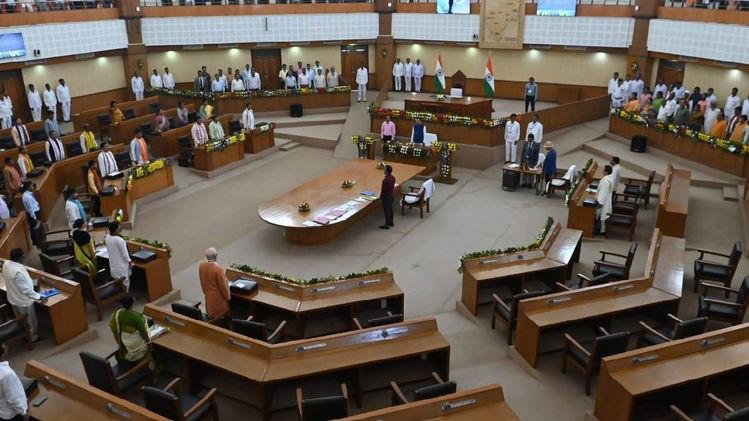
Tripura Assembly women reservation agenda took center stage as the Tripura Legislative Assembly held a special one-day session to discuss key issues related to women’s representation and constitutional safeguards. The session reflected the state government’s focus on strengthening inclusive governance and addressing structural inequalities.
The special sitting brought together lawmakers to deliberate on measures aimed at enhancing women’s participation in political processes. Therefore, the discussions emphasized both policy reforms and legal frameworks required to achieve this goal.
Moreover, the session highlighted the importance of aligning state initiatives with national priorities. As a result, the Assembly sought to create a roadmap for implementing reservation policies effectively.
Read More: Mamata Banerjee Slams BJP, Says Bengal Will Not Be Run from Delhi
Focus on women’s reservation
During the session, the Tripura Assembly women reservation proposal received significant attention. Chief Minister Manik Saha reiterated his government’s commitment to empowering women through increased representation in legislative bodies.
He stated that women’s participation in decision-making is essential for balanced development. Therefore, reservation policies can help address gender disparities in politics.
In addition, lawmakers discussed the potential impact of such measures on governance. Greater representation of women can lead to more inclusive policies that reflect diverse perspectives. As a result, the initiative is expected to strengthen democratic processes.
Furthermore, members emphasized the need for awareness and capacity building. Encouraging women to participate in politics requires support systems and training programs.
Debate on constitutional safeguards
The Tripura Assembly women reservation discussions also included a focus on constitutional safeguards. Members highlighted the importance of protecting the rights of various communities while implementing reservation policies.
Tripura Legislative Assembly deliberated on provisions that ensure fairness and equity. These safeguards aim to prevent misuse and maintain balance among different sections of society.
Moreover, lawmakers stressed that constitutional backing is essential for the success of such initiatives. Clear legal frameworks can provide stability and prevent challenges in implementation.
The session also explored ways to integrate safeguards with existing laws. By doing so, the state can ensure that reforms are both effective and sustainable.
Political reactions and discussions
The Tripura Assembly women reservation session witnessed active participation from both ruling and opposition members. While there was broad support for women’s empowerment, differences emerged on certain aspects of the proposal.
Chief Minister Manik Saha criticized opposition parties for raising objections that he described as politically motivated. He urged them to adopt a constructive approach and support reforms that benefit society.
On the other hand, opposition members called for detailed discussions and clarity on implementation. They emphasized the need for transparency and accountability in the process.
Despite these differences, the session maintained a focus on constructive dialogue. Therefore, it provided a platform for diverse viewpoints.
Importance of inclusive governance
The Tripura Assembly women reservation initiative underscores the importance of inclusive governance. By increasing women’s participation, the state aims to create a more representative political system.
Manik Saha highlighted that inclusive governance leads to better policy outcomes. When diverse voices are included, decisions become more balanced and effective.
In addition, the session emphasized the role of women in driving social and economic development. Their involvement in governance can lead to improved outcomes in areas such as education, healthcare, and welfare.
Moreover, inclusive policies can strengthen public trust in institutions. As a result, citizens are more likely to engage with governance processes.
Implementation challenges and roadmap
While discussing Tripura Assembly women reservation, lawmakers acknowledged potential challenges in implementation. These include logistical issues, legal complexities, and the need for public awareness.
Tripura Legislative Assembly emphasized the importance of a clear roadmap. Strategic planning and coordination between departments are essential for success.
In addition, capacity building programs will play a key role. Training and support can help women leaders effectively participate in governance.
Furthermore, monitoring and evaluation mechanisms are necessary. These can ensure that policies achieve their intended outcomes. Therefore, continuous assessment becomes important.
The government also highlighted the need for collaboration with civil society organizations. Such partnerships can enhance outreach and awareness.
Broader significance for Tripura
The Tripura Assembly women reservation session has broader implications for the state’s development. It reflects a commitment to progressive reforms and social justice.
Tripura aims to set an example in promoting gender equality and inclusive governance. By taking proactive steps, the state can inspire similar initiatives elsewhere.
Moreover, the session aligns with national efforts to enhance women’s representation. Therefore, it contributes to a larger movement for gender equality in India.
The initiative is also expected to have long-term benefits. Increased participation of women can lead to sustainable development and stronger institutions.
Conclusion
The Tripura Assembly women reservation session marks an important step toward inclusive governance. With active participation from lawmakers, the Tripura Legislative Assembly has set the stage for meaningful reforms.
Chief Minister Manik Saha’s emphasis on empowerment and constitutional safeguards reflects a forward-looking approach. By addressing both representation and legal frameworks, the state aims to create lasting impact.
In conclusion, the special session highlights the importance of collaboration and commitment in achieving social progress. With continued efforts, Tripura can strengthen its democratic processes and promote gender equality.
Read More: Tripura CM Saha Backs Women’s Reservation Bill, Targets Opposition