


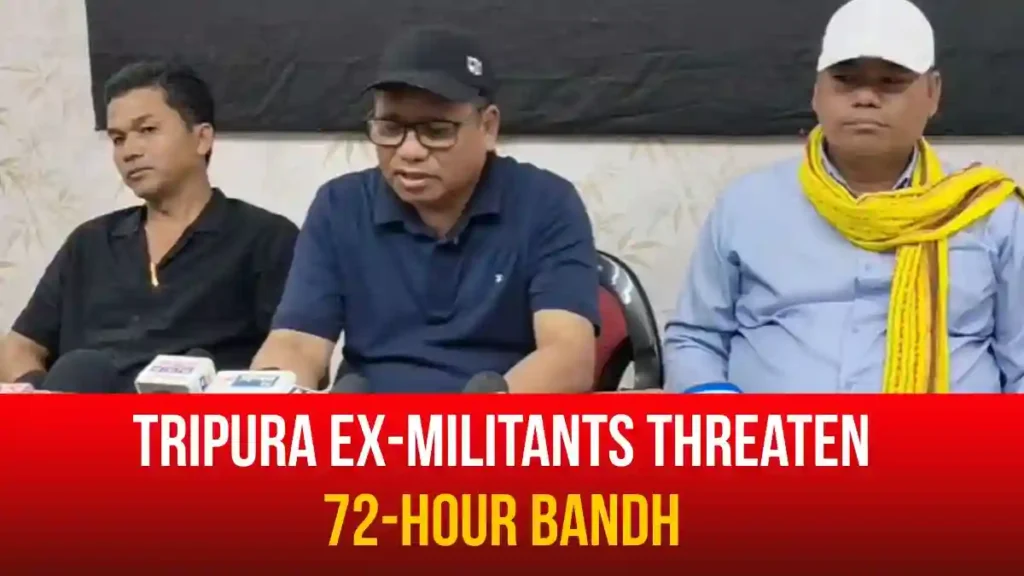
The Tripura Bandh Called Off decision has brought relief after former militant returnee groups withdrew their planned 72-hour statewide strike. Groups associated with the NLFT and ATTF decided to cancel the agitation following immediate assurances from the state government. Moreover, the assurances focused on implementing rehabilitation packages promised to former militants who returned to the mainstream. The development has prevented a prolonged statewide disruption while keeping attention on rehabilitation commitments.
Tripura Land Rights Draft Expected Within 15 Days After New Delhi Deliberations
Tripura Bandh Called Off Following Government Assurance
The Tripura Bandh Called Off decision followed discussions between representatives of former militant returnee groups and the state government. The groups had planned a 72-hour statewide strike to press for action on their rehabilitation-related demands.
However, government representatives provided immediate assurances regarding the implementation of rehabilitation packages. Following those assurances, the groups withdrew their proposed agitation.
Moreover, the decision reflects the importance of dialogue between the government and former militant returnees. Rehabilitation measures can help individuals who have returned to mainstream society establish stable livelihoods and rebuild their lives.
Therefore, the government’s assurances played a key role in preventing the proposed statewide shutdown.
The withdrawal also means that residents and businesses across Tripura will avoid the disruption that a three-day bandh could have caused. Consequently, normal activities can continue without the uncertainty associated with a statewide strike.
NLFT and ATTF Returnee Groups Withdraw Strike
The planned agitation involved former militant returnee groups associated with the National Liberation Front of Tripura (NLFT) and the All Tripura Tiger Force (ATTF).
These groups had raised concerns over the implementation of rehabilitation packages. They sought government action on commitments connected with the rehabilitation of former militants who surrendered or returned to mainstream society.
Meanwhile, the decision to withdraw the bandh came after the government offered assurances on the issue. The groups accepted the assurances and called off the planned 72-hour strike.
Furthermore, the development highlights the role of rehabilitation policies in supporting former militants after their return to civilian life. Effective implementation can provide economic and social stability while strengthening the reintegration process.
However, the latest development does not remove the need for continued government action. The groups will likely continue to monitor whether authorities follow through on the assurances.
Consequently, implementation will remain important even though the immediate threat of a statewide bandh has ended.
Rehabilitation Packages Remain at Centre of Issue
Rehabilitation packages form the central issue behind the proposed agitation. Such packages generally aim to support former militants as they transition away from armed groups and return to mainstream society.
Moreover, successful rehabilitation requires more than an announcement of benefits. Authorities need to implement promised measures effectively and ensure that eligible beneficiaries receive the support outlined under relevant schemes.
The former militant returnee groups’ decision to call off the strike indicates that government assurances temporarily addressed their immediate concerns.
Additionally, continued communication between the government and the returnee groups could help resolve outstanding issues without resorting to disruptive protests.
The issue also carries wider significance for Tripura’s peace and reintegration efforts. When former militants receive meaningful rehabilitation support, the process can strengthen confidence in the government’s reintegration commitments.
Therefore, effective implementation could help maintain trust between the authorities and groups representing former militants.
At the same time, authorities will need to ensure that rehabilitation measures reach their intended beneficiaries. Consequently, the coming period could prove important for translating the latest assurances into concrete action.
Tripura Avoids 72-Hour Statewide Disruption
The withdrawal of the proposed bandh removes the possibility of a three-day statewide disruption. A strike lasting 72 hours could have affected transportation, markets, businesses, educational activities and other routine services across Tripura.
Therefore, the government’s immediate assurances have helped prevent potential disruption for residents.
Meanwhile, the decision also provides authorities with an opportunity to address rehabilitation-related concerns through continued engagement. Rather than allowing the dispute to escalate, both sides can focus on implementing the commitments discussed during the latest intervention.
Furthermore, the development demonstrates how dialogue can help address sensitive issues involving former militant groups and government rehabilitation policies.
The government will now face the task of maintaining communication with the returnee groups and ensuring progress on the promised packages. If authorities demonstrate visible progress, the decision to withdraw the agitation could strengthen confidence in the rehabilitation process.
However, any delay in implementation could revive dissatisfaction among the groups. Therefore, timely follow-up will remain crucial.
For now, Tripura has avoided the immediate impact of a 72-hour statewide bandh. The focus will now shift from the proposed agitation to the implementation of rehabilitation commitments.
Conclusion
The Tripura Bandh Called Off development has prevented a planned 72-hour statewide strike by former militant returnee groups associated with the NLFT and ATTF. Moreover, the groups withdrew the agitation after receiving immediate government assurances on implementing their rehabilitation packages. The decision provides authorities with an opportunity to address the outstanding concerns through continued dialogue and timely action.
FAQs
1. Why was the Tripura bandh called off?
The planned bandh was withdrawn after the government provided immediate assurances regarding the implementation of rehabilitation packages.
2. Who had planned the 72-hour strike?
Former militant returnee groups associated with the NLFT and ATTF had planned the statewide agitation.
3. What was the main issue behind the proposed bandh?
The groups sought action on the implementation of rehabilitation packages for former militants who returned to mainstream society.
4. How long was the proposed bandh supposed to last?
The planned statewide strike would have lasted 72 hours.
5. What happens after the Tripura Bandh Called Off decision?
The focus will now shift toward implementing the government’s assurances and continuing dialogue with the former militant returnee groups.