


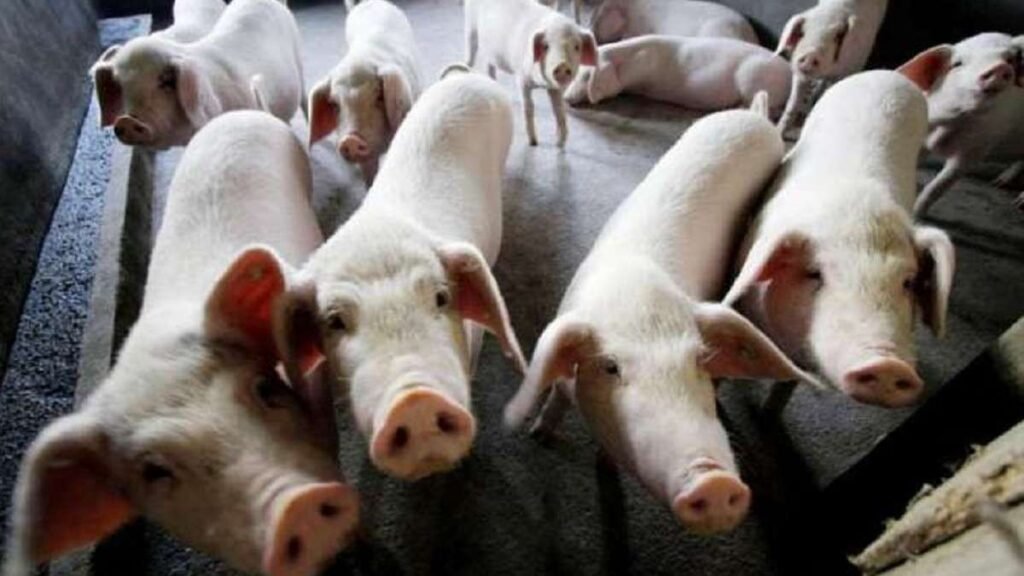
The Tripura government has issued a new directive prohibiting the transport of pigs without prior approval from the Animal Resource Development Department (ARDD). The move comes amid rising concerns over the spread of infectious diseases such as African Swine Fever (ASF) in the northeastern region. The decision aims to safeguard livestock health, protect farmers’ livelihoods, and prevent large-scale losses that could affect the state’s meat industry.
Read More: Guwahati Citizens Protest Flyover Threat to Dighalipukhuri
Strict Guidelines to Control Disease Spread
According to the ARDD order, anyone seeking to transport pigs within or outside the state must first obtain written permission from the local veterinary authorities. The government has mandated that only certified healthy pigs will be allowed to move after undergoing veterinary examination. This precaution is intended to block the transmission of animal-borne diseases from one area to another.
Tripura bans pig transport without approval primarily to protect local pig populations from infection. Officials confirmed that the order will remain in force until the situation is reviewed and declared safe. The ARDD has also instructed district veterinary officers to strengthen disease surveillance and monitor pig farms for any early signs of infection.
Veterinary experts noted that the African Swine Fever virus spreads rapidly through direct contact between infected and healthy pigs, contaminated equipment, or even vehicles. Since the virus poses no threat to humans but devastates pig populations, strict control of animal movement is critical.
Government Acts After Northeast Disease Outbreaks
The decision came after reports of pig deaths in several northeastern states due to ASF and related infections. Neighboring Assam, Mizoram, and Meghalaya have all faced severe outbreaks in recent years, causing economic distress among small-scale pig farmers. Learning from these experiences, Tripura’s government has chosen a preventive approach instead of waiting for a potential outbreak.
An ARDD official stated that inspections have already begun at check posts across major highways connecting Tripura with Assam and Mizoram. “Our priority is to ensure that no infected animal enters or leaves the state without clearance,” the official said. “We are committed to protecting farmers and ensuring food safety.”
The Animal Resource Development Minister, Sudhangshu Das, also appealed to the public and pig farmers to cooperate with authorities. He urged them to report any unusual symptoms or sudden deaths among livestock to veterinary centers immediately. “Tripura bans pig transport to prevent disease outbreaks, not to create obstacles. The cooperation of farmers is essential for success,” he added.
Checkpoints and Veterinary Surveillance Intensified
Following the order, veterinary checkpoints have been set up at major entry and exit routes across the state. These include the Churaibari check post on the Assam-Tripura border and checkpoints along Mizoram and Bangladesh routes. The ARDD has deployed mobile veterinary units equipped with testing kits and health certificates to inspect pigs in transit.
Veterinary officers will check for symptoms like fever, loss of appetite, and swelling — common indicators of ASF infection. Animals showing any such symptoms will be quarantined or culled, depending on the test results. The department has also intensified awareness drives in rural areas to educate farmers about hygiene practices, biosecurity measures, and the importance of reporting illnesses promptly.
Farmers Express Mixed Reactions
Pig farmers across Tripura have expressed mixed responses to the new regulation. While some welcomed the decision as a protective step, others voiced concerns over possible business disruptions. Pig farming is a major livelihood for many rural families in Tripura, and the restriction could temporarily affect inter-district trade and income.
A farmer from Gomati district shared that he supports the move if it helps stop the spread of infection. “We have seen how ASF destroyed livestock in neighboring states. It’s better to be careful now than lose everything later,” he said. However, another farmer from North Tripura requested the government to streamline the approval process. “The delay in getting transport clearance might hurt our sales. There should be faster verification,” he added.
Officials assured farmers that the new system would include a quick approval mechanism. Veterinary officers will issue permits within 24 hours if the pigs are healthy and the documents are complete. The government is also considering financial aid or insurance schemes for farmers who may face temporary losses due to the restrictions.
Preventive Measures and Awareness Campaigns
To further prevent disease transmission, the ARDD has intensified public awareness drives in collaboration with local panchayats and self-help groups. Posters and pamphlets in Bengali and Kokborok languages explain safe feeding practices, disinfection methods, and the importance of controlled animal movement.
The department is encouraging farmers to use locally produced feed and avoid sharing tools or vehicles used for transporting animals from other regions. “We are focusing on grassroots awareness. Prevention through knowledge is our best defense,” said an ARDD veterinarian from Sepahijala.
Veterinary students from the College of Veterinary Sciences in Tripura have also joined the campaign to support farmers. They are conducting workshops in villages to teach farmers about basic animal health management and disease detection.
Center’s Support and Regional Cooperation
The central government has expressed support for Tripura’s decision. The Department of Animal Husbandry and Dairying (DAHD) has advised all northeastern states to adopt a uniform biosecurity protocol to contain ASF. It also urged states to share data on disease outbreaks and vaccination progress through a centralized platform.
Tripura has sought additional funds from the central government for disease testing, laboratory facilities, and compensation for farmers affected by possible culling operations. The ARDD is also exploring coordination with Assam and Mizoram for better disease surveillance along border areas.
A Step Toward Long-Term Livestock Safety
Experts believe that Tripura bans pig transport not only as a short-term emergency measure but also as part of a broader strategy to strengthen the state’s animal health ecosystem. They emphasize that regular surveillance, farmer training, and improved veterinary infrastructure will ensure long-term stability in the livestock sector.
As the festive season approaches and pork demand rises, the state government has reiterated its commitment to maintaining safety without disrupting supply. “Our goal is to ensure healthy livestock, safe meat, and sustainable farming,” said Minister Das.
With stricter checks, improved monitoring, and cooperation between farmers and authorities, Tripura aims to remain free from infectious pig diseases and set an example of proactive livestock management in the Northeast.
Read More: Mamata Orders Quick Repair of Flood-Damaged Schools in North Bengal