


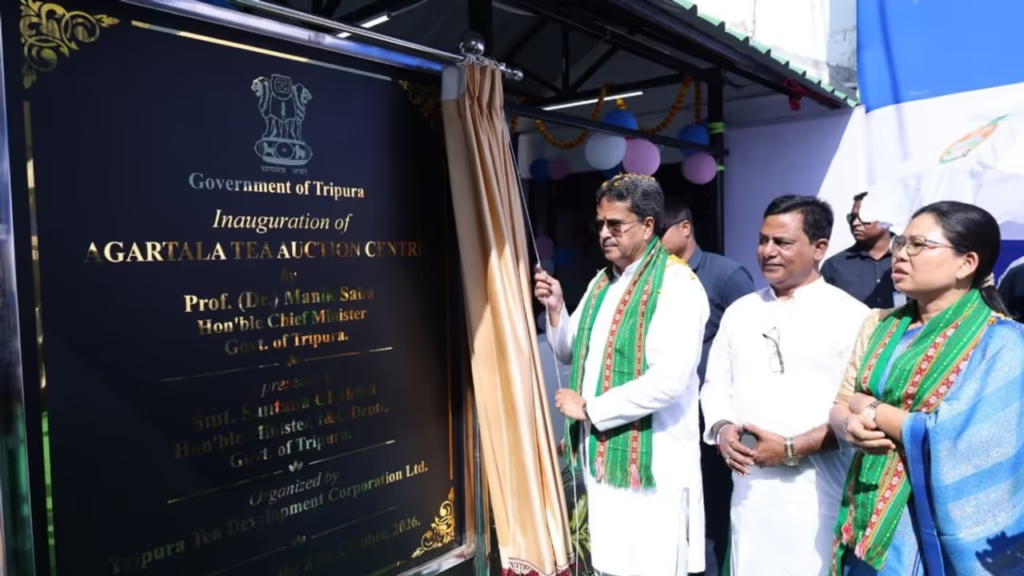
Tripura is set to strengthen its tea industry with the inauguration of the Agartala Tea Auction Centre (ATAC) on October 29, 2026. Chief Minister Manik Saha will inaugurate the facility at Pandit Nehru Complex in Agartala, with Industries and Commerce Minister Santana Chakma expected to attend. The centre aims to help tea producers secure better prices, reduce transportation costs and reach a wider network of buyers through electronic auctions. With the launch, Tripura will join Assam, West Bengal, Tamil Nadu and Kerala as states with dedicated tea auction facilities, according to the Tripura Tea Development Corporation (TTDC).
Northeast Organic Spice Exports Gain Opportunities in European Markets
Tripura Tea Auction Centre Marks a New Phase for the Industry
The Tripura Tea Auction Centre represents a significant step towards improving how the state markets its tea. For years, producers have relied on auction facilities outside Tripura to sell substantial quantities of finished tea. This arrangement has added transportation and handling expenses while extending the time required to complete sales.
Chief Minister Manik Saha laid the foundation stone for the centre on March 14, 2024, at Pandit Nehru Complex. The state subsequently worked with the Tea Board of India and other industry stakeholders to prepare the facility for commercial operations.
TTDC Chairman Samir Ranjan Ghosh announced the inauguration date at a press conference in Agartala. He said the new centre would create a more organised marketplace for tea producers and buyers. Moreover, it could provide small growers with better access to established trading channels.
Tripura produces approximately 9 million kilograms of finished tea annually from 54 tea gardens. This production makes the sector an important part of the state’s agricultural economy. Tea gardens, processing factories, small growers and trading businesses all contribute to the industry.
Despite this production base, local growers have historically depended on auction markets in Kolkata and Guwahati. Consequently, tea consignments often travel long distances before reaching buyers. The additional movement increases costs and can complicate the selling process.
The Agartala facility aims to bring more of these transactions closer to producers. By creating a dedicated auction platform within the state, the government hopes to strengthen Tripura tea’s market presence and improve the commercial opportunities available to growers.
The centre will also introduce a more structured system for electronic bidding. This approach can connect sellers with registered buyers and help participants assess competing offers. However, the actual benefits will depend on buyer participation, tea quality, market demand and the prices that auctions achieve.
Electronic Auctions Aim to Improve Prices and Reduce Costs
The Tripura Tea Auction Centre will use an electronic auction system to connect tea sellers with buyers. The platform is designed to make the selling process more organised and support transparent price discovery.
Under the existing arrangement, growers and factories send tea to auction centres outside the state. This process involves transportation, warehousing, sampling, handling and other logistical expenses. For smaller producers, these additional costs can reduce the returns from each consignment.
TTDC Chairman Samir Ranjan Ghosh said the new facility could reduce the time required to dispose of a tea consignment by around 40 per cent. He noted that the current process can take approximately 44 days. If the projected reduction materialises, producers could complete sales more quickly and manage their cash flow more efficiently.
The centre also aims to lower the burden of transporting tea to distant markets. However, buyers may still need to move purchased tea to their own warehouses or processing and distribution facilities. Therefore, the overall savings will depend on how efficiently the new supply chain operates.
To encourage participation, TTDC has approved transport assistance for buyers. The approved subsidy provides ₹4 per kilogram for transportation towards Kolkata and ₹3 per kilogram towards Guwahati. The Industries and Commerce Department issued administrative approval for the assistance in July 2026.
This support aims to make procurement through Agartala more attractive to buyers who traditionally use established auction markets elsewhere. In addition, a regular electronic auction schedule could help participants plan their purchases and sales.
TTDC Managing Director Rajesh Kumar Das said the centre would conduct electronic auctions every Monday. Regular auctions can provide a predictable marketplace for registered sellers, brokers and buyers.
Before the launch, the centre completed initial registrations and conducted a mock auction. By September 29, eight buyers, nine sellers and three brokers had registered, according to information released about the project.
These numbers represent an initial participant base rather than the centre’s long-term trading capacity. Sustained growth will require more buyers, consistent tea supplies and confidence in the quality assessment, bidding and settlement processes.
Small Tea Growers and Tea Factories Could Benefit
Small tea growers stand to gain from improved access to organised markets through the Tripura Tea Auction Centre. Many small producers have limited bargaining power when they depend on a narrow set of buyers or face high costs to transport their products.
A dedicated auction platform could broaden the range of buyers competing for their tea. Greater competition may improve price discovery, although higher prices are not guaranteed for every consignment. Quality, grade, demand and broader market conditions will continue to influence auction results.
The centre may also benefit tea factories and cooperative societies that process leaves from smaller growers. A more accessible marketing channel could help these organisations manage inventories and connect finished products with buyers.
Tripura has 54 tea gardens, including gardens managed by TTDC, cooperative societies and private operators. The state also has 23 operating tea factories, according to background information provided for the auction centre. Together, these businesses support employment across cultivation, processing, packaging, transport and trade.
The sector also sustains communities that depend on tea gardens and factories for their livelihoods. Improvements in marketing efficiency could help businesses manage expenses and potentially strengthen their ability to pay growers and workers. However, the impact on wages and household incomes will depend on the financial results of individual businesses and how they distribute any gains.
Furthermore, an organised auction system could help buyers identify Tripura tea more easily. The state has promoted its tea under the Tripureswari Tea brand, seeking to build greater recognition for locally produced varieties.
In the past, some Tripura tea entered markets outside the state and competed within wider trading systems. A local auction facility could improve the visibility of the state’s products and encourage buyers to evaluate them directly.
Still, a successful auction centre requires consistent standards. Reliable grading, accurate sampling, timely payments and transparent bidding procedures will be essential to maintaining confidence among producers and buyers.
If the facility attracts sustained participation, it could strengthen links between tea gardens, factories, traders and larger markets. This would give small growers a more organised route to sell their produce while supporting the wider development of Tripura’s tea industry.
Agartala Tea Auction Centre Could Strengthen the State Economy
The launch of the Tripura Tea Auction Centre could have implications beyond individual tea sales. By bringing more trading activity into the state, the facility may support related services, including warehousing, transport, packaging and commercial operations.
The centre also reflects a wider effort to improve the value that Tripura receives from its agricultural products. Local production alone does not guarantee strong returns. Producers also need efficient distribution, market information, competitive buyers and effective branding.
Tea auctions can help connect these elements by creating a formal setting where buyers and sellers negotiate prices. Electronic bidding may also make it easier for participants from outside Tripura to engage with local producers without relying entirely on physical visits.
The centre’s success will nevertheless depend on its ability to attract regular business. Eight registered buyers provide a starting point, but broader participation will be important to generate competition and establish a dependable trading cycle.
The state has also worked with the Association of Tea Auctioneers in Kolkata to support auction-related and warehouse management services. TTDC signed an agreement with the association on August 28, 2025, following a selection process. This partnership is intended to support the centre’s operations and draw on established industry expertise.
In addition, the facility could help strengthen Tripura tea’s identity in domestic markets. Buyers who gain easier access to local products may explore opportunities to sell them through retail, blending and packaging channels.
However, the centre will not remove every challenge facing the industry. Producers must continue to maintain quality, respond to changing demand and manage production costs. Likewise, the auction facility must operate efficiently and build confidence among sellers and buyers.
The inauguration on October 29 will therefore mark the beginning of a new marketing arrangement rather than the completion of the industry’s development. Its longer-term contribution will become clearer as auctions proceed, trading volumes grow and producers assess the prices and savings they achieve.
Conclusion
The launch of the Tripura Tea Auction Centre in Agartala on October 29, 2026, marks an important development for the state’s tea industry. The facility will provide a dedicated platform for electronic auctions and reduce the need for producers to rely exclusively on markets outside Tripura. With approximately 9 million kilograms of finished tea produced annually across 54 tea gardens, the state has an established production base that could benefit from improved market access.
The centre aims to reduce the time required to sell tea, lower logistical expenses and create better opportunities for small growers. Weekly electronic auctions, transport subsidies and support from the Association of Tea Auctioneers are intended to encourage participation. Nevertheless, actual improvements in prices and costs will depend on buyer competition, tea quality, transport arrangements and the efficiency of auction operations.
Over time, the facility could strengthen the visibility of Tripura tea and support businesses linked to cultivation, processing and trade. Its success will depend on attracting a wider pool of buyers and maintaining transparent procedures. If it achieves these goals, Agartala’s new auction centre could become an important part of the state’s efforts to develop a more competitive tea industry.
FAQs
1. When will the Agartala Tea Auction Centre be inaugurated?
Chief Minister Manik Saha is scheduled to inaugurate the Agartala Tea Auction Centre on October 29, 2026, at Pandit Nehru Complex in Agartala.
2. Why is Tripura establishing a dedicated tea auction centre?
The centre aims to improve market access for tea producers, reduce logistical expenses, support transparent price discovery and help growers reach buyers through electronic auctions.
3. How many tea gardens does Tripura have?
Tripura has 54 tea gardens and produces approximately 9 million kilograms of finished tea annually.
4. How often will electronic auctions take place?
TTDC Managing Director Rajesh Kumar Das has said that the centre will conduct electronic auctions every Monday.
5. How could the auction centre benefit small tea growers?
It could connect small growers with more buyers, reduce some marketing expenses and provide a more organised route to sell their tea. The actual benefits will depend on auction prices, quality and sustained buyer participation.