


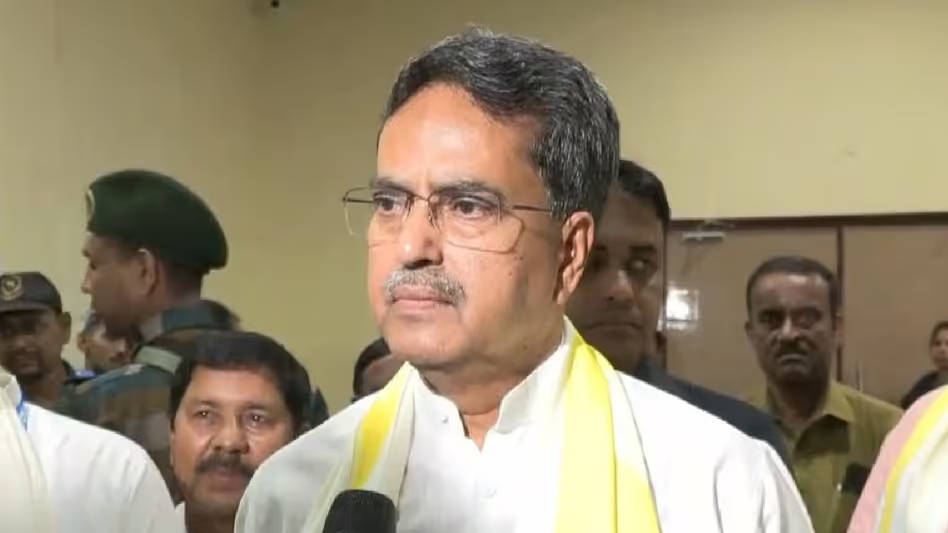
Tripura Chief Minister Manik Saha has reaffirmed his government’s commitment to the overall development of areas under the Tripura Tribal Areas Autonomous District Council (TTAADC). Speaking at the swearing-in ceremony of newly appointed Executive Members in Khumulwng on November 10, he described the tribal council as an integral part of Tripura.
He highlighted the importance of protecting indigenous communities’ constitutional rights under the Sixth Schedule. The Chief Minister also announced committees to examine land-related issues and improve education in tribal areas. Additionally, he called for regular dialogue between the state government and the council to resolve differences and accelerate development.
Read More: Pradyot Advises New TTAADC Executive Members
Key Facts About Manik Saha’s Announcement
- Location: Khumulwng, West Tripura.
- Date: November 10.
- Chief Minister: Manik Saha.
- Organisation: Tripura Tribal Areas Autonomous District Council (TTAADC).
- Constitutional provision: Sixth Schedule of the Indian Constitution.
- New initiatives: Committees on land-related issues and school consolidation.
- Education plan: Residential schools modelled on Eklavya Model Residential Schools.
- Other key figure: Tipra Motha founder Pradyot Kishore Manikya Debbarma.
Manik Saha Reaffirms Commitment to Tribal Development
Addressing the oath-taking ceremony of the newly inducted TTAADC Executive Members in Khumulwng, Chief Minister Manik Saha said his government remained committed to developing tribal council areas.
He described the TTAADC as an integral part of Tripura. He also stressed that cooperation between the state government and the autonomous council was essential for achieving development goals.
Saha explained that the Sixth Schedule of the Constitution protects the social, political and economic rights of indigenous communities.
These protections cover important aspects of tribal life, including land, tradition, culture and language.
However, he urged communities and their representatives to exercise these rights carefully. He also said demands raised by the tribal council should remain practical.
“The rights relating to land, tradition, culture and language accorded to indigenous people should be exercised carefully. There should not be any gaps in enjoying these rights. There may be demands from the tribal council, but they should be practical,” he said.
His remarks appeared to refer to the Tipra Motha Party’s demand for land rights.
Government Forms Committee to Examine Tribal Land Issues
The Chief Minister announced that the state government had constituted a committee to examine land-related issues in TTAADC areas.
Representatives from both the state government and the tribal council administration will serve on the committee.
The panel will examine concerns surrounding land and help address issues through discussions between the two administrations.
The announcement comes amid continuing discussions over indigenous land rights and the protection of tribal interests in Tripura.
Committee to Review Schools and Improve Education
Saha also announced another committee to examine the possibility of merging schools with low student enrolment into institutions with higher enrolment.
The proposal aims to improve educational quality and make better use of available resources in tribal council areas.
Emphasising the importance of education, the Chief Minister said, “Education is the most important factor for development.”
He further revealed that the government was planning to establish residential schools in tribal areas.
These institutions would follow the model of Eklavya Model Residential Schools (EMRS), which provide residential education to students from tribal communities.
The initiative aims to expand educational opportunities and improve access to quality schooling in remote areas.
CM Calls for Dialogue Between State Government and TTAADC
The Chief Minister acknowledged that disagreements could arise while implementing development projects.
However, he stressed that regular communication could help resolve problems before they became major obstacles.
“Mistakes happen when work is undertaken, and gaps emerge when dialogue stops. We must keep discussing issues to solve problems, as the tribal council is an integral part of the state. Let us work together to build a vibrant Tripura,” he said.
His remarks highlighted the need for coordination between the state government and the TTAADC administration.
Pradyot Kishore Debbarma Thanks Chief Minister
Tipra Motha founder Pradyot Kishore Manikya Debbarma also attended the swearing-in ceremony.
He thanked Chief Minister Manik Saha for attending the programme. Debbarma said he had initially been uncertain about attending the event but decided to participate to show respect for the Chief Minister.
He reiterated his decision to stay away from direct politics. However, he assured the gathering that he would continue supporting the people.
Debbarma also urged Saha to guide the newly formed TTAADC administration as it works to fulfil the development aspirations of tribal communities.
Earlier this year, Debbarma had guided the Tipra Motha Party to victories in the TTAADC general elections and village committee elections.
Questions and Answers
Q1. What did Tripura CM Manik Saha announce in Khumulwng?
He announced committees to examine land-related issues and improve education in TTAADC areas.
Q2. What constitutional provision protects tribal communities in Tripura?
The Sixth Schedule of the Indian Constitution provides safeguards for indigenous communities.
Q3. What is the proposed school initiative?
The government plans to establish residential schools modelled on Eklavya Model Residential Schools.
Q4. Who attended the TTAADC swearing-in ceremony?
Chief Minister Manik Saha and Tipra Motha founder Pradyot Kishore Manikya Debbarma attended the ceremony.
Q5. Why did the Chief Minister emphasise dialogue?
He said regular discussions between the state government and TTAADC could help resolve differences and support development.
Importance for Tripura and Northeast India
The TTAADC administers important tribal areas of Tripura and plays a key role in protecting indigenous interests.
Therefore, cooperation between the council and the state government remains important for land protection, education and economic development.
The proposed committees and residential school plans could help address long-standing concerns in tribal areas. Ultimately, regular dialogue and coordinated administration will remain essential to achieving inclusive development across Tripura and the wider Northeast.
Also Read: Manipur CM Announces ₹4 Lakh Fish Farming Subsidy