


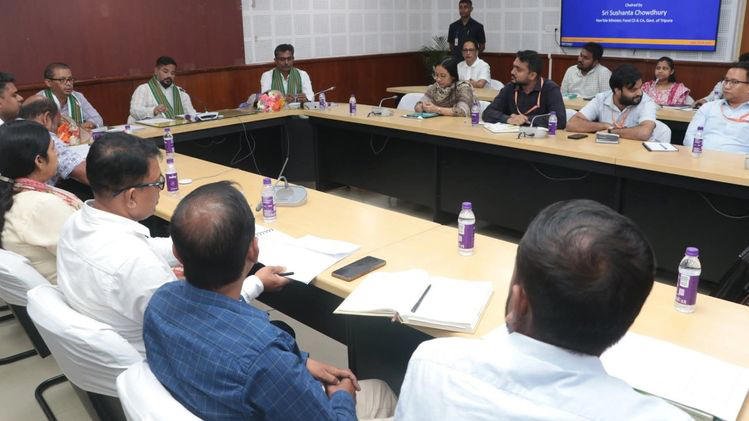
The government of Tripura continues to ensure a steady and reliable supply of essential commodities through the Public Distribution System (PDS). A senior minister recently reviewed the system and confirmed that authorities maintain smooth operations across the state. He stressed that the administration prioritizes efficiency, accessibility, and transparency at every level.
The minister clearly stated that uninterrupted access to essential goods remains a core responsibility of the government. Therefore, officials actively monitor supply chains and coordinate with local authorities. As a result, beneficiaries receive food grains and other necessities without disruption.
Read More: Assam Fuel Supply Stable Amid Global Concerns
Moreover, the government has strengthened coordination between departments to avoid delays. This approach has improved the overall functioning of the PDS. At the same time, officials continue to respond quickly to any emerging challenges. Consequently, the system remains stable even during periods of increased demand.
Minister emphasizes transparency and accountability
The minister strongly emphasized transparency as the foundation of the PDS. He instructed officials to maintain strict oversight and ensure fair distribution at all levels. Furthermore, he warned that authorities will take immediate action against any irregularities.
To improve accountability, the government actively tracks the movement of essential commodities. Officials now monitor supplies from warehouses to ration shops using digital tools. As a result, they can detect issues early and resolve them quickly.
In addition, authorities have introduced digitized records for beneficiaries. This system reduces errors and prevents duplication. Consequently, resources reach the right people without unnecessary delays.
The minister also encouraged officials to remain proactive. He asked them to conduct regular inspections and maintain accurate records. Therefore, the administration can ensure that every eligible household receives its rightful share.
Strong supply chain ensures uninterrupted distribution
A strong supply chain plays a crucial role in the success of the PDS. The government has taken several steps to maintain adequate stock levels across Tripura. Officials regularly assess storage facilities and replenish supplies when needed.
Additionally, authorities have improved transportation systems to ensure timely delivery. They have streamlined logistics and reduced delays in movement. As a result, ration shops receive goods on schedule.
The minister also highlighted the importance of proper storage practices. Officials now maintain warehouses more efficiently to protect the quality of food grains. Therefore, beneficiaries receive safe and usable commodities.
At the same time, the government has prepared contingency plans. These plans help officials respond effectively during emergencies such as natural disruptions or supply shortages. Consequently, the system remains resilient under pressure.
Beneficiaries report improved services
Beneficiaries across Tripura have noticed significant improvements in PDS services. Many people have reported timely distribution and better management at ration shops.
Furthermore, digital systems have made the process more transparent. Beneficiaries can now check their entitlements and track distribution schedules. As a result, they feel more informed and confident.
The government has also strengthened grievance redressal mechanisms. People can report issues through designated channels, and officials respond promptly. Therefore, complaints get resolved faster than before.
The minister acknowledged this positive feedback and encouraged continuous improvement. He stated that the administration values public input and uses it to refine the system.
Focus on inclusivity and welfare
The PDS remains a key pillar of welfare initiatives in Tripura. The government actively works to include all eligible beneficiaries in the system. Officials regularly update records to ensure accuracy.
Moreover, special attention goes to remote and underserved areas. Authorities have improved access to ration shops in these regions. As a result, more people can benefit from the scheme.
The government also conducts awareness campaigns to educate citizens. These campaigns inform people about their rights and entitlements. Consequently, beneficiaries can make better use of the system.
In addition, the minister stressed that inclusivity strengthens social security. When all eligible individuals receive support, communities become more stable and resilient.
Technology drives efficiency and transparency
Technology plays a vital role in modernizing the PDS. The government has introduced electronic point-of-sale machines at ration shops. These devices ensure accurate distribution and reduce chances of fraud.
Furthermore, officials use data analytics to monitor performance. They analyze trends and identify gaps in the system. As a result, they can make informed decisions and improve efficiency.
The integration of national databases has also strengthened the system. It helps eliminate duplicate entries and ensures proper targeting of beneficiaries. Therefore, resources get used more effectively.
The minister highlighted that digital governance remains a priority. By adopting modern tools, the government aims to enhance transparency and accountability.
Commitment to continuous improvement
The government of Tripura remains committed to improving the PDS. The minister stated that officials will continue to monitor performance and introduce necessary reforms.
He urged all stakeholders to work together and maintain high standards. Cooperation between departments, local authorities, and citizens plays a key role in success. Therefore, collective efforts will ensure long-term stability.
Additionally, the government plans to strengthen infrastructure and expand coverage. These steps will further enhance the reach and effectiveness of the system.
In conclusion, Tripura has built a strong and transparent PDS that serves its people efficiently. The focus on active monitoring, technology, and inclusivity has improved service delivery. As the system evolves, it will continue to support vulnerable communities and ensure food security across the state.
Read More: TTAADC Election Results Counting Begins Under Tight Security