


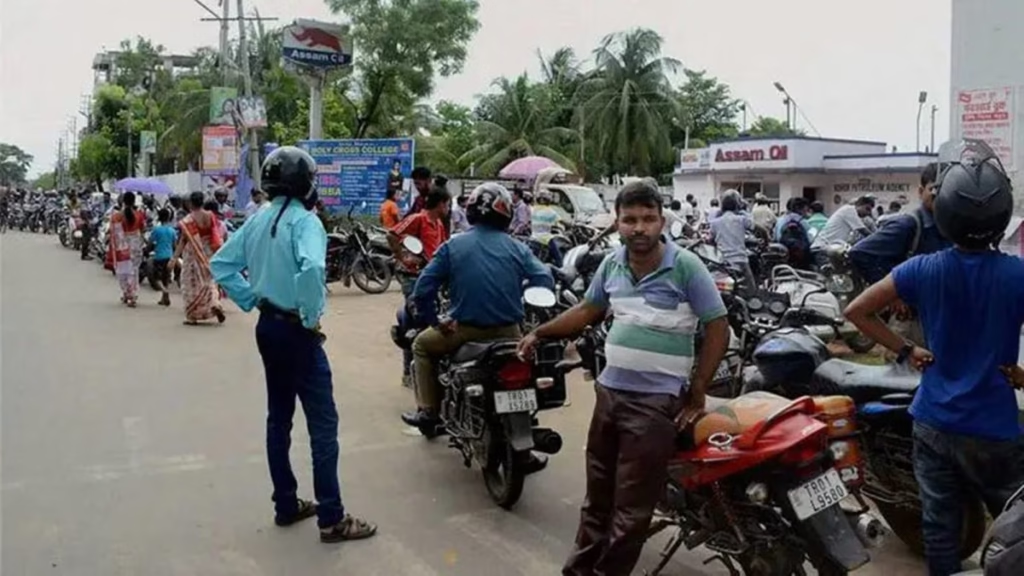
A sharp rise in fuel prices has intensified political debate in the state as Tripura Fuel Price Hike becomes a central issue of public concern and opposition criticism. Petrol prices reaching ₹102.29 per litre and diesel at ₹91.23 per litre have triggered widespread dissatisfaction among consumers, transport operators, and business groups. The price escalation has quickly turned into a political flashpoint, with opposition parties targeting the government over its handling of economic conditions and inflation management. The issue has further fueled discussions around taxation, cost of living, and policy responses to rising fuel costs.
Northeast animal husbandry review Aizawl meeting
Severe Weather Warning Northeast Flash Flood Alert
Background
Fuel pricing in India is influenced by multiple factors, including global crude oil rates, taxation structures, transportation costs, and currency fluctuations. Changes in fuel prices often have a direct impact on household budgets and commercial transportation expenses.
In Tripura, Tripura Fuel Price Hike reflects broader national and regional inflationary pressures that affect essential commodities and services. Fuel price changes typically influence not only transport costs but also the pricing of goods and services across markets, making it a key economic indicator for public concern.
Over time, fuel pricing has remained a politically sensitive issue due to its widespread impact on daily life and economic activity.
Current Update
The recent fuel price revision has led to immediate political reactions across the state. Opposition leaders have criticized the government, arguing that rising fuel costs reflect poor economic management and insufficient relief measures for citizens.
The Tripura Fuel Price Hike has become a focal point in public discourse, with concerns raised over its impact on transport fares, agricultural operations, and small businesses. Citizens have expressed concerns about increasing daily expenses, particularly in urban and semi-urban areas.
Government representatives are expected to provide clarification on pricing components and explore possible mitigation measures within existing policy frameworks.
Key Details
Fuel prices directly influence inflation trends, as transportation costs are embedded in the pricing of goods and services. A rise in petrol and diesel rates can lead to increased costs across multiple sectors, including agriculture, logistics, and retail.
The significance of the Tripura Fuel Price Hike lies in its immediate economic impact and its ability to influence public sentiment. Higher fuel costs often lead to demands for tax rationalization or subsidies to ease consumer burden.
Economists note that fuel pricing adjustments must balance fiscal requirements with consumer affordability, making it a complex policy area for governments.
Impact and Public Significance
The price increase is expected to affect daily commuters, transport operators, and small businesses the most. Higher diesel costs may also influence the pricing of essential goods, contributing to broader inflationary pressures.
From a governance perspective, Tripura Fuel Price Hike has become a key political issue, with opposition parties using it to question economic planning and policy decisions. Public dissatisfaction over rising fuel costs often translates into broader concerns about cost of living and economic stability.
The issue highlights the interconnected nature of fuel pricing and overall economic well-being.
What Happens Next
Authorities may review fuel taxation structures and assess whether any relief measures can be introduced to ease consumer burden. Discussions around price stabilization mechanisms or targeted support for transport sectors may also emerge.
Political debate is expected to continue as parties respond to public concerns and policy implications. Future price movements will depend on global oil trends and domestic fiscal decisions.
Conclusion
The fuel price increase has become a major economic and political issue in Tripura. As citizens face higher transportation and living costs, Tripura Fuel Price Hike continues to shape public discourse and opposition criticism. The coming period will determine whether policy adjustments or relief measures are introduced to address rising economic pressures.
FAQs
1. What are the current fuel prices in Tripura?
Petrol is priced at ₹102.29 and diesel at ₹91.23 per litre.
2. Why is the fuel price increase significant?
It affects transportation costs, goods pricing, and household expenses.
3. What does Tripura Fuel Price Hike refer to?
It refers to the recent rise in petrol and diesel prices in the state.
4. Why are opposition parties criticizing the government?
They are questioning economic management and inflation control measures.
5. How does fuel price affect daily life?
It increases transport costs and indirectly raises prices of essential goods.
6. What could happen next?
Authorities may consider policy reviews or relief measures depending on economic conditions.