


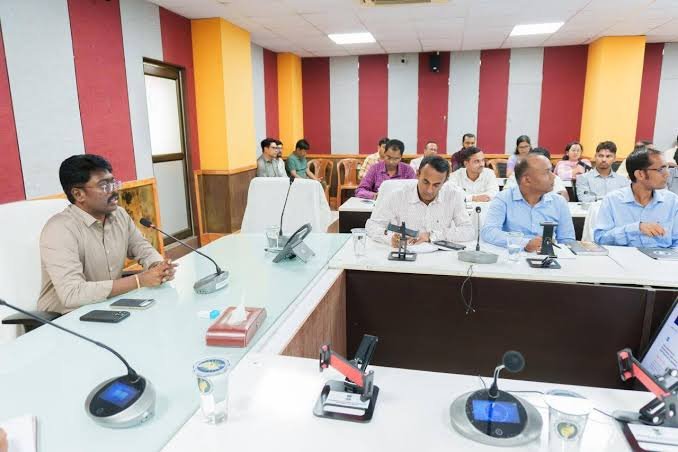
Tripura has strengthened its focus on digital administration by hosting a state-level consultation on technology-driven governance at IT Bhavan in Agartala. The technology in governance consultation reflects the state’s broader effort to improve public services through digital systems, institutional capacity and emerging technologies. Recent initiatives have also focused on artificial intelligence, e-governance platforms and technology-based citizen services.
The consultation comes as Tripura expands digital systems across departments and continues to integrate technology into administrative processes. Moreover, national e-governance agencies have encouraged states to exchange ideas and develop more citizen-focused digital services.
Agartala Puja Security Deployment Strengthened Ahead of Durga Puja
Technology in Governance Consultation Highlights Digital Administration
The technology in governance consultation takes place against the backdrop of Tripura’s expanding digital administration network. Government departments have increasingly adopted electronic platforms to reduce paperwork, improve coordination and make services more accessible.
Tripura has already introduced several systems covering finance, land administration, transport, healthcare, education and welfare delivery. According to the National Informatics Centre, platforms such as the Beneficiary Management System, eGRAS, RCMS, eDistrict and eCourts form part of the state’s connected digital governance ecosystem.
The state also operates supporting digital infrastructure through the NIC State Centre, the State Wide Area Network and other technology facilities. These systems provide the technical foundation for government offices to exchange information and deliver services electronically.
Furthermore, officials have highlighted the importance of extending digital governance beyond individual departments. A connected approach can allow different government systems to work together while reducing duplication and improving the flow of information.
The consultation therefore fits into a larger administrative shift. Rather than treating technology as a standalone IT function, Tripura is increasingly examining how digital tools can support everyday governance and public service delivery.
Tripura Expands Technology-Based Public Services
The state’s digital transformation has already moved into several areas of administration. Chief Secretary Jitendra Kumar Sinha said in May that Tripura had implemented digital systems across multiple departments, including e-Office, e-Cabinet and e-billing in the power sector. He also referred to e-hospital services as part of the state’s technology-enabled administration.
These platforms can help departments process files, maintain records and coordinate administrative decisions more efficiently. At the same time, digital systems can provide citizens with easier access to services when departments design them around actual user needs.
Tripura has also been working with national institutions on emerging technologies. In May 2025, the Directorate of Information Technology and the National e-Governance Division conducted a state-level workshop on artificial intelligence for good governance in Agartala. More than 150 government officers participated in the programme.
That workshop examined AI adoption, risk management, smarter public administration and AI infrastructure. The programme also stressed ethical and responsible use of emerging technologies.
Consequently, the latest technology in governance consultation can be viewed within a continuing effort to build technological capacity inside government. The focus extends beyond introducing software and includes training, institutional readiness and responsible technology use.
IT Bhavan Serves as a Digital Governance Hub
IT Bhavan in Indranagar, Agartala, has an important role in Tripura’s technology infrastructure. Government documents describe the facility as a state-of-the-art IT complex designed to support the Software Technology Park and other IT-related infrastructure.
The facility was planned to accommodate the Directorate of Information Technology and the Tripura State Computerisation Agency. It also includes infrastructure intended to support e-governance and related digital operations.
The building includes conference and video-conferencing facilities, while the broader IT infrastructure supports government technology requirements. Such facilities can provide an institutional setting for consultations, training programmes and coordination among departments.
Recent Directorate of Information Technology activities at IT Bhavan also show its continuing role in administrative technology work. In September 2026, officials reviewed performance on the Karmayogi platform at the Smart Training Centre there, focusing on capacity building and participation.
Similarly, the Directorate has used the facility for reviews of digital and e-governance projects. Officials have assessed project progress and issued directions aimed at strengthening digital governance and service delivery.
Therefore, the venue is more than an administrative office. It provides a central environment for Tripura’s technology-related planning, training and coordination.
Technology in Governance Consultation Focuses on Future Priorities
The latest consultation also comes at a time when Tripura is exploring newer areas of digital innovation. The government launched the Tripura Seva First Innovation Challenge 2026, Digi-SAPNE 3.0 and another youth-focused programme on October 1. The initiatives were presented as efforts to encourage innovation, expand digital access and support technology-based entrepreneurship.
The government has also examined specialised technology sectors. In May 2026, the Directorate of Information Technology conducted a stakeholder consultation on the draft Tripura AVGC-XR Policy, bringing together government officials, industry representatives, academics and entrepreneurs.
Cybersecurity has remained another important part of the state’s digital agenda. In June 2026, Tripura hosted a state-level consultation workshop on strengthening cybersecurity frameworks for state data. The programme brought together senior officials, technology representatives and experts.
These developments indicate that digital governance involves several interconnected priorities. Public-service platforms need reliable infrastructure, while expanding technology use also requires cybersecurity, staff training and appropriate safeguards.
At the same time, technology cannot by itself guarantee better governance. Departments must ensure that digital services remain accessible to people who may have limited connectivity, digital skills or access to devices. Human support therefore remains important alongside online systems.
Tripura’s Digital Governance Strategy Moves Ahead
The technology in governance consultation adds another layer to Tripura’s continuing digital transformation. The state has already established platforms and infrastructure across major administrative sectors, while officials are now examining newer technologies and approaches.
The emphasis on AI, cybersecurity, digital services and capacity building shows how governance technology is becoming a broader institutional priority. Moreover, collaboration with national agencies can help Tripura learn from wider digital governance practices and adapt them to local requirements.
For citizens, the main measure of progress will remain the quality and accessibility of government services. Faster processing, transparent systems and easier access can make digital governance meaningful when they translate into practical improvements.
However, the expansion of digital systems also requires responsible implementation. Data protection, cybersecurity, staff training and support for citizens who face digital barriers will remain important as more government functions move online.
Conclusion
The technology in governance consultation reflects Tripura’s continuing push toward technology-enabled public administration. IT Bhavan remains an important institutional centre for this work, supporting digital projects, training and coordination.
Tripura has already developed digital platforms across several sectors and is now exploring AI, cybersecurity and innovation-driven governance. Therefore, the next phase will depend not only on adopting new technology but also on ensuring that these systems remain secure, inclusive and useful for citizens.
FAQs
What was the technology in governance consultation about?
The technology in governance consultation focused on the role of technology in improving administration, digital services and public service delivery in Tripura.
Where was the consultation held?
The programme was held at IT Bhavan in Indranagar, Agartala, a major centre for Tripura’s IT and e-governance activities.
What digital systems does Tripura already use?
Tripura uses platforms and systems covering areas such as finance, land administration, transport, healthcare, education and welfare. These include eGRAS, RCMS, eDistrict and the Beneficiary Management System.
Has Tripura explored artificial intelligence for governance?
Yes. The Directorate of Information Technology and the National e-Governance Division held an AI-focused governance workshop in 2025 that examined AI adoption, public administration and responsible technology use.
Why is cybersecurity important for digital governance?
As government services become increasingly digital, cybersecurity helps protect government systems and data while maintaining reliable public services. Tripura held a state-level workshop on strengthening cybersecurity frameworks for state data in June 2026.