


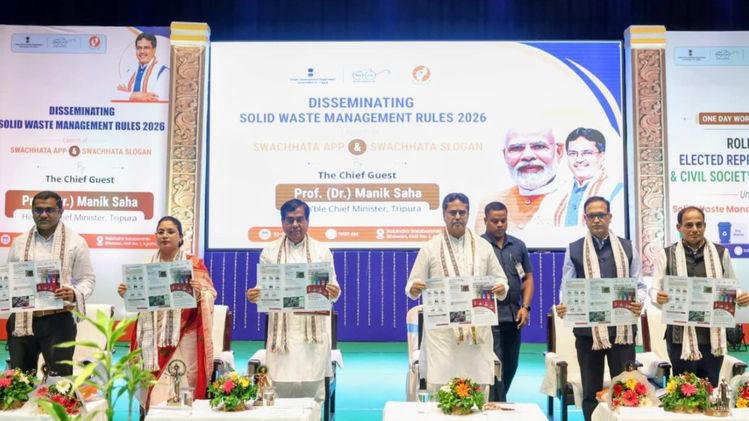
The Tripura government has launched the Swachhata App as part of its efforts to strengthen waste management systems and improve urban sanitation across the state. The initiative aims to encourage citizen participation, improve grievance redressal mechanisms, and support the state’s broader mission of achieving cleaner and more sustainable urban environments.
The launch marks an important milestone in Tripura’s sanitation and cleanliness campaign. State officials highlighted the role of technology in enhancing public service delivery and ensuring greater accountability in waste management operations.
Alongside the launch, the government emphasized the importance of collective action in addressing sanitation challenges. Authorities urged citizens, local bodies, community organizations, and institutions to work together to build a cleaner and healthier Tripura.
Officials noted that sustainable waste management requires active participation from every section of society. They stressed that government initiatives alone cannot achieve long-term success without public cooperation and awareness.
Swachhata App to Improve Citizen Engagement
The newly launched Swachhata App aims to create a direct communication channel between citizens and urban local bodies. Through the platform, residents can report sanitation-related issues, including garbage accumulation, waste disposal concerns, overflowing bins, and cleanliness challenges in public areas.
The app allows users to submit complaints quickly and track the status of their grievances in real time. This feature promotes transparency and ensures that authorities can respond more efficiently to public concerns.
Officials believe the platform will help improve service delivery while encouraging greater civic participation. Citizens can actively contribute to maintaining cleanliness in their neighborhoods by reporting issues as soon as they arise.
The app also supports the government’s efforts to strengthen accountability within municipal systems. By monitoring complaints and response times, authorities can identify operational gaps and improve sanitation services.
The digital platform represents a shift towards technology-driven governance, where citizens become active partners in urban development and environmental protection.
Strengthening Sustainable Waste Management Practices
Waste management has emerged as a major challenge for rapidly growing urban areas across India. Increasing population density, changing consumption patterns, and rising waste generation require innovative and sustainable solutions.
Tripura’s government views the Swachhata App as an important tool in addressing these challenges. The platform supports efforts to improve waste collection, transportation, segregation, and disposal practices.
Officials stressed that sustainable waste management extends beyond simply collecting garbage. It requires a comprehensive approach that includes waste reduction, recycling, resource recovery, and public awareness.
The state has already undertaken several initiatives to strengthen sanitation infrastructure and improve waste management systems. The introduction of the app complements these efforts by creating a stronger connection between citizens and service providers.
Authorities hope that improved reporting and monitoring mechanisms will lead to cleaner streets, better waste collection services, and more efficient municipal operations.
Promoting Public Participation in Cleanliness Efforts
A key message during the launch focused on the importance of public participation. Officials emphasized that achieving lasting cleanliness requires behavioral change and community involvement.
Citizens play a crucial role in maintaining sanitation standards. Proper waste segregation, responsible disposal practices, and active participation in cleanliness campaigns can significantly improve urban environments.
The government encouraged residents to use the app responsibly and report sanitation concerns whenever necessary. Officials also urged communities to adopt environmentally friendly practices that reduce waste generation and support recycling efforts.
Schools, colleges, resident welfare associations, and civil society organizations can contribute by spreading awareness about sanitation and environmental conservation. Community-led initiatives often create stronger and more sustainable outcomes than isolated government interventions.
Authorities believe that widespread public participation will strengthen the effectiveness of sanitation programs across the state.
Supporting Swachh Bharat Mission Objectives
The launch of the Swachhata App aligns with the broader objectives of the Swachh Bharat Mission, which seeks to improve sanitation, cleanliness, and waste management across the country.
Over the years, the mission has encouraged states and urban local bodies to adopt innovative approaches that enhance public participation and improve service delivery. Digital platforms have emerged as valuable tools in achieving these goals.
Tripura’s latest initiative reflects the state’s commitment to supporting national cleanliness campaigns while addressing local challenges. The app provides a practical mechanism for citizens to engage with municipal authorities and contribute to urban improvement efforts.
Officials noted that technology can significantly enhance the efficiency of sanitation systems by enabling faster communication, better monitoring, and improved resource allocation.
The initiative demonstrates how digital solutions can strengthen governance and support sustainable urban development.
Environmental Benefits of Effective Waste Management
Proper waste management delivers significant environmental benefits. Poorly managed waste can pollute land, water bodies, and air while creating serious public health concerns.
By improving waste collection and disposal systems, authorities can reduce environmental degradation and promote healthier living conditions. Effective sanitation practices also help protect ecosystems and preserve natural resources.
Tripura’s focus on sustainable waste management aligns with broader environmental goals, including climate resilience and ecological conservation. Waste reduction and recycling initiatives can contribute to lower greenhouse gas emissions while promoting resource efficiency.
Officials emphasized that environmental protection requires long-term commitment from governments, businesses, and citizens alike. Sustainable waste management practices can create cleaner communities while supporting broader sustainability objectives.
The Swachhata App can serve as an important tool in monitoring sanitation challenges and ensuring timely action to address environmental concerns.
Technology as a Driver of Urban Transformation
Cities across India increasingly rely on technology to improve public services and enhance governance. Digital platforms provide opportunities to strengthen citizen engagement and improve operational efficiency.
The Swachhata App reflects this growing trend. It combines technology with community participation to address one of the most pressing urban challenges—waste management.
By leveraging digital tools, authorities can gather valuable data on sanitation issues, identify problem areas, and allocate resources more effectively. Data-driven decision-making can lead to better outcomes and improved public satisfaction.
The platform also encourages transparency by allowing citizens to track the progress of their complaints and monitor service delivery.
As Tripura continues to modernize its urban infrastructure, technology-driven initiatives are expected to play an increasingly important role in governance and development.
Building a Cleaner and More Sustainable Future
The launch of the Swachhata App represents a significant step in Tripura’s efforts to strengthen sanitation systems and promote sustainable waste management. The initiative combines technology, public participation, and administrative accountability to address urban cleanliness challenges more effectively.
Officials believe the platform will improve citizen engagement, enhance service delivery, and support long-term environmental goals. At the same time, they have stressed that sustainable waste management requires collective action from all stakeholders.
The success of the initiative will depend on active participation from citizens, local bodies, educational institutions, and community organizations. Together, they can create cleaner neighborhoods, healthier communities, and more sustainable urban environments.
With the introduction of the Swachhata App, Tripura has taken another important step towards building a cleaner, greener, and more environmentally responsible future for its residents.
Read More: Meghalaya Announces Film City, Film Institute and Music Institute to Strengthen Creative Economy