


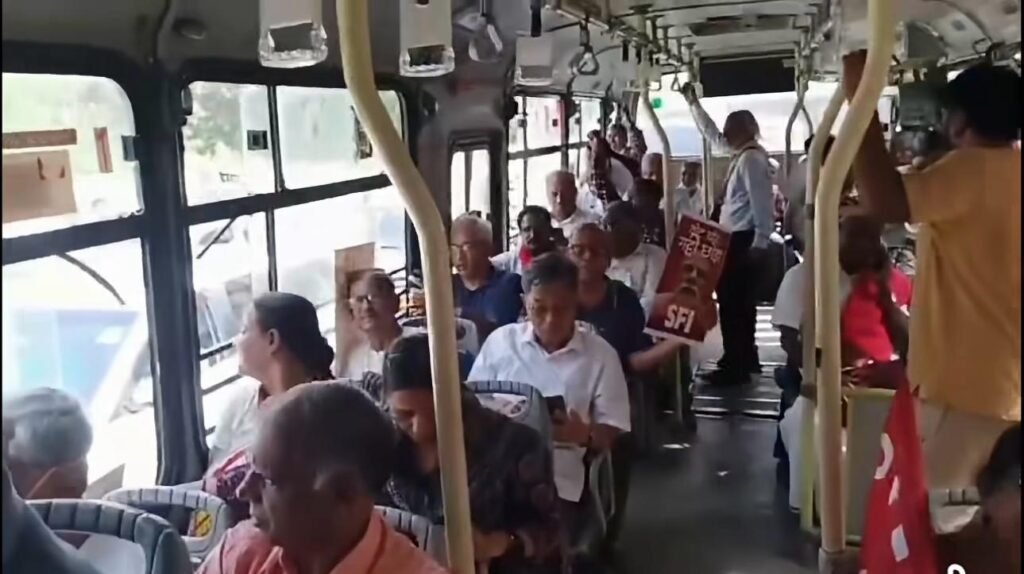
Tripura Leader of Opposition and CPI(M) Politburo member Jitendra Chaudhury was arrested by Delhi Police on Saturday while heading towards Jantar Mantar to participate in a protest over alleged irregularities in electoral rolls. Former Tripura Chief Minister Manik Sarkar accompanied him.
Chaudhury accused the Narendra Modi-led government of attempting to suppress the demonstration and undermine democratic rights. He claimed that restrictions had been imposed in Delhi to prevent protesters from reaching the venue. The arrest has intensified the political confrontation surrounding the planned protest and concerns over the integrity of the electoral process.
Read More: Tinku Roy Highlights PM Modi’s Women’s Welfare Vision
Key Facts
- Leader involved: Jitendra Chaudhury, Tripura Leader of Opposition and CPI(M) Politburo member
- Location: New Delhi, near the route to Jantar Mantar
- Accompanied by: Former Tripura Chief Minister Manik Sarkar
- Reason for protest: Alleged irregularities in electoral rolls
- Police action: Delhi Police arrested Chaudhury while he was heading towards the protest venue
- Main issue: Electoral integrity, constitutional rights and freedom to protest
Jitendra Chaudhury Accuses Centre of Suppressing Protest
Speaking shortly before his arrest, Chaudhury alleged that the government was attempting to prevent citizens from raising concerns about electoral rolls. He argued that such alleged irregularities could weaken public confidence in the country’s electoral system.
Chaudhury also claimed that preparations to stop the protest reflected the government’s concern about public opposition. He accused Prime Minister Narendra Modi and Union Home Minister Amit Shah of attempting to protect Chief Election Commissioner Gyanesh Kumar amid allegations concerning electoral rolls.
“The process of the downfall of the Modi government has begun today,” Chaudhury said while criticising the Centre.
These remarks reflect the CPI(M) leader’s political position. The allegations concerning electoral rolls and the government’s intentions have not been independently established in the information provided.
Chaudhury Questions Restrictions in Delhi
The Tripura opposition leader also questioned reports of restrictions or disruptions affecting public transport and other services in Delhi before the demonstration.
He alleged that metro services, trains, buses, hotels, restaurants and internet services had been restricted or disrupted since the previous day. According to Chaudhury, these measures made it difficult for protesters to reach the demonstration venue.
He said the students and young people who called for the protest had stated that they intended to follow the law. Therefore, he questioned why restrictions were reportedly being imposed ahead of the gathering.
However, the claims about disruptions to transport, hospitality and internet services require independent verification.
Protest Aimed at Protecting Electoral Rights
Chaudhury said the demonstration sought to defend citizens’ constitutional rights and protect the integrity of India’s electoral process. He also claimed that students, young people and ordinary citizens were joining the movement against what he described as an attempt to “steal democracy”.
The CPI(M) leader alleged that preventing the demonstration would go against democratic principles and the interests of citizens. He maintained that people should be able to express their concerns about electoral procedures through peaceful protest.
Reacting to his arrest, Chaudhury said he did not know where the police would take him.
“The police are arresting us, and we do not know where they will take us,” he said.
The available account does not specify the legal grounds for his arrest or whether police issued an official statement explaining the action.
Manik Sarkar’s Presence Draws Attention
Former Tripura Chief Minister Manik Sarkar’s presence alongside Chaudhury brought additional attention to the protest. Both leaders were associated with the planned demonstration in Delhi, which focused on alleged irregularities in electoral rolls.
The incident has highlighted the political dispute between opposition leaders and the Centre over electoral transparency, democratic participation and the right to protest.
Why the Protest Matters for Tripura and Northeast India
The arrest has drawn attention to the role of political leaders from Tripura in national debates over electoral transparency and constitutional rights. As a state in Northeast India, Tripura remains connected to broader discussions about democratic participation, political accountability and the functioning of electoral institutions.
The developments in Delhi could influence political debate in Tripura, particularly among opposition parties and citizens concerned about electoral processes.
Questions and Answers
What happened to Jitendra Chaudhury in Delhi?
Delhi Police arrested the Tripura Leader of Opposition while he was heading towards Jantar Mantar to attend a protest over alleged irregularities in electoral rolls.
Why was Chaudhury going to Jantar Mantar?
He intended to participate in a demonstration focused on alleged electoral-roll irregularities and the protection of democratic rights.
Who accompanied Chaudhury?
Former Tripura Chief Minister and CPI(M) leader Manik Sarkar accompanied him.
What allegations did Chaudhury make?
He accused the Centre of attempting to suppress the protest and alleged that restrictions on transport and other services were preventing demonstrators from reaching the venue. These claims require independent verification.
What is the main issue behind the protest?
The demonstration centres on allegations concerning electoral rolls, electoral transparency and citizens’ constitutional rights.