


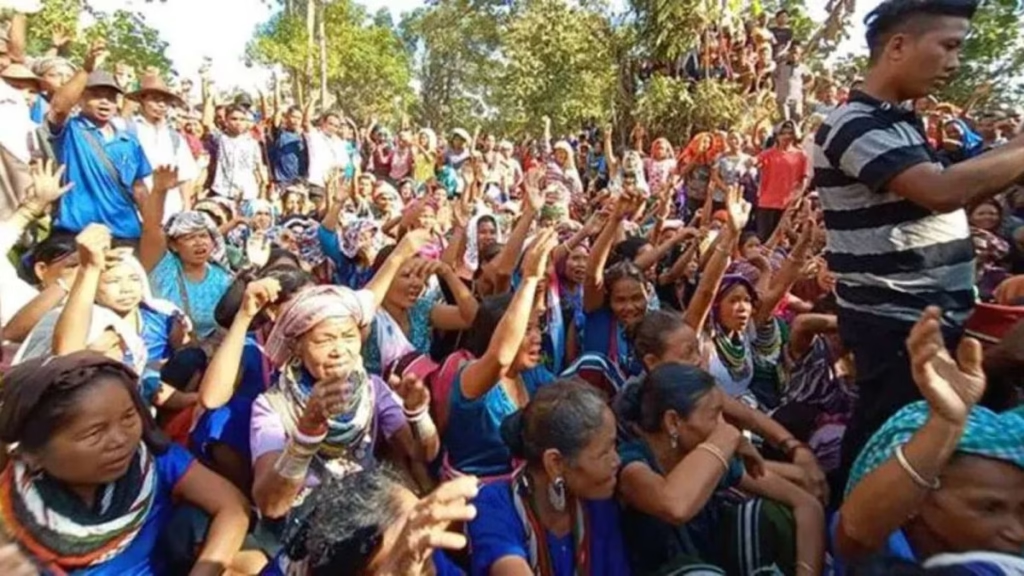
The expansion of welfare delivery under the PM JANMAN Tribal Housing initiative has gained attention in Tripura after the state government highlighted successful housing support extended to vulnerable tribal communities, particularly the Reang population. The announcement underscores ongoing efforts to improve living conditions in remote and marginalized tribal regions through targeted central welfare schemes. Officials stated that the program is contributing to improved housing access, basic infrastructure development, and long-term socio-economic stability for eligible beneficiaries.
Tripura Good Governance Week Drives Conclude
Tripura Left Front Vacant Drive Intensifies Pressure
Background
The PM-JANMAN initiative is designed to support Particularly Vulnerable Tribal Groups by addressing long-standing gaps in housing, infrastructure, and essential services. In Tripura, tribal welfare programs have historically played a significant role in improving access to basic amenities in remote and forested regions.
Within this framework, PM JANMAN Tribal Housing has become a key component of the state’s welfare delivery model. In particular, the focus on the Reang community reflects targeted efforts to prioritize groups facing geographic isolation and limited infrastructure access.
Moreover, government departments have been working to ensure that scheme implementation reaches eligible households efficiently through coordinated field-level execution.
Current Update
The state government has reported steady progress in delivering housing benefits under the scheme, with a strong emphasis on reaching vulnerable tribal populations. Officials noted that they have streamlined construction and allocation processes to improve delivery timelines and ensure broader coverage.
As a result, the PM JANMAN Tribal Housing initiative has been integrated with local administrative systems to strengthen beneficiary identification and monitoring. In addition, authorities emphasized that coordination between state agencies and central support mechanisms has played a crucial role in meeting implementation targets.
Furthermore, field-level verification and progress tracking are actively being used to ensure transparency and accountability in distribution.
Key Details
The scheme focuses on providing safe and durable housing for tribal households that lack adequate shelter. In Tripura, implementation efforts include identifying eligible families, supporting construction processes, and improving infrastructure connectivity in remote regions.
Importantly, the significance of PM JANMAN Tribal Housing lies in its targeted approach toward addressing long-standing developmental gaps in tribal communities. The Reang population, in particular, has been prioritized due to its socio-economic vulnerability and geographic isolation.
Officials also highlighted that improved housing access contributes to better health outcomes, stronger education access, and an overall improvement in quality of life.
Impact and Public Significance
The housing initiative is expected to significantly improve tribal welfare by raising living standards and reducing housing insecurity. In addition, better infrastructure in remote areas may expand access to government services and economic opportunities.
From a broader perspective, PM JANMAN Tribal Housing reflects a strong policy focus on inclusive development and targeted welfare delivery. As a result, the scheme strengthens coordination between central welfare programs and state-level implementation mechanisms.
Public response has largely focused on the long-term benefits of improved housing conditions, especially in underserved tribal regions.
What Happens Next
The government is expected to further expand coverage under the scheme while closely monitoring progress through regular administrative reviews. Meanwhile, additional implementation phases may include identifying remaining eligible households and completing ongoing housing projects.
Authorities may also strengthen monitoring systems to ensure timely completion and adherence to quality standards. Ultimately, future progress will depend on implementation speed and field-level coordination between agencies.
Conclusion
The progress under the PM-JANMAN initiative highlights continued efforts to improve tribal welfare in Tripura. With a strong focus on vulnerable communities such as the Reang population, PM JANMAN Tribal Housing represents a significant step toward improving living conditions and reducing developmental disparities. Going forward, the program’s success will depend on its ability to deliver sustained improvements in housing and overall quality of life.
FAQs
1. What is the PM-JANMAN scheme?
It is a welfare initiative aimed at improving housing and basic services for Particularly Vulnerable Tribal Groups.
2. Who benefits in Tripura?
Vulnerable tribal communities, especially the Reang population, are primary beneficiaries.
3. What does PM JANMAN Tribal Housing refer to?
It refers to housing support provided under the PM-JANMAN initiative for tribal households.
4. What is the main goal of the scheme?
To improve housing conditions and living standards in underserved tribal regions.
5. How is the scheme implemented?
Through coordinated efforts between state departments and central welfare frameworks.
6. What is the expected impact?
Improved housing, better infrastructure access, and enhanced quality of life for beneficiaries.