


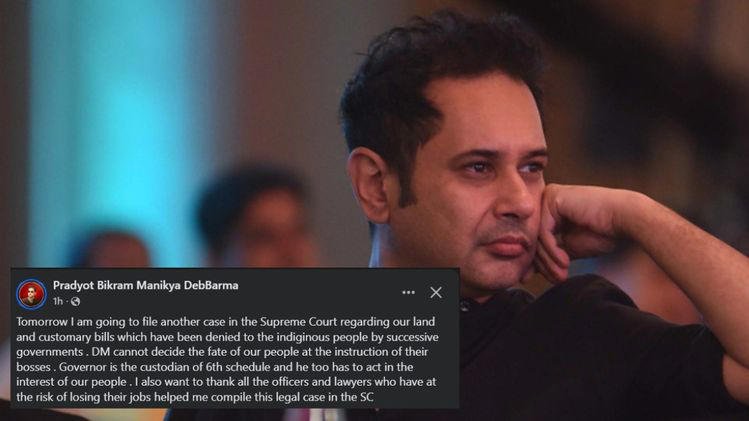
Pradyot Bikram Manikya Debbarma has declared his plan to approach the Supreme Court over the ongoing dispute surrounding indigenous land rights in Tripura. He aims to secure recognition for the state’s customary laws and safeguard the land ownership rights of the indigenous population, who have long struggled against administrative neglect and constitutional ambiguity.
The development has stirred political circles and reignited conversations about the rightful authority of Tripura’s indigenous bodies, particularly the Tripura Tribal Areas Autonomous District Council (TTAADC).
Read More: CM Manik Saha seeks J P Nadda’s support for Tripura medical college
Background on Indigenous Land and Customary Rights
Tripura has a complex land ownership history deeply tied to its indigenous communities. For decades, tribal populations have sought recognition for their traditional practices and land tenure systems under the Sixth Schedule of the Indian Constitution.
Despite multiple resolutions passed by the TTAADC to protect tribal lands and customary laws, several of these remain unapproved by the state government and the Governor. Indigenous leaders, including Pradyot, argue that this delay undermines the self-governing powers guaranteed to them under constitutional provisions.
Pradyot has been a vocal advocate of empowering the TTAADC to handle issues related to land management, customary practices, and cultural rights. He claims that District Magistrates (DMs) often exercise control over matters meant for tribal administration, violating the essence of autonomy provided under the Sixth Schedule.
Pradyot’s Supreme Court Petition
Pradyot announced his decision to file a petition before the Supreme Court challenging the non-implementation of customary laws and the delay in approving key legislative bills concerning indigenous people. He stated that the issue is not just legal but deeply moral, as the denial of customary authority deprives indigenous communities of their fundamental rights.
He emphasized that tribal land and customary matters should not fall under bureaucratic discretion. According to him, indigenous councils and traditional authorities possess the knowledge and legitimacy to govern these issues.
The petition aims to compel constitutional recognition of customary bills and demand accountability from the state and central authorities for their prolonged inaction.
Significance for Indigenous Communities
The case carries immense significance for the indigenous groups of Tripura. If the Supreme Court acknowledges the petition, it could reshape the legal framework governing tribal autonomy and land ownership.
Several outcomes are possible:
- Recognition of customary land tenure: It could legally protect tribal land from transfers or encroachments without consent.
- Strengthened role of TTAADC: The ruling could enhance the council’s power to make binding decisions on cultural and land-related matters.
- Legal enforcement of pending bills: The Supreme Court might order the government to implement the bills already passed by the council.
- Broader tribal empowerment: Success in this case may encourage indigenous communities across the Northeast to seek similar constitutional remedies.
However, the process is expected to face legal and political challenges. The state may contest the petition, arguing that certain lands are governed by general legislation, not tribal jurisdiction.
Broader Legal and Political Implications
Pradyot’s legal move on indigenous land rights in Tripura could have a ripple effect across other northeastern states governed under the Sixth Schedule. A favorable verdict would strengthen indigenous self-rule, reinforcing the principle that local customs and traditional laws should prevail within tribal areas.
Politically, this development may boost Pradyot’s image as a defender of indigenous identity. It could also push mainstream parties to take clearer positions on land and autonomy-related issues before the next elections.
If the Supreme Court delivers a strong verdict, it could set a precedent forcing state governments to respect and implement tribal autonomy mechanisms more faithfully.
Challenges in Implementation
Even if Pradyot’s petition succeeds, implementing the ruling on the ground will be complex. Administrative hurdles, lack of coordination between tribal and state authorities, and local resistance could delay enforcement.
Furthermore, the demarcation of land under customary control might trigger disputes, especially in mixed-population areas. Effective monitoring and cooperation between the TTAADC, local administration, and community organizations will be crucial to ensure that the legal victory translates into practical change.
Conclusion
Pradyot’s decision to approach the Supreme Court marks a crucial moment in the fight for indigenous land rights in Tripura. For years, indigenous people have demanded recognition of their customary laws and protection of their ancestral land. This legal move represents a step toward reclaiming those rights and restoring justice within the constitutional framework.
The upcoming court proceedings are likely to shape Tripura’s political and social landscape. A favorable outcome could redefine indigenous governance, while an adverse ruling might reignite calls for greater autonomy. Either way, this case will play a defining role in determining how India’s democracy addresses the complex balance between state authority and indigenous self-rule.
Read More: Special Committee to Develop Zubeen Garg’s Samadhi Khetra