


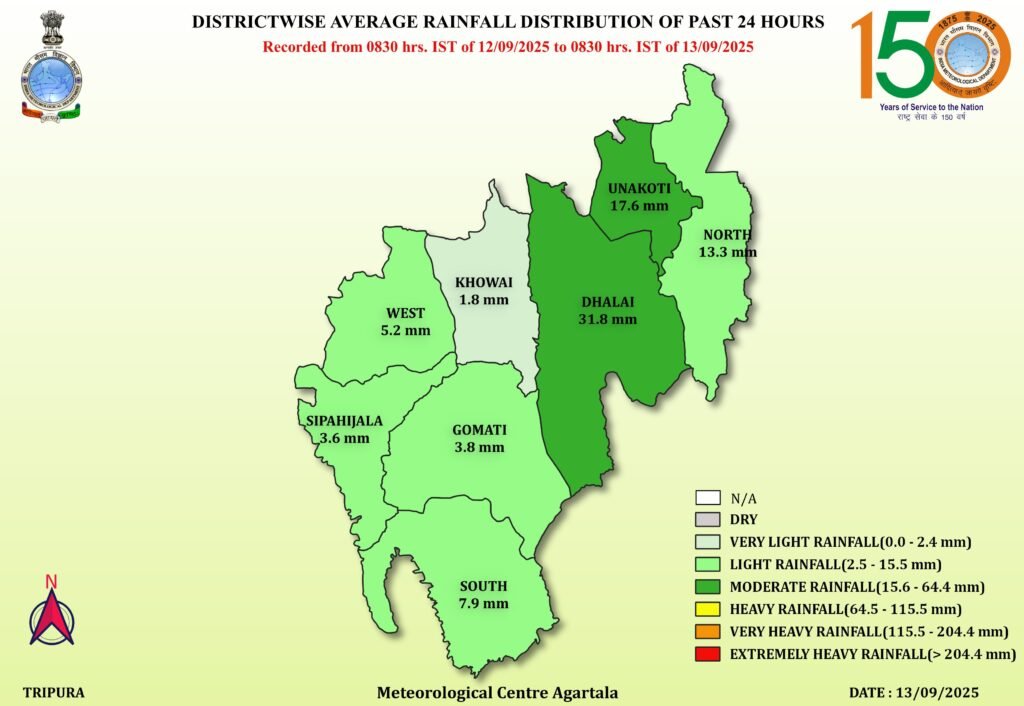
The Meteorological Department has released the district-wise average rainfall distribution report for Tripura over the past 24 hours, dated September 13, 2025. The data highlights varying rainfall patterns across the state’s eight districts, reflecting localized weather activity.
According to the official report, moderate to heavy showers were recorded in certain regions, while other districts experienced only light rainfall. This uneven distribution is typical for the state during the monsoon season, influenced by regional topography and climatic variations.
In the western belt of Tripura, which includes Agartala and nearby areas, light to moderate rainfall was observed. These showers have brought some relief from the humid conditions that prevailed earlier in the week. In contrast, districts in north and south Tripura received heavier spells, adding significant amounts to the seasonal rainfall tally.
Dhalai district reported one of the highest averages, indicating consistent showers across several blocks. The rainfall here is expected to benefit agricultural activities, particularly paddy cultivation, which is in a crucial growth stage. Similarly, Gomati and South Tripura districts registered above-average rainfall compared to the state mean.
Meanwhile, districts like Khowai and Unakoti recorded comparatively lower figures, reflecting scattered rainfall activity. Experts suggest that while this does not immediately impact crop health, farmers in these areas may need to monitor water availability more closely in the coming weeks.
The overall distribution pattern, as shown in the rainfall maps, provides a clear picture of the localized nature of precipitation across Tripura. Officials emphasized that continuous monitoring will help authorities in agricultural planning, flood management, and ensuring timely advisories for farmers.
With the monsoon season progressing steadily, the state has so far received a balanced spread of rainfall, though certain pockets remain vulnerable to both excess and deficit conditions. Meteorological experts noted that such district-wise analysis is vital for effective water resource management and disaster preparedness.