


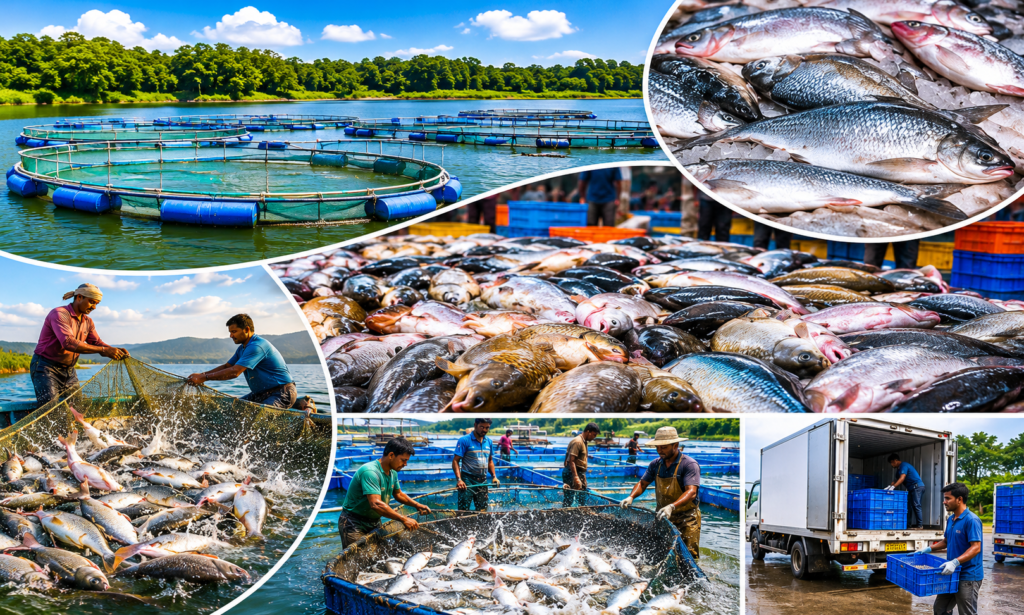
Tripura has recorded significant growth in fish production under the Pradhan Mantri Matsya Sampada Yojana (PMMSY), with the Fisheries Department investing over ₹8,139.77 lakh during the 2024-25 financial year. Nearly 18,912 beneficiaries have received support through fisheries development projects, including fish ponds, hatcheries, cage culture units, and biofloc farming.
Despite these achievements, fish markets across the state continue to rely heavily on supplies from Andhra Pradesh, West Bengal, and Assam. Experts believe that while local production has increased, it remains insufficient to fully meet consumer demand. They have called for greater investment, stronger implementation, and enhanced support for fish farmers to help Tripura achieve self-sufficiency.
Read More: Tripura CM Promotes Cricket, Youth Development
Key Facts
- State: Tripura
- Scheme: Pradhan Mantri Matsya Sampada Yojana (PMMSY)
- Investment (2024-25): ₹8,139.77 lakh
- Beneficiaries: 18,912 fish farmers and stakeholders
- Fish Fingerlings Released: Over 24.54 lakh in Dumboor Reservoir
- Cage Culture Units Supported: 1,464
- Major Activities: Hatcheries, fish ponds, biofloc farming, ornamental fish culture
- Challenge: Continued dependence on imported fish from other states
Fisheries Sector Records Strong Growth
The fisheries sector has emerged as one of Tripura’s fastest-growing rural development sectors. According to the latest Economic Review of Tripura, government initiatives under PMMSY have created employment opportunities and improved livelihoods for thousands of fish farmers.
During the 2024-25 financial year, the Fisheries Department invested more than ₹8,139.77 lakh in fisheries development projects. As a result, nearly 19,000 beneficiaries received assistance through various schemes and infrastructure initiatives.
PMMSY Expands Aquaculture Infrastructure
Under PMMSY, authorities supported the establishment of freshwater hatcheries, construction of fish ponds, and expansion of integrated fish farming systems.
Additionally, the government promoted modern aquaculture practices such as biofloc fish culture, ornamental fish farming, and cage culture. These interventions have strengthened the state’s fisheries ecosystem and increased production capacity.
Officials also highlighted the stocking of over 24.54 lakh fish fingerlings in the Dumboor Reservoir and support for 1,464 cage culture units as major achievements.
Imported Fish Still Dominates Markets
Despite the reported rise in production, fish markets in Agartala and other parts of Tripura continue to receive large quantities of fish from neighboring states.
Traders and consumers report that fish imported from Andhra Pradesh, West Bengal, and Assam remains widely available throughout the year. Consequently, questions have emerged about whether local production is currently sufficient to meet growing demand.
Experts Call for Greater Support
Experts acknowledge that PMMSY has improved infrastructure and created new opportunities for fish farmers. However, they argue that production figures alone do not provide a complete picture of the sector’s performance.
Kiran Bhowmik, a PhD scholar in Agricultural Economics at Tripura University, stated that the scheme has encouraged modern aquaculture practices and strengthened fisheries infrastructure. However, he emphasized that additional financial support from the Central Government is necessary to unlock the sector’s full potential.
Need for Sustainable Growth
Researchers and stakeholders believe Tripura has significant untapped potential for aquaculture expansion, particularly in rural and tribal areas.
Furthermore, they recommend increased investment in ponds, hatcheries, feed production units, marketing infrastructure, and technical support services. Stronger monitoring, regular impact assessments, awareness campaigns, and entrepreneurship training can also improve the long-term success of fisheries projects.
Experts stress that the ultimate goal should be to reduce dependence on imported fish while ensuring sustainable income for local fish farmers.
Importance of the Location
Tripura is one of the key agricultural and fisheries-producing states in Northeast India. With abundant water resources and favorable climatic conditions, the state has significant potential to become self-sufficient in fish production and emerge as a major aquaculture hub in the region.
Question & Answer
What is the main issue highlighted in the report?
Despite record growth in fish production, Tripura continues to rely heavily on fish imported from other states.
How much did Tripura invest under PMMSY in 2024-25?
The Fisheries Department invested more than ₹8,139.77 lakh under the scheme.
How many people benefited from PMMSY?
A total of 18,912 beneficiaries received support through fisheries-related projects.
Which states supply fish to Tripura?
Tripura imports significant quantities of fish from Andhra Pradesh, West Bengal, and Assam.
What are experts recommending?
Experts recommend higher central funding, stronger monitoring, improved infrastructure, and wider outreach among fish farmers.
Why is fish self-sufficiency important?
Greater self-sufficiency can reduce dependence on external supplies, strengthen local livelihoods, and improve the state’s fisheries economy.
Also Read: Sikkim Minister Reviews Eco City Centre Project in Gyalshing