


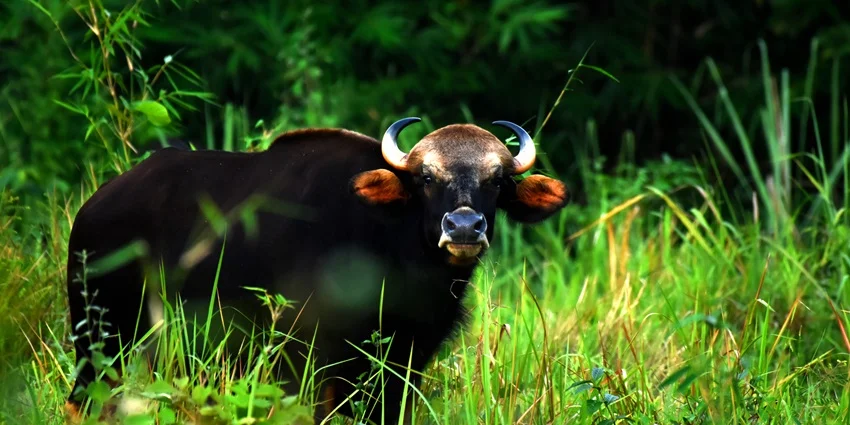
The Trishna Wildlife Sanctuary in South Tripura’s Belonia subdivision is witnessing increased sightings of the endangered Indian Gaur, also known as the bison, near nearby villages and agricultural fields. Forest officials said the seasonal movement is mainly caused by food and water shortages inside the forest during the summer and early monsoon months. The sanctuary, known for its dedicated wildlife conservation efforts, remains one of Tripura’s top eco-tourism destinations. Authorities have intensified surveillance and are working to improve water and food availability within the sanctuary to reduce animal movement toward human settlements. Plans are also underway to enhance safari infrastructure and tourist observation facilities.
Read More: Mamata Banerjee Appears in Calcutta HC to Argue Bengal Post-Poll Violence Case – Borok Times
Key Facts
- Location: Trishna Wildlife Sanctuary, Belonia subdivision, South Tripura
- Animal Concerned: Indian Gaur (Bison)
- Conservation Area: Special “Bison National Park” zone inside the sanctuary
- Issue: Bison moving toward villages due to lack of food and water inside forest areas
- Tourist Attraction: Popular among domestic and international tourists
- Current Action: Forest Department increasing surveillance and improving habitat resources
- Future Plans: Safari upgrades and construction of observation towers
Trishna Wildlife Sanctuary Draws Attention Over Indian Gaur Movement
The Trishna Wildlife Sanctuary in South Tripura has once again come into focus following increased sightings of the endangered Indian Gaur near human settlements and agricultural fields.
Located in the Belonia subdivision, the sanctuary is one of Tripura’s most important wildlife conservation areas and a major eco-tourism destination in Northeast India. Surrounded by dense greenery and rich biodiversity, the sanctuary attracts thousands of visitors every year.
The Indian Gaur, commonly referred to as the bison, is among the key wildlife species protected inside the sanctuary. To support its survival and breeding, the government established a dedicated “Bison National Park” zone within the sanctuary.
Forest Department officials stated that the gaur population in the region had declined significantly over the years due to environmental changes, shrinking forest cover, and reduced food availability. Despite these challenges, a surviving population continues to thrive inside the protected area because of long-term conservation efforts.
Tourists Visit Sanctuary Hoping to Spot Bison
Trishna Wildlife Sanctuary remains a favorite destination for wildlife enthusiasts, photographers, and nature lovers from Tripura and across India.
The sanctuary also receives international visitors, especially during winter and early monsoon seasons when the forest landscape becomes greener and more scenic. Many tourists visit with the hope of spotting the majestic Indian Gaur in its natural habitat.
However, several visitors have reportedly expressed disappointment after failing to see the elusive animals during safari tours inside the forest.
Forest officials explained that gaur sightings become more common during the months of May, June, and July. During this period, the animals often move out from the deeper forest regions searching for food and drinking water.
Bison Frequently Seen Near Paddy Fields and Villages
Residents of Rajnagar and nearby villages said herds of bison are frequently spotted at night near paddy fields and areas close to human settlements.
Locals stated that the animals generally enter agricultural land in search of grass and water. While no major human-wildlife conflict has been reported so far, villagers remain concerned about possible future incidents.
Residents have urged the Forest Department to strengthen preventive measures and ensure the safety of both people and wildlife.
According to forest officials, the movement of gaur outside the sanctuary is largely seasonal and linked to the temporary scarcity of natural resources inside the forest.
Forest Department Intensifies Monitoring
In response to the growing movement of bison near villages, the Forest Department has increased surveillance in and around the sanctuary.
Officials said teams are actively monitoring animal movement patterns to avoid any conflict between wildlife and local communities. Authorities are also working to improve grass availability and water sources inside the sanctuary so the animals remain within forest limits.
The department believes that strengthening habitat conditions inside the sanctuary will help reduce the need for the animals to move toward nearby villages and farmland.
Plans to Improve Tourism Infrastructure
Apart from wildlife conservation, the Forest Department is also focusing on improving tourism facilities at Trishna Wildlife Sanctuary.
Officials revealed that plans are being considered to upgrade safari services and build special observation towers for tourists. These facilities are expected to improve wildlife viewing opportunities while ensuring minimal disturbance to animals.
The proposed upgrades may also boost eco-tourism in South Tripura and attract more visitors to the sanctuary in the coming years.
Importance of Trishna Wildlife Sanctuary
Trishna Wildlife Sanctuary is one of the most significant wildlife habitats in Tripura and plays an important role in conserving endangered species in Northeast India.
The sanctuary not only protects the Indian Gaur but also supports diverse flora and fauna, making it a critical ecological zone in the region. Its growing popularity among tourists has also contributed to the promotion of sustainable eco-tourism in Tripura.
Question and Answer Section
What is happening at Trishna Wildlife Sanctuary?
The sanctuary is witnessing increased sightings of endangered Indian Gaur near villages and agricultural areas.
Why are the bison coming near human settlements?
Forest officials said the animals move outside the forest mainly due to shortages of food and water during summer and early monsoon months.
Where is Trishna Wildlife Sanctuary located?
The sanctuary is located in the Belonia subdivision of South Tripura.
Has any human-wildlife conflict been reported?
No major conflict has been reported so far, according to local residents and forest authorities.
What steps are authorities taking?
The Forest Department has intensified surveillance and is improving food and water availability inside the sanctuary.
Are there plans to improve tourism?
Yes, authorities are planning safari upgrades and new observation towers for tourists.
Also Read: Chin Refugee Influx Raises Border Concerns – Hindustan Pioneer