


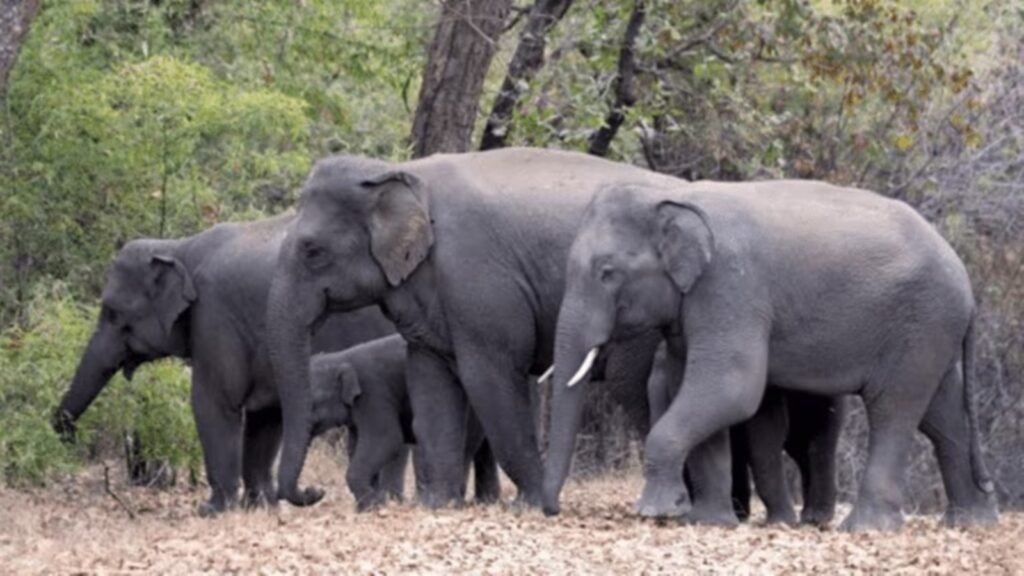
Bagdogra Elephant Attack Incident has raised serious concerns over wildlife movement and human safety after two people were killed near Bagdogra along Asian Highway II. The sudden attack by a wild elephant reportedly occurred in the early hours when the victims were passing through a forest-adjacent stretch of the busy highway.
Forest officials and police teams rushed to the spot soon after receiving information, while local residents expressed shock over the tragic incident. Authorities have begun an investigation and initiated measures to monitor elephant movement in the area.
KKR Injury Concerns Ahead of RCB Clash
Tutu Bose Passes Away: End of Mohun Bagan Era
Sudden Elephant Attack on Highway Stretch
According to preliminary reports, the victims were traveling along Asian Highway II near Bagdogra when a wild elephant suddenly emerged from nearby forest cover and attacked. The encounter proved fatal, and both victims died at the scene.
The Bagdogra Elephant Attack Incident highlights the increasing danger of human-wildlife conflict in areas where highways pass through forest corridors. Officials stated that elephants frequently cross these routes while searching for food or following migratory paths.
Later, police and forest personnel recovered the bodies and sent them for post-mortem examination.
Concerns Over Wildlife Corridors
The region near Bagdogra experiences regular elephant movement because of its proximity to forested zones in northern West Bengal. Wildlife experts have repeatedly warned that expanding infrastructure in such areas increases the risk of accidental encounters.
As a result, the Bagdogra Elephant Attack Incident has renewed concerns about wildlife corridor management and the need for stronger early warning systems along highways.
Forest officials explained that elephants in the region continue to follow traditional migratory routes that often intersect with roads and human settlements.
Authorities Begin Investigation
After the attack, police and forest officials launched a joint investigation to determine the exact circumstances behind the incident. Investigators are also examining whether any human activity triggered the elephant’s aggressive behavior.
Meanwhile, the Bagdogra Elephant Attack Incident has prompted authorities to increase patrolling along vulnerable highway stretches and install additional warning signs for motorists.
Officials also confirmed that they will begin compensation procedures for the victims’ families under existing government guidelines.
Human-Wildlife Conflict Rising in North Bengal
Northern West Bengal has recorded several human-elephant conflict cases in recent years. Shrinking forest areas and expanding road networks continue to increase interactions between humans and wildlife.
Therefore, the Bagdogra Elephant Attack Incident underscores the urgent need for long-term solutions such as protected wildlife passages, regulated traffic zones, and community awareness programs.
Environmental experts have also stressed the importance of balancing development projects with ecological conservation to prevent similar tragedies.
Traffic and Safety Measures Under Review
Following the incident, authorities temporarily regulated traffic movement along the affected section of Asian Highway II. Forest teams have also increased monitoring of elephant movement in nearby areas.
In response to the Bagdogra Elephant Attack Incident, officials are now considering stricter safety measures. These may include night-time speed restrictions, improved driver alert systems, and enhanced highway surveillance.
Transport authorities are also reviewing additional infrastructure changes that could reduce future risks.
Community Expresses Concern
Local residents expressed shock and concern over the repeated movement of wild elephants near populated areas. Many villagers said encounters with elephants have become more unpredictable and dangerous in recent years.
Consequently, the Bagdogra Elephant Attack Incident has triggered calls for stronger coordination between forest departments, highway authorities, and local administrations.
Community leaders have urged officials to implement preventive measures quickly to avoid further loss of life.
Conclusion
The tragic elephant attack near Bagdogra on Asian Highway II has claimed two lives and renewed concerns about human-wildlife conflict in northern West Bengal. Authorities have launched an investigation and started reviewing safety measures for vulnerable highway stretches. Overall, the Bagdogra Elephant Attack Incident highlights the urgent need for stronger wildlife management policies and safer infrastructure planning near forest corridors.
FAQs
What happened near Bagdogra?
Two people were killed in a sudden elephant attack near Asian Highway II.
Where did the incident occur?
Near Bagdogra in northern West Bengal.
What caused the attack?
A wild elephant reportedly emerged from nearby forest and attacked suddenly.
Are authorities investigating?
Yes, forest and police officials have launched a joint investigation.
Is this area prone to elephant movement?
Yes, the region lies near forest corridors frequently used by elephants.
What measures are being taken?
Traffic regulation, increased patrols, and safety reviews have been initiated.