


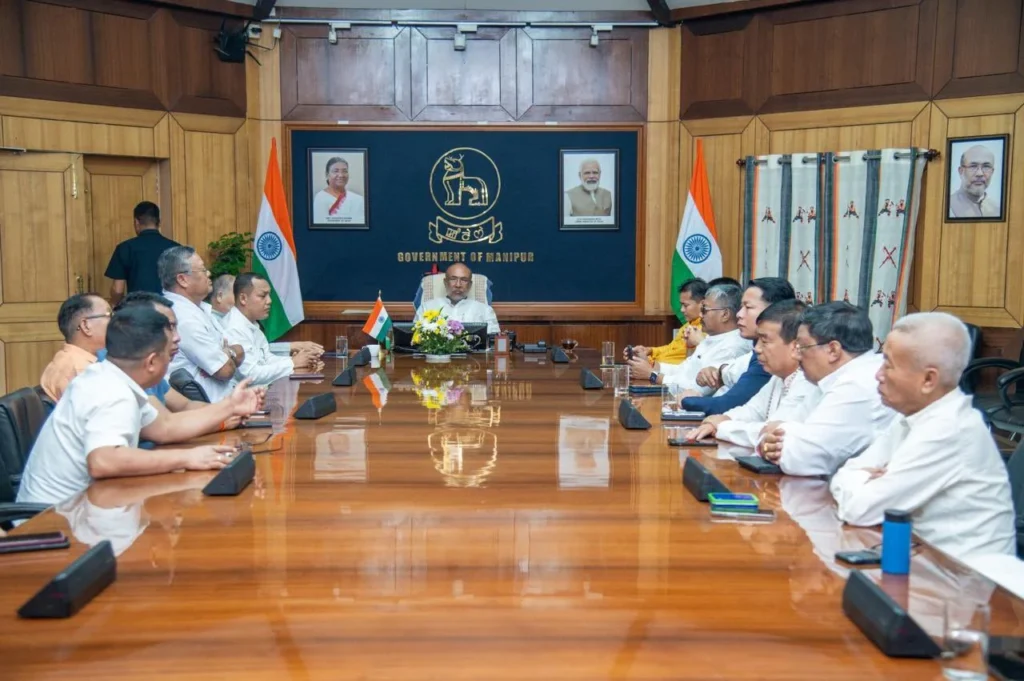
The Suspension Operations Pact Reconsideration has become a key issue in Manipur after the United Naga Council (UNC) urged the Central Government to reconsider its decision regarding the Suspension of Operations (SoO) pact. Moreover, the council emphasized the importance of dialogue, peace, and stability while calling for continued engagement with all stakeholders. Consequently, the appeal has renewed discussions on security, conflict resolution, and the future of peace initiatives in the region.
Discovery of Uncovers Hidden Arms, Mortars, and Communication Equipment
UNC Raises Concerns Over Kamjong Border Violence After Houses Burned
Suspension Operations Pact Reconsideration Gains Attention
The Suspension Operations Pact Reconsideration entered public discourse after the United Naga Council appealed to the Centre to review its position on the Suspension of Operations agreement. Furthermore, the organization highlighted the need for sustained dialogue to maintain peace and confidence among communities.
The Suspension of Operations arrangement has been an important component of peace-building efforts in parts of Northeast India. Consequently, any policy review attracts significant attention from community organizations and government agencies.
Moreover, discussions surrounding the agreement continue within the broader framework of security and governance. Therefore, stakeholders are closely monitoring future developments.
Additionally, public engagement on peace initiatives reflects the importance of long-term stability. Thus, constructive dialogue remains central to the process.
UNC Emphasizes Dialogue and Lasting Peace
The Suspension Operations Pact Reconsideration reflects the UNC’s position that continued engagement and negotiations are essential for addressing long-standing issues. Furthermore, the council urged authorities to prioritize peaceful solutions through consultation and dialogue.
Dialogue remains a widely recognized approach for resolving complex regional challenges. Consequently, sustained communication among stakeholders can help build mutual understanding.
Moreover, peaceful engagement contributes to public confidence and social stability. Therefore, discussions on security-related agreements remain significant.
Similarly, cooperation between community organizations and government institutions supports conflict resolution. Additionally, transparent communication helps strengthen trust.
Centre Continues Reviewing Security and Governance Issues
The Suspension Operations Pact Reconsideration also highlights the broader context of security policy and administrative decision-making in the Northeast. Furthermore, the Central Government continues evaluating various measures related to regional peace and public safety.
Security policies often require regular assessment to address evolving ground realities. Consequently, governments review existing arrangements while considering public interest and legal obligations.
Moreover, coordination between the Centre, state governments, and local stakeholders remains important. Therefore, institutional cooperation supports informed decision-making.
Similarly, balanced policy discussions contribute to sustainable governance. Additionally, continued consultation can help improve long-term outcomes.
Peace Initiatives Remain Important for Regional Stability
The Suspension Operations Pact Reconsideration underscores the continuing importance of dialogue-based approaches in promoting peace across conflict-affected regions. Furthermore, community participation and institutional cooperation remain valuable components of long-term stability.
Effective peace initiatives require consistent engagement among governments, civil society organizations, and local communities. Consequently, collaborative efforts can strengthen confidence and reduce tensions.
Moreover, transparent communication encourages constructive participation in the peace process. Therefore, continued dialogue remains essential for addressing future challenges.
Similarly, democratic institutions provide mechanisms for discussing security and governance issues. Additionally, peaceful engagement contributes to sustainable regional development.
Conclusion
The Suspension Operations Pact Reconsideration has gained renewed attention after the United Naga Council urged the Central Government to reconsider its position on the Suspension of Operations agreement. Moreover, the appeal highlights the continued emphasis on dialogue, peace, and community engagement.
Furthermore, discussions surrounding the agreement are expected to remain an important part of broader efforts to promote stability and effective governance in the Northeast. Consequently, constructive dialogue, institutional cooperation, and peaceful engagement will continue to play vital roles in shaping the region’s future.
Looking ahead, transparent consultation, responsible policymaking, and sustained communication among stakeholders will remain essential as the Suspension Operations Pact Reconsideration continues to evolve.
FAQs
1. What is the Suspension Operations Pact Reconsideration?
It refers to the UNC’s appeal urging the Central Government to reconsider its position on the Suspension of Operations (SoO) agreement.
2. Who made the appeal?
The United Naga Council (UNC) urged the Centre to review the existing position on the SoO pact.
3. Why is the SoO pact important?
The agreement has been associated with peace-building efforts and dialogue in parts of Northeast India.
4. What did the UNC emphasize?
The council highlighted the importance of continued dialogue, peaceful engagement, and long-term regional stability.
5. Why is the Suspension Operations Pact Reconsideration significant?
It highlights ongoing discussions about peace initiatives, security policy, and the role of dialogue in promoting stability across the region.