


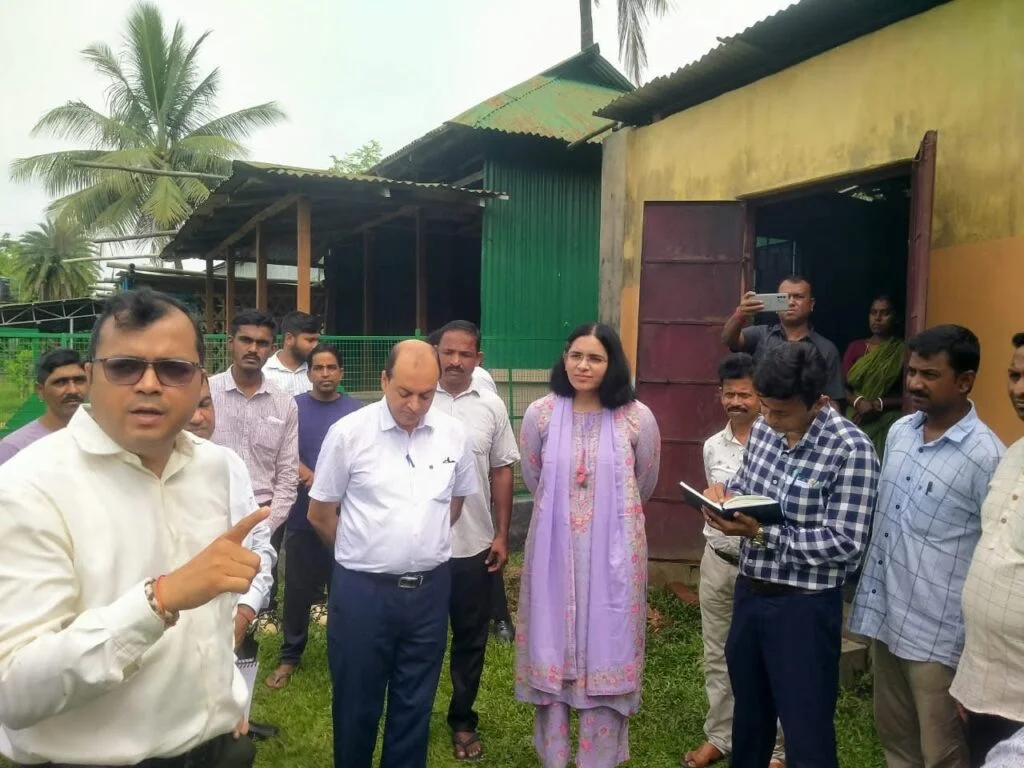
The West Tripura welfare scheme review has emerged as part of the district administration’s efforts to monitor development activities and ensure that government services reach intended beneficiaries. The West Tripura District Magistrate and Collector has conducted field inspections and review meetings involving officials from different departments.
The administration has focused on checking the progress of development projects, public-service delivery and welfare-related activities at the grassroots level. Moreover, officials have been asked to address pending work and improve coordination between departments.
Sikkim’s Soreng Ranks No. 1 in Health and Nutrition Under NITI Aayog Programme
West Tripura Welfare Scheme Review Focuses on Implementation
The West Tripura welfare scheme review centres on monitoring how government programmes and development works progress at the district level. District authorities use review meetings and field inspections to identify delays, examine implementation and assess whether services are reaching residents.
West Tripura District Magistrate and Collector Dr Vishal Kumar has previously conducted field visits across rural areas with officials from different departments. During a June visit to Simna Gram Panchayat under Mohanpur Rural Development Block, the administration inspected a school, an Anganwadi Centre and ongoing development works.
The inspection covered several aspects of local service delivery. Officials reviewed educational infrastructure, classroom facilities, attendance, sanitation, drinking water arrangements and nutrition services. Consequently, the exercise provided the district administration with an opportunity to assess services directly at the local level.
Such field-level monitoring complements formal review meetings. Rather than relying only on departmental reports, officials can examine projects and public facilities directly and identify issues requiring follow-up.
Officials Monitor Development Projects and Public Services
The West Tripura welfare scheme review also connects with the district administration’s monitoring of development projects. During another field inspection in Jirania Rural Development Block, Dr Vishal Kumar visited several development and public-service locations.
The inspection covered Nalgariya Market, West Ranigaon SB School, Majlishpur Anganwadi Centre, a Gram Panchayat building construction site, concrete road projects, Harijoy Chowdhury Park and an Ayushman Arogya Mandir health sub-centre.
Officials reviewed the progress of ongoing works and assessed the delivery of government services. The district administration also interacted with residents, public representatives and officials to understand local issues and requirements.
Furthermore, the administration directed concerned departments to speed up pending projects while maintaining quality standards. A review meeting followed the field inspection at North Majlishpur Gram Panchayat, where officials discussed project progress and future action plans.
The approach highlights the importance of linking field inspections with administrative follow-up. Consequently, officials can identify problems during visits and discuss corrective steps during subsequent meetings.
District Administration Checks Delivery to Beneficiaries
The West Tripura welfare scheme review is also relevant to the administration’s efforts to ensure that welfare benefits reach eligible residents. District-level coordination remains important because several welfare programmes involve multiple departments and local administrative bodies.
West Tripura has also used district-level programmes to improve access to government services in rural areas. At a September 2026 Antyodaya Diwas programme, the state launched the Ekdunia Antyodaya Digital Mission, which aims to help rural residents access digital services relating to healthcare, education and government welfare schemes. West Tripura District Magistrate Dr Vishal Kumar attended the programme.
The district administration’s monitoring role therefore extends beyond individual projects. Officials also need to coordinate with departments responsible for education, health, rural development and social welfare.
Additionally, Tripura’s grievance-redressal system provides a mechanism for residents to raise complaints about government services. The state describes its online grievance system as a platform for speedy redress and monitoring of complaints concerning government departments and organisations.
These mechanisms can support administrative monitoring by providing information about service-delivery problems alongside departmental reviews and field inspections.
Field Inspections Support Grassroots Monitoring
The West Tripura welfare scheme review reflects the district administration’s broader practice of taking development monitoring to the grassroots. Field inspections allow senior officials to observe public facilities, interact with residents and assess the progress of works.
During the Simna visit, the West Tripura DM examined facilities at a higher secondary school and an Anganwadi Centre while also reviewing ongoing development works. The administration included officers from different line departments in the inspection.
Similarly, the Jirania inspection brought together different officials while covering infrastructure, education, healthcare and local development activities. The administration subsequently held a review meeting to discuss progress and future action.
Moreover, this multi-department approach can help address issues that cross departmental boundaries. For example, a rural development project may require coordination involving local bodies, engineering officials and administrative authorities.
However, field inspections themselves do not necessarily mean that a project has been completed or that every identified issue has been resolved. Follow-up action remains necessary to determine whether directions issued during reviews translate into completed work and improved services.
Welfare Implementation Remains Under Administrative Review
The West Tripura welfare scheme review forms part of an ongoing process rather than a single administrative exercise. District authorities regularly monitor development works and public services through inspections, meetings and departmental reporting.
Earlier district-level review mechanisms in West Tripura have also covered welfare and development programmes. Government records from the district show review meetings involving multiple departments and directions concerning unfinished works, beneficiary services and monitoring of programme information.
The current administrative approach similarly places emphasis on checking implementation at the local level. Officials can use field findings to identify delays, while review meetings provide a platform to assign follow-up responsibilities.
Meanwhile, residents and local representatives can provide information about practical problems that may not appear in routine departmental reports. This interaction can help officials understand issues involving infrastructure, public services and access to government programmes.
Therefore, the district administration’s review process involves several stages. These include inspecting facilities, assessing ongoing works, discussing findings with officials and monitoring subsequent action.
Conclusion
The West Tripura welfare scheme review highlights the district administration’s continuing efforts to monitor development works and public-service delivery. District Magistrate Dr Vishal Kumar has conducted field inspections involving education, child welfare, healthcare, infrastructure and rural development activities.
The administration has also used review meetings to discuss project progress and identify future action. Such monitoring allows officials to examine implementation at the grassroots level while coordinating with different departments.
At the same time, welfare delivery depends on continued follow-up after inspections and meetings. The district’s monitoring efforts therefore remain an ongoing administrative process aimed at tracking projects and improving access to government services.
FAQs
What is the West Tripura welfare scheme review?
The West Tripura welfare scheme review refers to district-level monitoring of government welfare programmes, development works and public-service delivery through inspections and review meetings.
Who is the West Tripura District Magistrate?
Dr Vishal Kumar serves as the District Magistrate and Collector of West Tripura District. He has conducted field inspections of development works and public-service facilities in different parts of the district.
What areas have officials inspected?
Recent field inspections have covered schools, Anganwadi Centres, healthcare facilities, roads, markets, public parks, Gram Panchayat infrastructure and other development works.
Why are field inspections important?
Field inspections allow district officials to assess projects and public services directly, interact with residents and identify issues requiring administrative follow-up.
How does the district monitor welfare delivery?
The administration uses field inspections, departmental coordination and review meetings to monitor implementation. Residents can also raise service-related complaints through Tripura’s grievance-redressal system.