


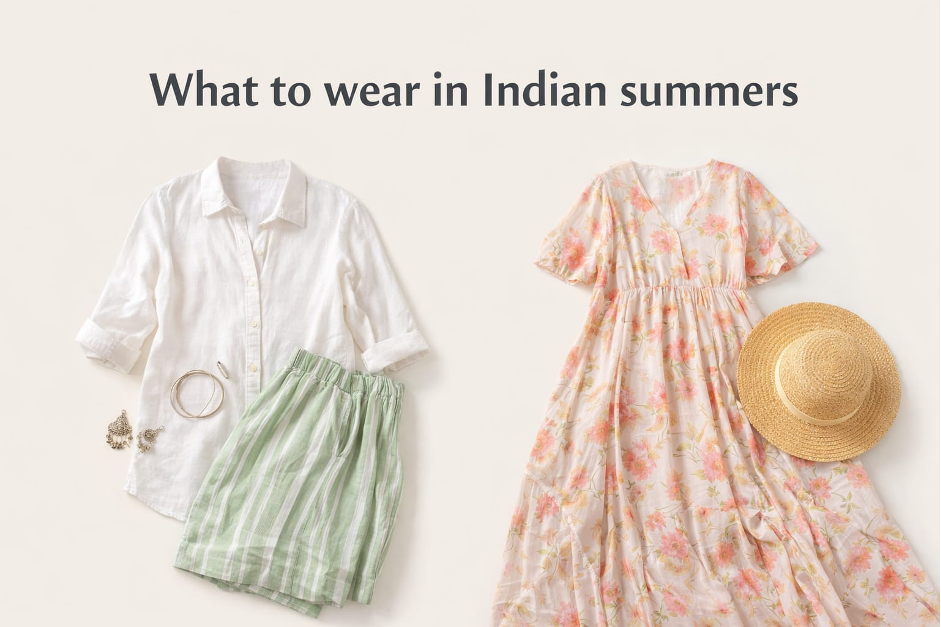
Indian summers are not mild. Temperatures regularly cross 40 degrees Celsius across large parts of the country, humidity levels in coastal cities sit at uncomfortable highs for months at a stretch, and direct sun exposure turns even a short commute into an endurance test.
What you wear during these months genuinely affects how your body manages heat, and the fabric your clothing is made from is the most important variable in that equation. Synthetic fibers that might feel smooth and look presentable trap heat and moisture against the skin, turning a lightweight-looking garment into something genuinely uncomfortable within minutes of stepping outside.
And knowing which materials deliver these properties under real Indian summer conditions is the most practical starting point for building a wardrobe that holds up through the season. Browsing a curated selection of summer fabrics sourced with these properties in mind gives buyers and brands a reliable reference for what actually works in high-heat, high-humidity environments.
Why Fabric Choice Matters More Than Silhouette
Most summer dressing advice focuses on silhouette: loose fits, wide sleeves, open necklines. These help, but they are secondary to material. A loose polyester kurta will still trap heat. A fitted cotton shirt will breathe far better. The fiber determines the baseline performance of any garment regardless of how it is cut.
The key properties to look for in a summer fabric are:
- Breathability: The ability of a fabric to allow air movement through its structure, reducing heat buildup against the skin.
- Moisture management: How quickly the fabric absorbs sweat and releases it through evaporation, keeping the surface dry rather than damp and heavy.
- Thermal conductivity: How readily the fabric draws heat away from the body rather than insulating it.
- Weight: Lighter fabrics with open weave structures perform better in high temperatures, reducing the total thermal load of the garment.
- Natural fiber content: Plant-based fibers consistently outperform synthetics across all four of the above properties in warm and humid conditions.
The Best Natural Fabrics for Indian Summers
Natural plant-based fibers are the most reliable choice for warm-weather dressing in India. They have been used in Indian textile traditions for centuries precisely because they work in the climate. The following fabrics are the strongest performers.
Cotton
Cotton is the most widely worn fabric across Indian summers for good reason. Its fiber structure is highly absorbent, pulling moisture away from the skin and allowing it to evaporate. Plain weave cotton, particularly in lighter weights between 100 and 150 GSM, allows good air circulation.
Kala cotton, a rain-fed indigenous variety grown in Kutch, has an especially open weave structure that enhances breathability beyond standard mill cotton. For summer wear, single-yarn counts above 40s produce a finer, lighter cloth that sits more comfortably against the skin in heat.
Linen
Linen is arguably the most thermally efficient fabric available for summer use. It is made from flax stem fibers, which are hollow and allow exceptional air circulation through the cloth.
Linen is a poor insulator, meaning it does not trap body heat. It absorbs moisture rapidly and dries faster than cotton, which prevents the clammy, heavy feeling that affects cotton in high-humidity conditions. Its slightly textured surface also means it does not lie flat against the skin, creating a small but significant layer of air between the body and the fabric.
Hemp
Hemp fabric is underused in Indian summer wardrobes despite being one of the best-performing natural fibers in heat and humidity. Hemp fibers are longer and more porous than cotton, which gives the finished fabric superior moisture-wicking and drying speed. It is also naturally UV-resistant, which matters in prolonged outdoor exposure.
Hemp softens significantly with each wash, improving in comfort over time without losing its structural integrity. In lighter weights, it is genuinely comparable to linen for summer performance and carries a lower environmental footprint across its full production lifecycle.
Handloom Fabrics
Handloom-woven cloth, whether cotton, linen, or blended, has an inherently open weave structure compared to power-loom alternatives at the same weight. The slight irregularity in thread spacing that characterises handloom cloth creates more air pockets within the fabric, improving breathability at the micro level.
Indian handloom traditions, particularly from regions like Kutch, Andhra Pradesh, and West Bengal, have produced summer fabrics specifically calibrated for the local climate across generations. These fabrics carry both functional and cultural depth that mass-produced alternatives do not.
Fabrics to Avoid in Indian Summers
Not all lightweight-looking fabrics are cool. Several common choices actively work against comfort in high temperatures.
Polyester: Polyester does not absorb moisture. Sweat sits on the surface of the skin rather than being drawn away. In direct sun, polyester can also absorb and retain heat from solar radiation, making a polyester garment significantly warmer than its weight suggests.
Viscose and rayon: These semi-synthetic fabrics feel cool initially but become heavy and clingy once damp. In humid conditions, they lose their shape and drape, and they dry slowly, which prolongs discomfort.
Nylon: Nylon is designed for strength and stretch, not breathability. It traps air against the skin rather than circulating it and performs poorly in both heat and humidity.
Blended synthetics: Fabric blends that include more than 30% synthetic content generally lose the breathability benefits of the natural fiber component. A 60% cotton and 40% polyester blend will not perform like cotton in Indian summer conditions.
How to Choose the Right Summer Fabric for Your Needs
Fabric performance in summer depends on how and where the garment is being worn. A fabric that works well for an office environment with air conditioning may not be the right choice for outdoor use, and vice versa.
– For outdoor use in direct sun, linen and hemp are the strongest choices because of their UV resistance and fast drying speed.
– For all-day indoor and outdoor use, lightweight plain weave cotton in counts above 40s performs consistently across varied conditions.
– For formal or occasion wear, finer handloom cottons and linen blends provide the required structure without sacrificing thermal comfort.
– For active use or extended physical activity, lightweight hemp or hemp-cotton blends manage moisture more efficiently than pure cotton at comparable weights.
The full breakdown of how these fabrics compare across specific use cases and climatic conditions is covered in detail at best fabric for summer, which looks at fiber properties, weave types, and practical performance across Indian summer contexts.