


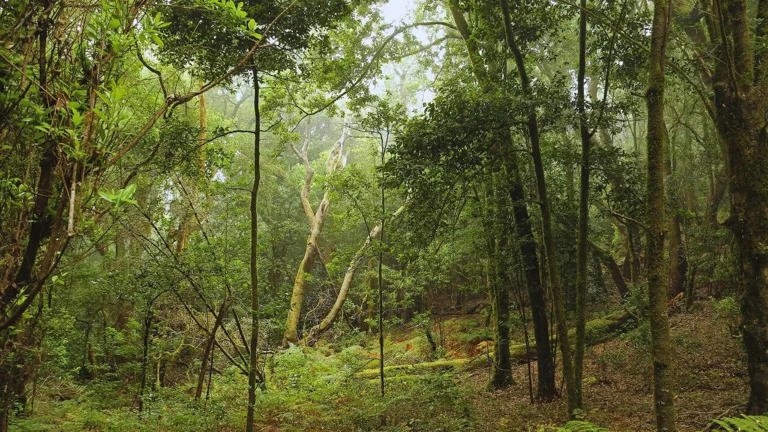
Meghalaya is home to some of India’s most unique natural landscapes, including the mysterious sacred forest in Meghalaya where strict traditional rules have protected nature for centuries. Among the most famous of these forests is the Mawphlang Sacred Grove, a place where visitors are strictly forbidden from taking anything — not even a leaf or a small stone.
Local communities believe that the forest is protected by powerful deities and ancestral spirits. According to Khasi traditions, removing any object from the sacred forest in Meghalaya can bring misfortune to the person who breaks the rule. This belief has helped preserve the forest’s biodiversity for generations.
While the warning may sound like folklore, the rule has played a significant role in conservation. Today, the sacred forest in Meghalaya stands as a remarkable example of how indigenous beliefs can protect ecosystems long before modern environmental laws existed.
Read More: Tripura Raises ST Student Stipend to Rs 100
The Cultural Importance of the Sacred Forest in Meghalaya
For the Khasi community, sacred groves are not just forests but deeply spiritual spaces. These groves are believed to be the dwelling places of protective deities known locally as “Labasa” or forest spirits.
The sacred forest in Meghalaya functions as a natural temple where rituals and ceremonies take place. Villagers gather in these groves during important occasions to perform traditional offerings and prayers.
Because the forest holds religious significance, strict rules govern how people interact with it. Cutting trees, removing plants, or taking stones from the grove is considered disrespectful to the spirits that protect the land.
This cultural reverence has helped maintain the sacred forest in Meghalaya in an almost untouched state for centuries. Even fallen leaves and branches are left where they are, allowing nature to follow its natural cycle.
Mawphlang Sacred Grove: The Most Famous Sacred Forest
One of the best-known sacred groves is the Mawphlang Sacred Grove located near Shillong. This sacred forest in Meghalaya attracts tourists, researchers, and nature lovers who want to witness its unique ecological richness.
The forest is believed to be several hundred years old and contains rare plants, ancient trees, and medicinal herbs. Because no resources have been removed from the grove, the ecosystem has remained remarkably intact.
Visitors entering the sacred forest in Meghalaya are guided by local custodians who explain the traditions and rules associated with the site. They are repeatedly reminded not to pick anything from the forest floor.
There are numerous stories shared by locals about individuals who ignored the rule and later experienced unexplained misfortune. Whether or not these stories are factual, they reinforce the importance of respecting the sacred grove’s customs.
How Traditional Beliefs Protect Biodiversity
The sacred forest in Meghalaya demonstrates how cultural traditions can function as powerful conservation tools. Long before environmental protection became a global concern, indigenous communities had already developed systems to safeguard their natural surroundings.
Because nothing is removed from the sacred groves, the forest floor accumulates layers of organic material. This creates fertile soil that supports diverse plant life.
Scientists studying the sacred forest in Meghalaya have discovered several rare species of orchids, ferns, and medicinal plants that thrive in this protected environment. Many of these species are difficult to find in other forests that experience regular human activity.
Wildlife also benefits from the protection provided by sacred groves. Birds, insects, and small animals find safe habitats within these forests where human interference remains minimal.
The Strict Rule: Take Nothing, Leave Nothing
One of the most well-known principles associated with the sacred forest in Meghalaya is the rule that nothing should be taken out of the grove.
Visitors often find this rule surprising because it applies even to small objects like pebbles, twigs, or dried leaves. However, the Khasi community believes that removing anything disturbs the balance maintained by the forest spirits.
This belief has created a powerful psychological barrier against exploitation. Even people who do not necessarily believe in the spiritual explanation often respect the rule out of cultural sensitivity.
As a result, the sacred forest in Meghalaya remains one of the most pristine ecosystems in the region.
Sacred Groves Across Meghalaya
Mawphlang is not the only sacred grove in the state. In fact, Meghalaya has dozens of sacred forests protected by different indigenous communities.
Each sacred forest in Meghalaya follows similar principles rooted in local tradition and spiritual belief. These groves vary in size, but they all share a common purpose — protecting nature through respect and restraint.
Some sacred groves are associated with specific clans or villages. Community leaders ensure that the rules are followed and that the forest remains undisturbed.
These traditional conservation systems highlight the strong relationship between culture and environment in Meghalaya.
A Lesson for Modern Conservation
In an era of rapid environmental degradation, the sacred forest in Meghalaya offers an important lesson. Conservation does not always require complex policies or enforcement mechanisms.
Sometimes, cultural values and community traditions can be even more effective. The Khasi people have preserved their sacred groves for centuries without modern technology or formal environmental regulations.
Today, researchers and environmentalists view these forests as living examples of sustainable conservation. The sacred forest in Meghalaya shows how respect for nature can create long-term ecological balance.
Respecting the Forest and Its Traditions
Visitors who explore these sacred groves often leave with a deeper appreciation for the region’s cultural and ecological heritage. The experience of walking through a forest that has remained untouched for generations can be both humbling and inspiring.
The rule of taking nothing from the sacred forest in Meghalaya may seem simple, but it carries profound meaning. It reflects a philosophy that humans should coexist with nature rather than exploit it.
By honoring these traditions, both locals and visitors help preserve one of India’s most remarkable natural treasures. The sacred forest in Meghalaya stands as a reminder that sometimes the most effective way to protect nature is simply to leave it exactly as it is.
Read More: West Asia Crisis May Hit Karnataka Economy