


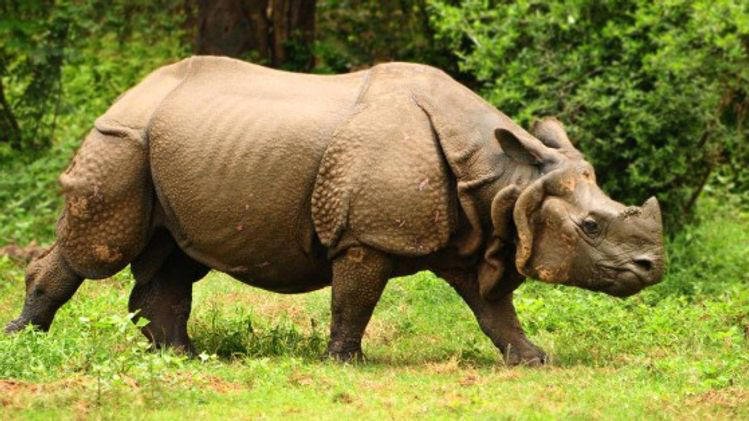
Assam marked World Rhino Day on September 22 with Chief Minister Himanta Biswa Sarma highlighting the state’s continuing efforts to protect the greater one-horned rhinoceros. The Chief Minister pointed to Assam’s major role in global rhino conservation and highlighted the progress made in protecting the species from poaching.
Sarma said Assam is home to around 80 per cent of the world’s greater one-horned rhinoceros population. He also noted that the state recorded zero rhino poaching cases last year, reflecting the impact of sustained protection measures.
Read More: India Pushes Lower Trade Costs, Resilient Supply Chains at SCO Meet
Assam Remains a Major Rhino Habitat
Assam plays a central role in the conservation of the greater one-horned rhinoceros. The species has strong associations with the state’s grasslands and wetlands, particularly those of Kaziranga National Park and Tiger Reserve.
According to government data, Assam’s rhino population has increased substantially over the decades. The population rose from around 600 in the 1960s to more than 4,000 by 2024. The increase reflects long-term conservation efforts involving forest personnel, scientific management and local communities.
Kaziranga remains the most important rhino habitat in the state. The park recorded 2,613 greater one-horned rhinos in the 2022 census, making it one of the world’s most important strongholds for the species.
CM Highlights Zero Poaching
On World Rhino Day, Himanta Biswa Sarma highlighted the state’s recent record of preventing rhino poaching. Assam recorded no rhino poaching cases last year, according to the figures cited by the Chief Minister.
Poaching has remained one of the major threats to rhinos. Criminal networks have historically targeted the animals for their horns, despite scientific evidence showing that rhino horn has no proven medicinal value.
Assam has therefore strengthened anti-poaching operations and increased protection around important rhino habitats. Forest personnel use patrolling, surveillance and other measures to protect animals inside protected areas.
Conservation Efforts Protect Rhino Habitats
Rhino conservation involves more than preventing poaching. Protecting and restoring suitable habitat remains equally important.
Assam has worked to expand and manage rhino habitats in several protected areas. The government has also focused on maintaining grasslands and wetlands that provide food and shelter for the animals.
The Kaziranga Model of Conservation combines wildlife protection, habitat management, anti-poaching measures and community participation. The Union government has described the model as an important example of scientific wildlife management.
Habitat management becomes particularly important because rhinos depend heavily on grassland ecosystems. Changes in vegetation, flooding patterns, invasive species and human activity can affect these habitats.
Rhino Population Shows Long-Term Growth
Assam’s conservation journey shows a significant increase in rhino numbers over several decades. Government figures presented on World Rhino Day 2024 recorded more than 4,000 rhinos in Assam, compared with around 600 in the 1960s.
The increase demonstrates the long-term impact of conservation programmes. It also highlights the importance of maintaining protection measures even when population numbers improve.
The greater one-horned rhino remains vulnerable to several threats. Poaching, habitat loss, human-wildlife conflict and environmental changes can affect populations if authorities do not maintain effective conservation measures.
Kaziranga Remains at the Centre
Kaziranga National Park and Tiger Reserve remains central to Assam’s rhino conservation efforts. The protected area has developed an international reputation for its successful conservation of the greater one-horned rhinoceros.
The park also supports several other important species, including tigers, elephants, swamp deer and numerous bird species. Protecting rhino habitat therefore contributes to the wider conservation of Assam’s biodiversity.
The park’s conservation programme combines protection by forest staff with scientific monitoring and community engagement. Tourism also provides an opportunity to increase public awareness about wildlife conservation.
Community Participation Remains Important
Assam’s conservation efforts also involve communities living around protected areas. Local participation can help reduce conflict between people and wildlife and strengthen support for conservation programmes.
World Rhino Day activities in Kaziranga have included local communities, forest personnel, safari operators, NGOs and wildlife enthusiasts. These programmes help spread awareness about the importance of protecting rhinos and their habitats.
The participation of local communities is particularly important because many protected areas border villages and agricultural land. Cooperation between residents and forest authorities can help address human-wildlife conflict and protect wildlife corridors.
Protecting Forest Frontline Workers
Forest personnel play a major role in Assam’s rhino conservation programme. They patrol protected areas, monitor wildlife and respond to threats such as poaching and illegal activities.
The government has also introduced initiatives aimed at supporting frontline forest workers. During World Rhino Day activities in 2024, the state highlighted programmes connected with safari drivers, mahouts and forest personnel.
Their work remains essential because conservation programmes depend on regular monitoring and protection on the ground.
Assam’s Conservation Efforts Have Wider Significance
Assam’s rhino population has significance beyond the state. The greater one-horned rhinoceros is one of the world’s important Asian rhino species, and India holds a major share of its global population.
Government data indicates that Assam accounts for around 80 per cent of the world’s greater one-horned rhinos. This gives the state an important responsibility in maintaining the species’ global population.
The success of Assam’s conservation programme also demonstrates how sustained habitat protection and anti-poaching measures can support wildlife recovery.
Climate and Human-Wildlife Challenges Remain
Despite the progress, conservation authorities continue to face challenges. Climate change can alter rainfall patterns, flooding and grassland conditions. Invasive plants can also affect the habitats that rhinos depend on.
Human-wildlife conflict presents another challenge. As protected areas share boundaries with populated areas and agricultural land, animals may sometimes move outside protected habitats.
The government and conservation agencies therefore need to maintain monitoring, habitat management and community engagement alongside anti-poaching operations.
World Rhino Day Renews Conservation Commitment
World Rhino Day provides an opportunity to highlight both Assam’s achievements and the continuing responsibilities involved in protecting the species. Chief Minister Himanta Biswa Sarma’s message on September 22 focused on the state’s role in protecting one of its most recognisable wildlife species.
The absence of reported rhino poaching last year marks an important development in the state’s conservation efforts. At the same time, the continued growth of the rhino population makes long-term protection essential.
Road Ahead for Rhino Conservation
Assam’s experience shows that wildlife conservation requires sustained work across several areas. Anti-poaching operations, habitat protection, scientific monitoring and community participation all contribute to protecting rhinos.
Kaziranga remains at the heart of these efforts, while other protected areas also contribute to Assam’s overall rhino population. The state’s conservation strategy will need to respond to emerging challenges such as habitat pressure, climate change and human-wildlife conflict.
On World Rhino Day 2026, Assam has once again highlighted its role in protecting the greater one-horned rhinoceros. The state’s continued efforts will remain important for safeguarding the species and its habitat for future generations.
Read More: Tripura CM Announces 250 MBBS Seats at Agartala Government Medical College