


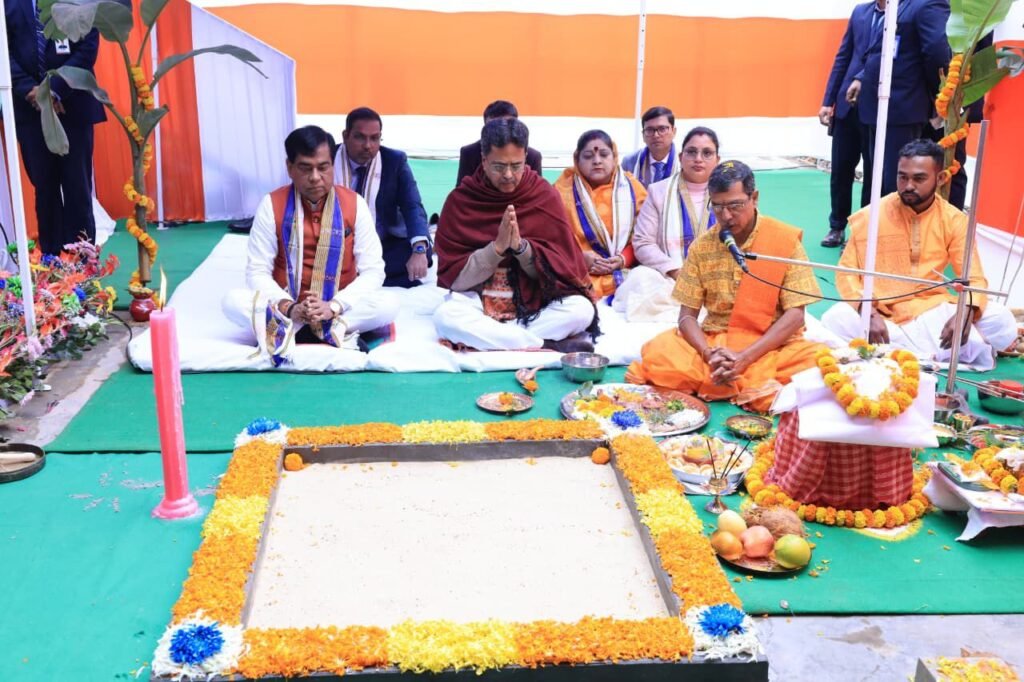
The Agartala Smart City projects are being implemented with a clear focus on ensuring clean and safe drinking water for every resident, Chief Minister of Tripura Prof. Dr. Manik Saha said on Tuesday. Highlighting the importance of basic civic amenities, the Chief Minister said access to potable water remains a top priority under the state’s urban development agenda.
Speaking at a programme related to ongoing Smart City initiatives, Dr. Saha said Agartala’s transformation must begin with essential services that directly impact public health and quality of life. Therefore, water supply projects have received special attention under the Agartala Smart City framework.
Read More: Tripura to Restore Historic Jackson Gate
Clean drinking water as a core development goal
Dr. Manik Saha stressed that clean drinking water forms the foundation of healthy cities. According to him, urban development loses meaning if residents continue to struggle for safe water.
Under the Agartala Smart City projects, authorities are upgrading water treatment facilities, expanding distribution networks, and reducing leakage. As a result, officials expect improved water quality and uninterrupted supply across wards.
The Chief Minister said the government aims to reach every household, including newly developed and densely populated areas. Moreover, the administration plans to ensure equitable access without discrimination.
Progress of water supply infrastructure in Agartala
Officials involved in the Agartala Smart City projects said several water-related works are already underway. These include modernisation of pipelines, installation of new pumping stations, and rehabilitation of ageing infrastructure.
In addition, smart monitoring systems are being introduced to track water flow and detect faults quickly. This approach helps reduce wastage and ensures efficient distribution.
Dr. Saha noted that improved infrastructure would also help address seasonal shortages. Therefore, the city can remain resilient during dry spells.
Integration with Smart City mission
The Chief Minister explained that the water projects align closely with the broader goals of the Smart City Mission. Besides physical infrastructure, the mission focuses on technology-driven governance and sustainability.
Through the Agartala Smart City projects, authorities aim to integrate digital tools for real-time monitoring and grievance redressal. Consequently, residents can report water-related issues more easily.
Dr. Saha said smart solutions should simplify daily life. Hence, citizen-centric planning remains at the heart of the initiative.
Health and social benefits highlighted
Clean drinking water directly impacts public health outcomes. Dr. Manik Saha said improved water quality can significantly reduce water-borne diseases.
He added that families, especially children and older people, stand to benefit the most. Therefore, investing in water infrastructure also reduces healthcare burdens in the long run.
Officials believe that access to safe water strengthens social equity. Every household, regardless of location or income, deserves reliable water supply.
Addressing urban growth challenges
Agartala has witnessed steady population growth and urban expansion in recent years. This growth has increased pressure on existing civic amenities, including water supply.
Dr. Saha acknowledged these challenges and said the Agartala Smart City projects were designed to address future demand as well. Capacity planning, he noted, plays a crucial role in sustainable urban management.
The government aims to ensure that infrastructure keeps pace with development. Hence, water projects factor in long-term needs rather than short-term fixes.
Coordination among departments
Effective implementation of Agartala Smart City projects requires coordination among multiple departments. Dr. Saha said the state government has streamlined inter-departmental collaboration to avoid delays.
Urban local bodies, public health engineering departments, and Smart City officials work together to meet project timelines. As a result, execution has improved compared to earlier phases.
The Chief Minister also emphasised accountability. Regular reviews, he said, help identify bottlenecks and ensure quality standards.
Transparency and public participation
Dr. Manik Saha underlined the importance of transparency in Smart City works. He said citizens must remain informed about ongoing projects and timelines.
Under the Agartala Smart City projects, authorities plan to share updates through digital platforms and public notices. This step builds trust and encourages public cooperation.
The Chief Minister urged residents to provide feedback and report issues. According to him, community participation strengthens governance outcomes.
Broader vision for Agartala’s transformation
Beyond water supply, the Agartala Smart City projects cover areas such as roads, public transport, green spaces, and digital services. However, Dr. Saha said water remains the most critical component.
He described clean drinking water as a non-negotiable necessity. Therefore, the government prioritises it above cosmetic or secondary upgrades.
Dr. Saha added that Smart City development must improve everyday life rather than remain limited to infrastructure showcases.
Looking ahead
As projects progress, the Tripura government expects visible improvements in water availability across Agartala. Officials said phased completion will ensure minimal disruption to residents.
Dr. Manik Saha reiterated that the government remains committed to timely delivery. He assured that no compromise would be made on quality or safety standards.
With a strong focus on clean drinking water, the Agartala Smart City projects aim to set a benchmark for sustainable urban development in Tripura. The initiative reflects a broader vision where smart governance begins with meeting basic human needs and building healthier, more inclusive cities.
Read More: Mizoram’s Transformative Year 2025