


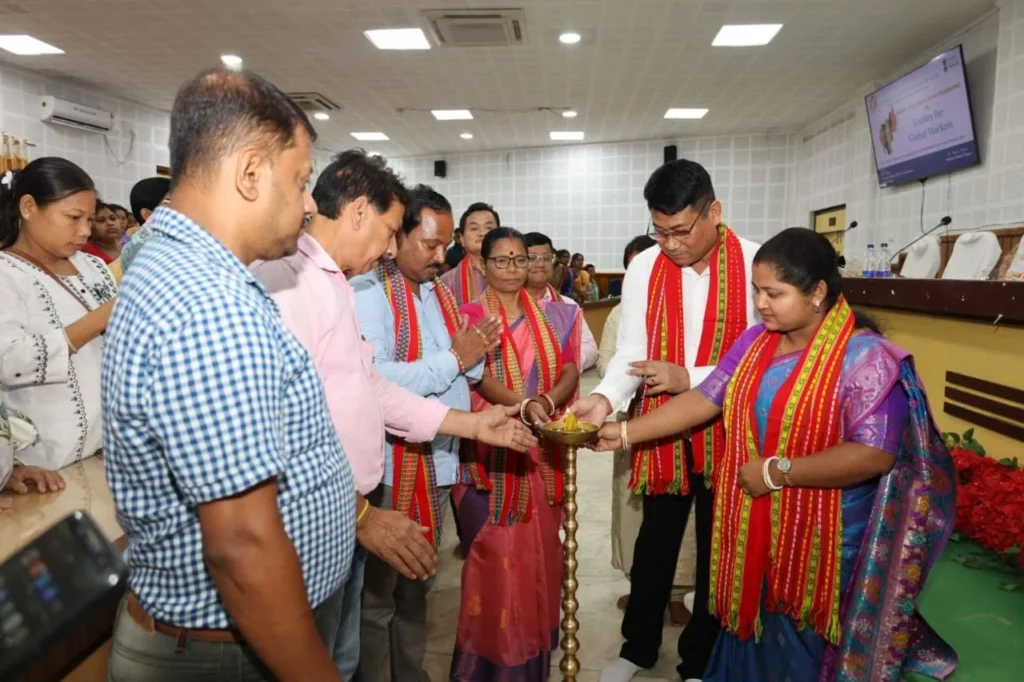
Ambassa: The Ministry of Textiles and the Tripura Department of Handlooms, Handicrafts and Sericulture organized a district-level consultative programme titled “Textiles for Global Markets” at Ambassa in Dhalai district on Monday. The initiative aims to create a strategic roadmap for connecting Tripura’s traditional textile sector with international markets. State Textiles Minister Bikash Debbarma inaugurated the programme and highlighted the global potential of Tripura’s handloom and handicraft products.
Additionally, artisans, entrepreneurs, and government officials discussed product quality, design innovation, and export readiness. The programme supports India’s vision of achieving US$100 billion in textile exports by 2030 while creating new livelihood opportunities for local communities.
Read More: Tripura Reviews NH Construction Waterlogging Issues
Key Facts
- Programme: Textiles for Global Markets
- Location: Ambassa, Dhalai district, Tripura
- Venue: PRTI Conference Hall
- Organisers: Ministry of Textiles and Tripura Department of Handlooms, Handicrafts and Sericulture
- Chief Guest: Bikash Debbarma
- Objective: Promote textile exports and global market integration
- National Target: US$100 billion textile exports by 2030
- Focus Areas: Handloom, handicrafts, product quality, design innovation, export readiness
Initiative Aims to Connect Tripura Textiles with Global Markets
Tripura took a significant step toward expanding its textile industry by organizing the “Textiles for Global Markets” consultative programme in Ambassa.
The initiative seeks to develop a comprehensive strategy for integrating the state’s handloom and handicraft sectors with international markets. Moreover, the programme aims to strengthen export opportunities and improve the competitiveness of local products.
Minister Highlights Export Potential
Textiles Minister Bikash Debbarma inaugurated the event by lighting the ceremonial lamp and addressing participants.
During his speech, he emphasized the growing demand for unique handcrafted products in global markets. Furthermore, he noted that Tripura’s rich textile traditions and skilled artisan community provide a strong foundation for export growth.
According to the Minister, the state possesses significant potential to become an important contributor to India’s textile export ambitions.
Focus on Quality and Innovation
A major objective of the programme was to facilitate discussions between policymakers, artisans, entrepreneurs, and industry stakeholders.
Participants exchanged ideas on improving product quality, introducing innovative designs, and meeting international market standards. Consequently, these discussions are expected to help local producers become more competitive in overseas markets.
In addition, experts highlighted the importance of branding, packaging, and market-oriented production to increase the global appeal of Tripura’s textile products.
Government Committed to Supporting Artisans
Debbarma stated that both the Central and State governments are working to unlock the full potential of the textile sector.
Therefore, authorities plan to strengthen institutional support, enhance skill development programmes, and improve access to market opportunities. Moreover, these efforts aim to create sustainable livelihoods for artisans and entrepreneurs across the state.
The Minister also stressed the importance of preserving traditional weaving techniques while adopting modern business practices.
Dignitaries and Stakeholders Participate
Several dignitaries attended the programme and contributed to discussions on the future of Tripura’s textile sector.
Among those present were Susmita Das, Sabhadhipati of Dhalai Zilla Parishad; Pratima Malakar, Chairperson of Ambassa Municipal Council; Ajit Shukla Das, Director of the Department; and Van Lal Dika Darlong, Additional District Magistrate of Dhalai.
Additionally, local artisans, entrepreneurs, and departmental officials participated in the consultation process and shared their perspectives on industry development.
Boost for Youth Employment and Economic Growth
Officials believe that expanding textile exports can generate new employment opportunities, particularly for young people and artisan communities.
As a result, the initiative is expected to encourage entrepreneurship, strengthen rural economies, and promote economic self-reliance. Furthermore, it will help preserve Tripura’s cultural heritage by supporting traditional handloom and handicraft practices.
By connecting local producers with global buyers, the programme aims to create long-term economic benefits for communities across the state.
Question & Answer
What is the “Textiles for Global Markets” programme?
It is a district-level consultative initiative aimed at connecting Tripura’s textile sector with international markets and increasing export opportunities.
Where was the programme held?
The event took place at the PRTI Conference Hall in Ambassa, Dhalai district, Tripura.
Who inaugurated the programme?
Tripura Textiles Minister Bikash Debbarma inaugurated the event.
What were the main topics discussed?
Participants discussed product quality, design innovation, export readiness, branding, and strategies for accessing global markets.
How will artisans benefit?
The initiative aims to improve market access, enhance skills, create employment opportunities, and increase income for artisans and entrepreneurs.
Location Context
Dhalai district, located in eastern Tripura, is home to diverse tribal communities and a rich tradition of handloom and handicraft production. Therefore, initiatives that promote textile exports can strengthen local livelihoods, preserve cultural heritage, and contribute to the broader economic development of Tripura and Northeast India.
Also Read: Manipur Violence Inquiry Panel Visits Relief Camps