


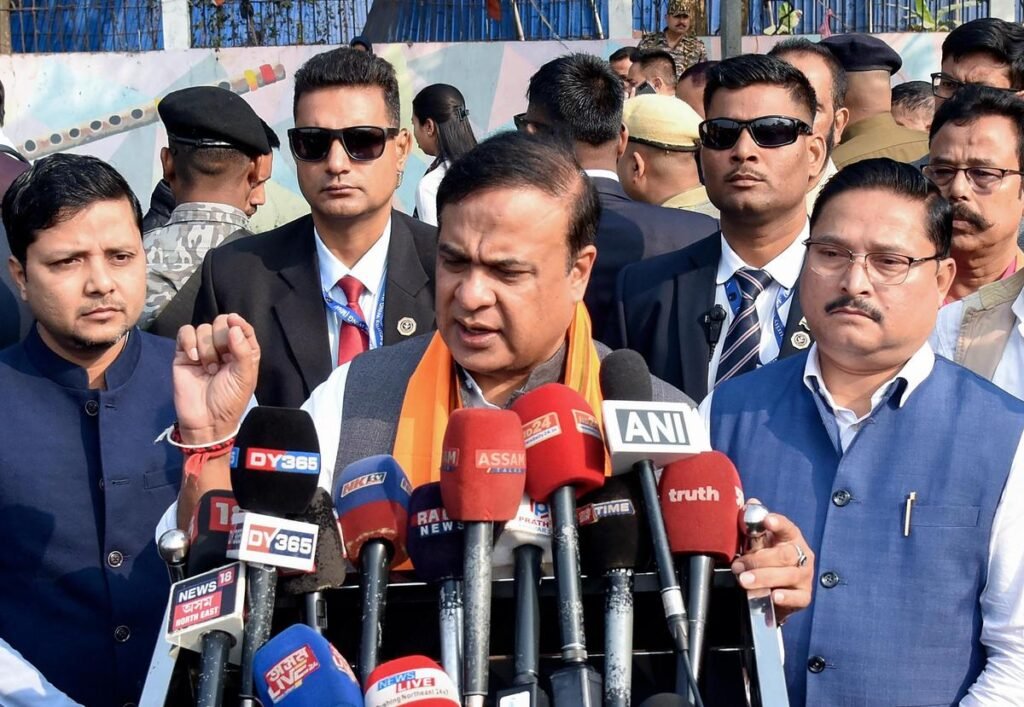
Assam opposition backlash claims intensified after Himanta Biswa Sarma stated that attempts by opposition parties to politicize recent events during the Assam polls had completely backfired. Meanwhile, the chief minister argued that voters rejected what he described as politically motivated narratives during the election campaign period. His remarks triggered fresh political debate between ruling party leaders and opposition representatives across Assam. Additionally, political analysts observed that campaign strategies and public perception remained central themes following the recent electoral developments.
Guwahati fuel price protest intensifies political tensions
Online medical referral system improves Mizoram healthcare
CM Sarma Criticizes Opposition Campaign Tactics
Speaking on the political situation, Himanta Biswa Sarma claimed opposition parties attempted to gain electoral advantage by highlighting recent controversial developments during the polls. Consequently, he argued that the strategy failed to influence public opinion in the way opposition leaders had expected.
The chief minister stated that voters preferred stability and development-focused politics instead of emotionally charged narratives. However, opposition parties have continued criticizing the ruling administration over multiple governance and public policy issues. At the same time, political observers noted that sharp exchanges between rival parties intensified throughout the election period.
The Assam opposition backlash claims also reflected the increasingly confrontational nature of political campaigning in the state. Furthermore, analysts suggested that electoral narratives surrounding public events often shape broader political perception during major polls.
Political Reactions Intensify Across Assam
Leaders from opposition parties reportedly rejected the chief minister’s remarks and defended their campaign approach. Meanwhile, opposition representatives argued that raising public concerns and questioning government decisions remains part of democratic political engagement.
Several political leaders claimed the ruling party was attempting to shift attention away from key governance issues. Specifically, opposition figures maintained that public dissatisfaction over economic and social matters continued influencing voter sentiment. Earlier, campaign rallies and political speeches across Assam had featured strong exchanges between ruling and opposition camps.
The Assam opposition backlash claims therefore triggered renewed political confrontation between competing parties after the election phase. Consequently, political discussions surrounding campaign conduct and voter response gained momentum statewide.
Analysts Examine Electoral Messaging
Political experts stated that campaign messaging plays a significant role in shaping voter perception during elections. Meanwhile, analysts observed that both ruling and opposition parties increasingly rely on emotionally resonant narratives and public reactions to major events.
Election observers explained that politicization allegations often emerge during highly competitive electoral contests. In addition, experts noted that political parties attempt to frame public issues in ways that strengthen their support base. Analysts also highlighted the growing impact of social media and digital campaigning on voter engagement.
The Assam opposition backlash claims further fueled discussions regarding political communication strategies and election management. Moreover, commentators suggested that post-election narratives often influence long-term political positioning.
Ruling Party Defends Electoral Performance
Leaders from the ruling political camp stated that the election results reflected public confidence in government policies and administrative performance. Meanwhile, party representatives claimed voters rejected divisive political narratives and supported development-oriented governance.
Supporters of the ruling alliance argued that welfare programs, infrastructure projects, and economic initiatives contributed to electoral support. However, opposition groups maintained that several unresolved issues still require government attention. At the same time, independent observers noted that Assam’s political environment remains highly competitive and dynamic.
The Assam opposition backlash claims also became a talking point during public discussions and television debates following the polls. Consequently, political commentators analyzed whether campaign controversies significantly affected voter behavior.
Opposition Continues Criticism Of Government
Opposition leaders insisted that raising sensitive public issues during elections should not be described as politicization. Meanwhile, critics accused the ruling party of attempting to dismiss legitimate public concerns by framing them as political attacks.
Several opposition representatives stated that democratic elections require open debate and accountability regarding major events and policy decisions. In addition, analysts observed that political polarization has increased in several regional and national election campaigns in recent years. Public reactions on social media also reflected sharply divided opinions regarding the chief minister’s statement.
The Assam opposition backlash claims therefore deepened existing political divisions between rival parties in the state. Specifically, observers noted that competing narratives regarding governance and public trust may continue shaping future political discourse.
Political Debate Likely To Continue
Experts believe the exchange between the ruling government and opposition parties may continue influencing Assam’s political atmosphere in the coming months. Furthermore, analysts stated that election-related controversies often remain part of broader political narratives even after polling concludes.
Political strategists also suggested that parties will likely continue using recent events and campaign messaging to strengthen support among voters. Consequently, public attention may remain focused on political accountability, governance performance, and opposition strategies. Observers emphasized the importance of maintaining balanced democratic debate during politically sensitive periods.
The Assam opposition backlash claims may therefore continue shaping political conversations and campaign approaches in future elections. Ultimately, both ruling and opposition parties are expected to intensify efforts to influence public perception ahead of upcoming political contests.
Conclusion
The Assam opposition backlash claims made by Chief Minister Himanta Biswa Sarma have triggered renewed political debate following the recent Assam polls. Meanwhile, the chief minister argued that opposition attempts to politicize recent events ultimately failed to influence voters. Opposition leaders rejected the criticism and defended their campaign approach as part of democratic political engagement. Ultimately, the controversy highlights the growing intensity of electoral narratives, political messaging, and public perception battles in Assam’s evolving political landscape.
FAQs
Q1. What did CM Himanta Biswa Sarma claim about the opposition? He stated that opposition attempts to politicize recent events during the Assam polls had backfired politically.
Q2. Where did the political controversy emerge? The debate intensified in Assam following recent election-related developments.
Q3. What are the Assam opposition backlash claims about? The Assam opposition backlash claims refer to the chief minister’s statement that opposition political strategies failed to influence voters as intended.
Q4. How did opposition parties respond? Opposition leaders rejected the allegations and defended their campaign actions as legitimate democratic criticism.
Q5. Why are political analysts discussing the issue? Experts believe the controversy reflects broader trends involving campaign narratives, voter perception, and political polarization.
Q6. Could the debate continue in future elections? Yes, analysts expect similar political messaging and campaign disputes to remain important in upcoming electoral contests.