


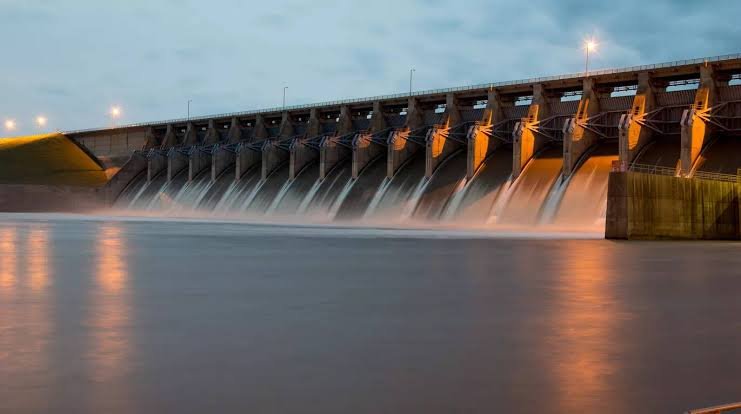
Brahmaputra Medog Dam concerns have gained renewed attention as environmental experts, researchers and policy forums examine the potential consequences of China’s massive hydropower project on the Yarlung Tsangpo. The river enters Arunachal Pradesh as the Siang before flowing into Assam as the Brahmaputra, making the project a major transboundary water issue.
The Medog project has generated debate over downstream water security, seismic risks, sediment movement, biodiversity and disaster preparedness. Moreover, expert discussions have stressed the need for better scientific information and stronger mechanisms for managing a river shared across national boundaries.
Manipur CM Distributes PMFME Subsidies to 2,835 Beneficiaries in Imphal
Brahmaputra Medog Dam Concerns Grow Across Downstream Regions
The Brahmaputra Medog Dam concerns stem primarily from the scale and location of the project. China is constructing the hydropower facility at the Great Bend of the Yarlung Tsangpo in Tibet, close to the Indian border. Once completed, the project is expected to become the world’s largest hydropower installation, with a planned capacity of about 60,000 MW.
The river takes a dramatic turn around the Namcha Barwa massif before entering India. Consequently, the steep elevation difference in this region gives the site substantial hydropower potential. However, the same geography also creates concerns because the area remains tectonically active and vulnerable to landslides and earthquakes.
India’s downstream exposure begins in Arunachal Pradesh, where the Yarlung Tsangpo becomes the Siang. Further downstream, the river enters Assam and becomes the Brahmaputra. Therefore, any significant change in upstream river behaviour could have implications across several communities, ecosystems and economic activities.
Experts have consequently focused on more than the possibility of changes in water volume. They have also examined sediment transport, seasonal flow patterns, aquatic ecosystems and the consequences of an extreme geological or engineering event.
Environmental Forums Examine Geological and Ecological Risks
Several expert forums have already examined the potential consequences of the Medog project. In July 2025, the Vivekananda International Foundation organised a China Expert Group Meeting specifically on the Medog Hydropower Project and its implications for the Brahmaputra Basin and India. The panel included former ambassador Ashok Kantha, Dr Y. Nithiyanandam and Dr Srinivas Chokkakula.
The discussion highlighted the limited availability of technical information about the project, including details concerning water diversion, tunnel construction and flow regulation. Participants also pointed to the geological sensitivity of the Great Bend region and the potential consequences for downstream areas.
Similarly, the Second Stockholm Forum on Himalaya examined major infrastructure developments in Tibet, including the Medog project. Its discussions highlighted geotechnical, environmental and seismic risks, alongside possible effects on downstream ecosystems and transboundary water security.
Environmental discussions have therefore increasingly treated the Medog project as a basin-wide issue rather than simply a power-generation project. Furthermore, experts have argued that the environmental consequences should be assessed across the entire river system.
These discussions do not establish that the project will necessarily cause a specific downstream disaster. Instead, they identify potential risks that require further scientific assessment, monitoring and information sharing.
Seismic Concerns Add Another Layer to the Debate
One of the most significant developments in the debate came from reports concerning the geological conditions beneath the project area. A study involving geologists affiliated with China’s state-run geological survey identified the Paizhen Fault beneath the Medog project area, raising questions about structural safety in an earthquake-prone region.
The Himalayas remain one of the world’s most active tectonic regions because of the continuing collision between the Indian and Eurasian plates. Therefore, large infrastructure projects in such terrain require careful consideration of earthquakes, landslides, slope instability and cascading hazards.
The concern becomes particularly important because the Medog project sits near a major bend in the river and in terrain characterised by steep mountains and deep valleys. Consequently, a major geological event could have implications extending beyond the immediate project area.
However, identifying geological risk does not automatically mean that a dam will fail or cause downstream flooding. Such conclusions require detailed engineering assessments, operational information and independent scientific evaluation.
Instead, experts have stressed the importance of understanding how earthquakes, landslides, reservoir operations and downstream river conditions could interact. The combination of these factors makes disaster preparedness particularly important for downstream regions.
Recent discussions have also connected the issue with the wider vulnerability of the Himalayan region. The August 2026 disaster in Nepal and Tibet, for example, renewed attention on the difficulty of managing major infrastructure in mountainous terrain exposed to extreme geological and climatic events.
Water Flow and Sediment Impacts Remain Key Issues
Water availability represents another major component of the Brahmaputra Medog Dam concerns. India remains a lower-riparian country on the Yarlung Tsangpo-Brahmaputra system, and officials and experts have repeatedly sought greater transparency about China’s upstream projects.
The Brahmaputra, however, receives substantial water from tributaries after entering India. Therefore, experts caution against simplistic claims that the Medog project could completely control the river’s flow into Assam. India Today’s analysis noted that the river’s volume increases substantially through tributaries within India.
Nevertheless, upstream infrastructure could potentially influence the timing and characteristics of water releases. Changes in seasonal flows could affect agriculture, fisheries, wetlands and communities that depend on the river system.
Sediment represents another important concern. Large Himalayan rivers transport substantial quantities of sediment downstream. Environmental researchers have argued that changes in sediment movement could influence river ecology and the fertility of downstream floodplains.
The ecological issue extends beyond agriculture. Riverine ecosystems depend on natural variations in water and sediment movement. Consequently, changes in these processes could affect aquatic habitats, fish populations and other species.
Furthermore, Assam’s floodplain communities already face recurring floods and erosion. Any major alteration in the river’s natural behaviour could therefore interact with existing vulnerabilities, although the exact downstream impact of the Medog project remains difficult to quantify without comprehensive technical data.
India Faces Need for Stronger Basin-Level Preparedness
The debate over the Medog project has also highlighted the importance of India’s own river-management capacity. The Brahmaputra Board reviewed integrated water-resource development and management in June 2026, including river-basin master planning, flood and erosion management, sediment management and coordination among basin states.
The Union government has also continued discussions on river-basin management through the Brahmaputra Board. In May 2026, the High-Powered Review Board met in Guwahati to examine river-basin management initiatives and the future roadmap for the organisation.
Such measures are significant because downstream preparedness cannot depend solely on diplomatic engagement. Assam and Arunachal Pradesh also need reliable hydrological monitoring, flood forecasting, emergency communication and disaster-response systems.
Moreover, greater access to upstream information would help Indian agencies model different scenarios. This could include unusually high releases, low-flow periods, extreme rainfall, landslides and other events affecting river behaviour.
The issue also has an international dimension. The Brahmaputra is a transboundary river system involving China, India and Bangladesh. Consequently, long-term water security requires greater cooperation, timely hydrological information and mechanisms for addressing potential downstream impacts.
The absence of a comprehensive water-sharing treaty between India and China makes the issue more complicated. Existing cooperation has largely focused on hydrological information and consultation rather than a binding water-allocation framework. Recent analysis has also highlighted the weakness of institutional arrangements for managing the shared river.
Conclusion
Brahmaputra Medog Dam concerns have moved beyond a narrow debate over hydropower development. Environmental forums and expert panels have increasingly examined the project’s potential implications for downstream water security, sediment movement, biodiversity, seismic safety and disaster preparedness.
The project’s enormous planned capacity and location at the Great Bend of the Yarlung Tsangpo make it particularly significant. At the same time, experts have cautioned that many technical details remain insufficiently available for independently assessing the full downstream consequences.
For Arunachal Pradesh and Assam, the issue therefore requires both diplomatic engagement and stronger domestic preparedness. Better hydrological monitoring, scientific research, flood forecasting and basin-level planning could help authorities prepare for a range of possible scenarios.
Ultimately, environmental concerns surrounding Medog should be assessed through evidence rather than speculation. Transparent data, independent scientific evaluation and sustained dialogue among the countries sharing the Brahmaputra basin will remain important as construction progresses.
FAQs
What are the main Brahmaputra Medog Dam concerns?
The main concerns involve downstream water security, sediment movement, ecological impacts, seismic hazards, landslides and the possibility of changes in river-flow patterns.
Where is the Medog hydropower project located?
The project is being developed on the Yarlung Tsangpo at the Great Bend in Tibet’s Medog County, before the river enters Arunachal Pradesh.
How does the river reach Assam?
The Yarlung Tsangpo enters Arunachal Pradesh as the Siang and later becomes the Brahmaputra as it flows through Assam.
Why are environmental experts concerned about the project’s geology?
Reports have identified the Paizhen Fault in the project area, raising questions about earthquake and structural risks in an already tectonically active Himalayan region.
What can downstream states do to prepare?
Authorities can strengthen hydrological monitoring, flood forecasting, disaster-response systems, river-basin planning and scientific assessment while pursuing greater transparency and information sharing on transboundary waters.