


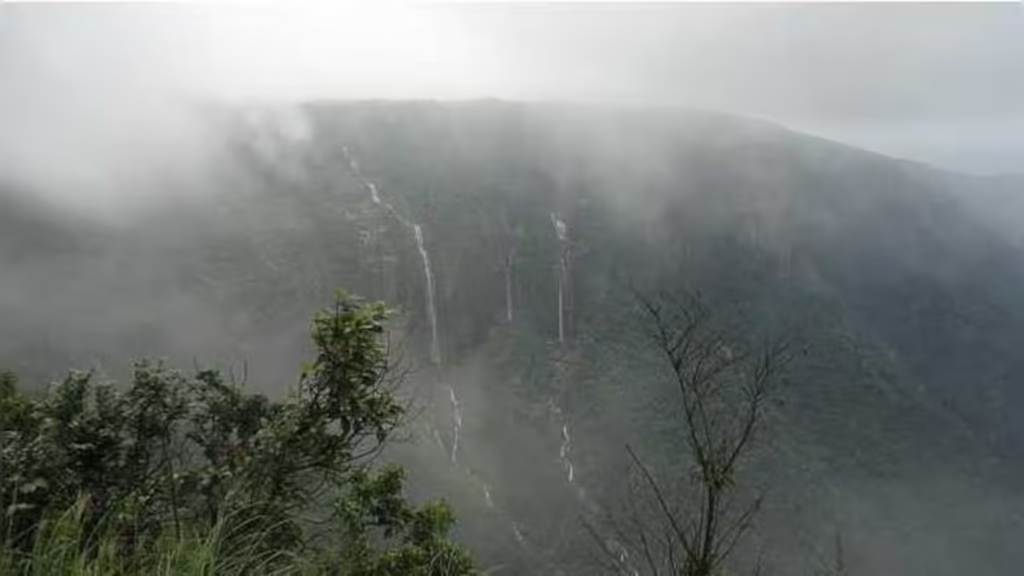
Cherrapunji records its third-highest historic downpour with 972 mm of rain in a single day, marking another extreme weather event in one of the world’s wettest regions. The unprecedented rainfall has drawn attention from meteorological observers and disaster management authorities. Moreover, the intense downpour highlights the continuing vulnerability of Meghalaya’s hilly terrain to cloudburst-like weather conditions. Officials have noted that such extreme rainfall events can significantly impact daily life and infrastructure.
Sikkim Highway Department Completes Construction of All-Weather Retaining Walls Along Teesta River
National Highway-10 Blocked Completely by Sudden Mudslides Near Rangpo, Cutting Off Sikkim
Record Rainfall Highlights Extreme Weather in Cherrapunji
Cherrapunji records its third-highest historic downpour with 972 mm of rain in a single day, reinforcing its reputation as one of the highest rainfall-receiving places on Earth. Consequently, the region continues to witness extreme precipitation patterns during the monsoon season.
The rainfall of 972 mm places the event among the most intense single-day downpours in the region’s recorded history. Moreover, meteorological data indicates that such heavy rainfall events are rare but not unprecedented in Cherrapunji. Therefore, this latest occurrence adds to the long-standing climate record of extreme weather in the area.
Authorities monitoring weather conditions in Meghalaya have noted that the monsoon system remains highly active. Furthermore, saturated atmospheric conditions contributed to sustained heavy rainfall over the region. As a result, the downpour persisted for several hours, leading to significant water accumulation.
Meanwhile, local residents experienced continuous rainfall that affected daily movement and outdoor activities. Consequently, normal life was disrupted across several parts of the region during the peak of the downpour.
Impact on Daily Life and Local Infrastructure
Cherrapunji records its third-highest historic downpour with 972 mm of rain in a single day, which has had a visible impact on local infrastructure and transportation. Moreover, heavy rainfall in the region often leads to waterlogging and temporary disruptions in road connectivity.
The hilly terrain of Meghalaya makes it particularly vulnerable to landslides and soil erosion during intense rainfall. Consequently, continuous rain increases the risk of road blockages and delays in transportation services. Therefore, authorities remain on alert during such extreme weather events.
Furthermore, local streams and rivers swell rapidly during heavy rainfall episodes. As a result, low-lying areas face increased water flow and potential flooding risks. Such conditions require constant monitoring by disaster management teams.
Meanwhile, residents typically adopt precautionary measures during intense monsoon spells. Similarly, movement is often restricted in affected areas to ensure safety during peak rainfall periods.
Meteorological Factors Behind the Heavy Downpour
The extreme rainfall recorded in Cherrapunji is linked to strong monsoon activity over the northeastern region. Moreover, moisture-laden winds from the Bay of Bengal contribute significantly to heavy precipitation in Meghalaya. Therefore, the region frequently experiences intense rainfall events during the monsoon season.
Orographic lift plays a crucial role in amplifying rainfall in Cherrapunji. Consequently, moist air masses are forced upward by the Khasi Hills, resulting in condensation and heavy precipitation. Such geographical conditions make the area one of the wettest places globally.
Furthermore, climate variability and shifting monsoon patterns have been observed in recent years. As a result, rainfall distribution has become increasingly unpredictable, with periods of both intense rainfall and dry spells.
Meanwhile, meteorological departments continue to monitor atmospheric conditions closely. Similarly, advanced forecasting tools are being used to predict heavy rainfall events more accurately.
Environmental and Regional Implications of Extreme Rainfall
Cherrapunji records its third-highest historic downpour with 972 mm of rain in a single day, raising discussions about environmental resilience and climate patterns in the region. Moreover, such extreme rainfall events can have long-term ecological impacts.
Heavy rainfall contributes to soil erosion, especially in steep hilly regions like Meghalaya. Consequently, vegetation cover and land stability can be affected over time. Therefore, sustainable land management practices are increasingly important.
Furthermore, intense rainfall influences water resources in the region, replenishing rivers and groundwater levels. As a result, it plays a dual role in both supporting ecosystems and creating natural hazards.
Meanwhile, environmental experts emphasize the importance of climate adaptation strategies. Similarly, improved infrastructure planning is necessary to mitigate the impact of recurring extreme weather events.
Conclusion
Cherrapunji records its third-highest historic downpour with 972 mm of rain in a single day, underscoring the region’s extreme monsoon characteristics. Moreover, the event reflects the continued intensity of rainfall patterns in Meghalaya’s high-altitude terrain.
The downpour has impacted daily life and highlighted the need for preparedness in dealing with heavy monsoon conditions. Therefore, authorities remain focused on monitoring weather developments closely.
As Cherrapunji records its third-highest historic downpour with 972 mm of rain in a single day, it reinforces the importance of understanding and adapting to extreme climatic conditions in the region.
FAQs
1. How much rainfall did Cherrapunji receive?
Cherrapunji recorded 972 mm of rainfall in a single day.
2. Why is this rainfall significant?
It is the third-highest historic downpour recorded in the region.
3. What causes heavy rainfall in Cherrapunji?
Moist monsoon winds and orographic lift from the Khasi Hills contribute to heavy rainfall.
4. How does this affect daily life?
It disrupts transportation, causes waterlogging, and increases landslide risks.
5. Is Cherrapunji known for heavy rainfall?
Yes, it is one of the wettest places on Earth with frequent extreme rainfall events.