


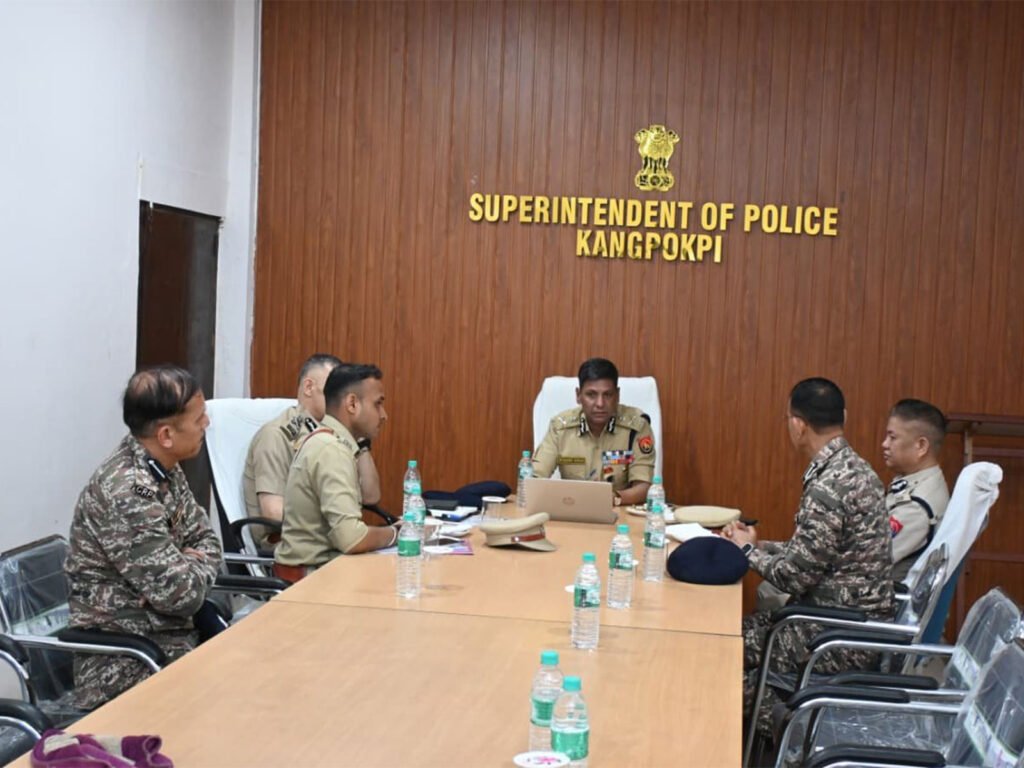
The newly appointed Director General of Police (DGP), a 1996-batch Indian Police Service (IPS) officer, officially assumed command of the state police force following a ceremonial reception at the police headquarters in Imphal. The formal takeover marks an important transition in the state’s law enforcement leadership and comes at a time when policing, security coordination, and institutional reforms remain key administrative priorities. Moreover, the appointment is expected to strengthen operational oversight and enhance strategic planning within the police establishment.
Ceremonial Welcome Marks Leadership Transition
The newly appointed DGP was accorded a ceremonial welcome at the state police headquarters before formally assuming charge of the police force. Consequently, senior police officials, administrative representatives, and departmental personnel participated in the transition proceedings.
According to official sources, the ceremonial event included traditional police honors and introductory briefings regarding the current operational and administrative priorities of the department. Moreover, the leadership transition was viewed as an important step in ensuring continuity and strengthening institutional governance. Therefore, the formal assumption of office has attracted considerable attention within administrative and security circles.
Officials emphasized that leadership transitions play a crucial role in maintaining operational stability and institutional effectiveness. As a result, the new DGP is expected to undertake comprehensive reviews of existing policing strategies and administrative frameworks.
Meanwhile, departmental coordination and operational activities continue as scheduled.
Focus on Law Enforcement and Institutional Strengthening
The appointment of the new DGP comes amid ongoing efforts to strengthen law enforcement capabilities, improve public safety mechanisms, and enhance coordination among security agencies. Moreover, modern policing increasingly requires a combination of operational efficiency, technological integration, and community engagement. Therefore, leadership effectiveness remains a critical factor.
Security experts noted that senior police leadership plays an essential role in shaping strategic priorities, improving institutional accountability, and strengthening response capabilities. Consequently, transitions at the highest levels of police administration often influence long-term policy implementation and organizational development. Such leadership changes can also contribute to improved operational coordination.
Furthermore, enhanced oversight and strategic planning may support more effective policing outcomes. As a result, expectations regarding administrative reforms and institutional modernization remain significant.
Meanwhile, officials continue to evaluate priorities for future policing initiatives.
Modernization and Security Coordination Remain Priorities
The new leadership is expected to focus on strengthening policing infrastructure, improving intelligence coordination, and expanding the use of technology in law enforcement operations. Moreover, evolving security challenges require adaptive and integrated policing strategies. Therefore, modernization remains an important institutional objective.
Law enforcement analysts observed that contemporary policing increasingly depends on data-driven decision-making, inter-agency cooperation, and technological innovation. Consequently, police departments across the country continue to prioritize capacity-building and modernization efforts. Such initiatives contribute to improved public safety and operational efficiency.
Furthermore, strengthening coordination between state and central security agencies can improve preparedness and response capabilities. As a result, strategic collaboration is expected to remain a key focus area.
Meanwhile, internal reviews and policy consultations are anticipated under the new leadership.
Public Confidence and Institutional Governance
The formal takeover also underscores the broader importance of institutional continuity, public trust, and effective governance within law enforcement agencies. Moreover, strong leadership is often viewed as essential for maintaining public confidence and ensuring the effective delivery of policing services. Therefore, administrative stability remains a major priority.
Experts emphasized that successful policing requires a balance between operational effectiveness, accountability, and public engagement. Consequently, leadership transitions provide opportunities to review existing practices and strengthen institutional frameworks. Such efforts contribute to long-term organizational resilience and improved public service delivery.
Furthermore, continued emphasis on professional standards and strategic governance can enhance institutional performance. As a result, the appointment has generated considerable interest among administrative and security observers.
Conclusion
The formal assumption of office by the newly appointed 1996-batch IPS officer as Director General of Police marks an important development in the state’s law enforcement administration. Moreover, the leadership transition highlights the importance of institutional continuity, strategic planning, and modernization in contemporary policing.
As the new DGP assumes responsibility for overseeing the state’s police force, attention is expected to focus on strengthening security coordination, enhancing operational efficiency, and improving public safety outcomes. Therefore, the appointment is likely to play a significant role in shaping future law enforcement priorities.
The latest development reinforces the importance of strong leadership, institutional governance, and strategic modernization in maintaining effective policing systems.
FAQs
1. Who assumed charge as the new DGP?
A newly appointed 1996-batch IPS officer formally assumed charge as the state’s Director General of Police.
2. Where did the formal takeover ceremony take place?
The ceremonial welcome and formal assumption of office took place at the police headquarters in Imphal.
3. Why is the appointment significant?
The appointment marks an important leadership transition within the state’s law enforcement system.
4. What areas may receive priority under the new leadership?
Law enforcement modernization, security coordination, and institutional strengthening are expected to receive attention.
5. Why are leadership transitions important in policing?
They help ensure continuity, strengthen governance, and shape future strategic priorities.