


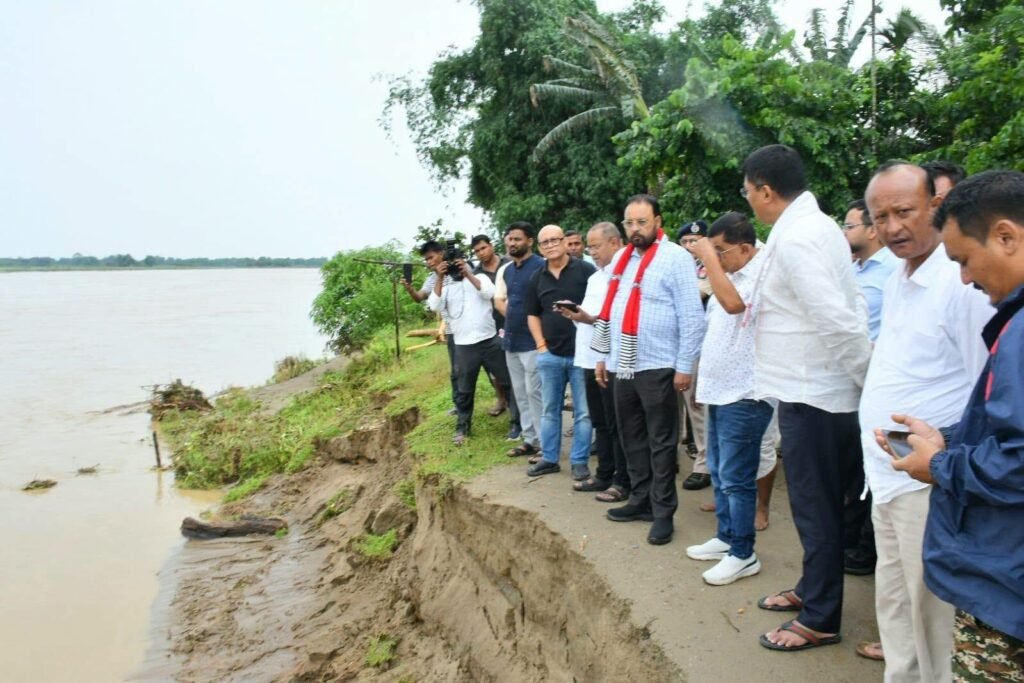
The Dhemaji flood displacement crisis has intensified after overflowing riverbanks inundated large parts of Assam’s Dhemaji district, forcing more than 16,000 residents to leave their homes. Continuous rainfall and rising water levels have submerged villages, damaged infrastructure, and disrupted transportation across several affected areas. District authorities, disaster management agencies, and relief teams have launched rescue and rehabilitation operations to support displaced families. Temporary shelters have been established, while officials continue monitoring river conditions and weather forecasts to respond swiftly to any further deterioration in the flood situation.
Shah Sarma Emergency Aid Coordination Begins
West Bengal Assembly Passes Two Bills Amending OBC Reservation Laws
Rising Rivers Inundate Large Parts of Dhemaji
The Dhemaji flood displacement crisis unfolded as persistent rainfall caused rivers to overflow, flooding numerous villages across the district. Water entered residential areas, agricultural fields, and public infrastructure, leaving thousands of families stranded and disrupting daily life. Roads connecting several rural communities became impassable, making rescue operations more challenging for emergency responders.
District officials have been assessing the extent of damage while coordinating with state disaster management authorities to prioritize relief efforts. Rescue teams used boats to reach isolated settlements where residents required immediate assistance. Authorities also continued monitoring embankments and river levels to detect any additional flood threats.
Floodwaters have affected local markets, educational institutions, and transportation services, creating widespread disruptions. Officials remain focused on restoring connectivity wherever conditions permit while ensuring the safety of affected communities.
Relief Operations Support Displaced Families
The Dhemaji flood displacement crisis has prompted an extensive emergency response involving district authorities, disaster management agencies, and humanitarian workers. Temporary relief camps have been established to provide shelter, food, drinking water, and essential medical services to displaced residents.
Health teams are conducting regular visits to relief centres to monitor public health conditions and prevent outbreaks of waterborne diseases. Officials have also arranged the distribution of essential supplies, including hygiene materials and emergency provisions, to families affected by the flooding.
Authorities continue identifying vulnerable groups, including children, elderly residents, and people with disabilities, to ensure they receive appropriate assistance. Coordination among multiple government departments has remained essential for maintaining relief operations and responding efficiently to emerging needs.
Emergency personnel have urged displaced residents to remain in designated shelters until local authorities confirm that floodwaters have receded sufficiently for a safe return.
Agriculture and Infrastructure Face Major Challenges
The Dhemaji flood displacement crisis has significantly affected agriculture, which remains a primary source of livelihood for many families in the district. Floodwaters have submerged crop fields, increasing concerns about production losses and financial hardship for farmers during the current growing season.
Transportation infrastructure has also suffered damage, with flooded roads and weakened embankments disrupting the movement of people and essential supplies. Public utilities in some locations have experienced temporary interruptions as authorities work to restore normal services.
Officials are conducting damage assessments to estimate the impact on homes, public buildings, and community infrastructure. These evaluations will support rehabilitation planning once floodwaters begin to recede.
Experts note that prolonged flooding can delay recovery efforts, particularly if additional rainfall continues during the active monsoon period. Consequently, authorities remain prepared for further emergency operations if weather conditions worsen.
Authorities Continue Monitoring Flood Conditions
The Dhemaji flood displacement crisis remains under close observation as river levels continue fluctuating across affected areas. Meteorological forecasts and hydrological data are being reviewed regularly to help authorities anticipate changing conditions and strengthen preparedness.
District administrations are maintaining communication with local communities through official advisories, encouraging residents to avoid flooded areas and remain alert to evacuation instructions if necessary. Disaster response teams continue patrolling vulnerable locations while monitoring embankments and water flow.
State agencies are also coordinating with weather officials to improve early warning systems and ensure timely dissemination of information during the ongoing monsoon season. Such coordination is expected to support quicker response measures and reduce risks to lives and property.
Authorities have emphasized that continued vigilance remains essential until water levels decline and affected communities can safely begin recovery and rehabilitation efforts.
Conclusion
The Dhemaji flood displacement crisis highlights the severe humanitarian impact of monsoon flooding in Assam, with more than 16,000 residents displaced after overflowing rivers inundated large parts of the district. Rescue teams, relief agencies, and local authorities continue working to assist affected families while monitoring evolving river conditions. As the monsoon progresses, sustained preparedness, coordinated disaster response, and timely public advisories will remain crucial for protecting vulnerable communities and supporting long-term recovery.
FAQs
1. Why were thousands of people displaced in Dhemaji?
Overflowing rivers flooded villages and forced residents to move to safer locations.
2. How many people have been affected by the flooding?
More than 16,000 residents have reportedly been displaced across the district.
3. What is the Dhemaji flood displacement crisis?
The Dhemaji flood displacement crisis refers to the large-scale displacement caused by severe flooding after rivers overflowed in the district.
4. What assistance is being provided to affected families?
Authorities have established relief camps offering shelter, food, medical care, and essential supplies.
5. How has the flooding affected agriculture?
Floodwaters have submerged farmland, raising concerns about crop losses and reduced agricultural productivity.
6. What precautions are authorities advising residents to follow?
Residents should remain in safe locations, monitor official advisories, and avoid entering flooded areas.