


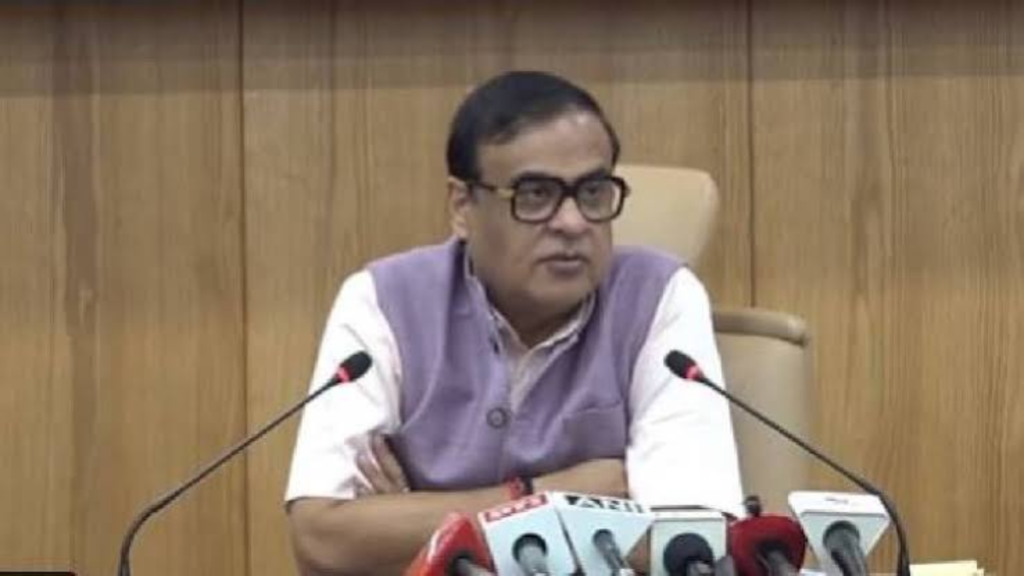
The Election Commission has come under fresh political scrutiny after Assam Chief Minister Himanta Biswa Sarma said the Chief Election Commissioner cannot take decisions unilaterally.
Speaking on Thursday, September 24, Sarma defended CEC Gyanesh Kumar and stressed that the poll panel functions as a collective body. He said decisions must follow consensus or majority opinion among the commissioners.
Sarma’s comments came amid a wider debate over the functioning of the Election Commission and reports of differences among its members over electoral-roll procedures, including the Special Intensive Revision (SIR).
Sarma stresses collective decision-making
Sarma said the Election Commission cannot act through the CEC alone. According to him, the three-member body must take decisions collectively, with a majority required when commissioners do not agree.
He argued that portraying the CEC as independently making decisions does not fit the constitutional framework governing the poll panel. Moreover, he said pre-decision discussions should be distinguished from formal decisions issued by the Commission.
The chief minister also described criticism of the CEC as a political campaign by the Opposition. That is Sarma’s political assessment.
Election Commission faces questions over SIR
The remarks came as questions have emerged over the Election Commission’s internal deliberations on electoral-roll matters. A report said Election Commissioners Sukhbir Singh Sandhu and Vivek Joshi had recorded objections on at least 14 occasions over 10 months.
The reported objections concerned changes to Form 6, ERONET controls, voter-deletion appeals in West Bengal and eligible voters in Goa. These reports prompted opposition parties to question the poll panel.
However, the Election Commission has disputed the suggestion that its final decisions were taken without the participation of all commissioners.
Poll panel says final decisions were unanimous
The Election Commission has said differences in views, written observations and technical suggestions are a normal part of institutional deliberation. It maintained that individual opinions expressed during discussions should not be treated as final decisions of the Commission.
According to the poll panel, all final decisions, including those connected with the SIR exercise, were taken unanimously. The Commission also said its official orders and administrative directions followed established statutory procedures.
This position is significant because the current debate involves both the process of internal consultation and the authority of the final decisions issued in the Commission’s name.
Majority rule and the CEC’s role
The legal framework governing the Commission’s business provides for decisions by consensus or, where differences remain, by majority. Therefore, a disagreement by one commissioner does not by itself establish that the Commission has acted outside its decision-making framework.
At the same time, reported objections have kept attention on how the three-member panel records and resolves differences before issuing final orders. The distinction between internal disagreement and a formal Commission decision remains central to the debate.
Political dispute widens around election body
Sarma’s latest remarks add to an increasingly political discussion around the Election Commission. Opposition parties have criticised the CEC and raised questions about electoral-roll revision, while the Commission has defended its procedures and said its decisions carry legal authority.
Sarma also said targeting the CEC reflected Opposition frustration. However, that statement represents his political assessment, rather than an independently established finding.
Meanwhile, the controversy has placed renewed attention on the safeguards that govern the Election Commission’s collective functioning. The debate also highlights the importance of distinguishing allegations about internal disagreements from the formal record of decisions.
Election Commission debate keeps focus on procedure
The Election Commission now faces continued public attention over how its three members deliberate, record differences and approve final decisions. Sarma’s intervention has reinforced the argument that the CEC does not operate as a standalone decision-maker.
At the same time, the Commission’s own clarification says differing views are part of deliberation and that its final decisions, including those related to SIR, were unanimous. As the debate continues, the documented rules and formal decisions of the poll panel will remain central to assessing how it exercises its constitutional responsibilities.
Assam CM Himanta Biswa Sarma Defends Election Commission Amid SIR Row