


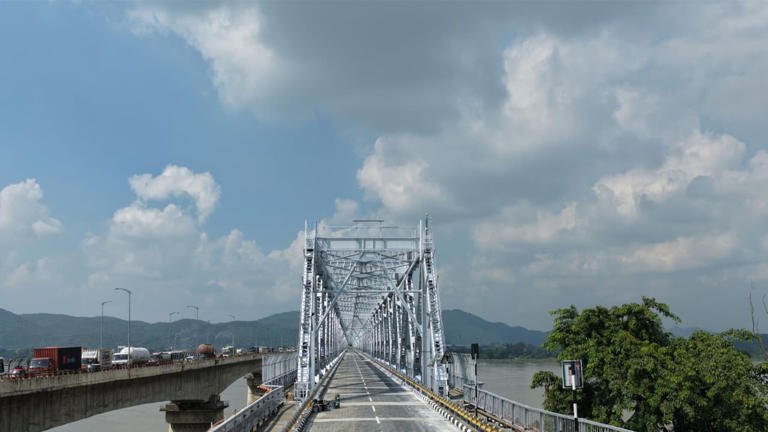
The Northeast Frontier Railway (NFR) has completed the comprehensive Saraighat Bridge rehabilitation project in Guwahati. The railway authority spent around Rs 7 crore on the major repair and strengthening work.
The rehabilitation began on July 13, 2026. Engineers completed the project on September 15, 2026.
The historic bridge crosses the Brahmaputra River and serves as a crucial transport link for Assam and the wider Northeast. The latest work focused on structural repairs, safety improvements and long-term reliability.
Read More: Tripura BJP Chief Warns Against Anti-Party Activities Amid Groupism Reports
Historic Bridge Receives Major Structural Repairs
The Saraighat Bridge has served the region for more than six decades. Indian Railways commissioned the bridge in 1962.
Since then, the bridge has played an important role in connecting the northern and southern banks of the Brahmaputra. It also supports the movement of people and goods between the Northeast and other parts of the country.
Years of heavy traffic and exposure to weather caused considerable wear and tear. Recent inspections found several areas that required urgent attention.
NFR officials said routine maintenance could no longer address all the problems. The railway therefore decided to undertake a comprehensive rehabilitation project.
Engineers Identified Several Structural Problems
Detailed inspections identified multiple problems across the bridge.
Engineers found a damaged expansion joint at the Amingaon end. They also detected distress in supporting steel members.
The inspection also found structural cracks and cavities in sections of spalled concrete. Water entered these damaged areas and affected the bridge’s expansion joints.
The bridge has 11 expansion joints in total. Water ingress had damaged eight of them, according to NFR.
The road deck also contained several potholes and distressed sections. These areas required more extensive work than routine patching could provide.
Eight Expansion Joints Repaired
The rehabilitation team dismantled and repaired eight damaged expansion joints. These joints play an important role in allowing the bridge structure to respond to movement and temperature changes.
Engineers also removed damaged sections of the concrete road deck. They then recast those portions and allowed adequate curing time.
The project also included repairs and strengthening of the underlying steel structural members. These repairs addressed some of the damage identified during the inspection.
The work aimed to restore the bridge’s condition and strengthen important structural components. NFR also sought to ensure that the bridge continues to meet modern load-bearing and safety requirements.
Earlier Pothole Repairs Could Not Solve the Problem
The bridge had already received several pothole repairs earlier in 2026. Workers carried out repair work at different times between January and May.
However, heavy traffic created difficulties for those repairs. Engineers needed sufficient curing time for newly laid concrete, but continuous traffic limited the available time.
Heavy vehicles also placed additional pressure on the repaired sections. As a result, some damage returned.
NFR then opted for a more comprehensive approach. Instead of continuing with repeated surface repairs, engineers addressed the underlying structural problems.
Safety Remained the Main Priority
Safety formed the central focus of the rehabilitation project. The railway wanted to restore the bridge’s structural condition while improving its long-term reliability.
NFR Chief Public Relations Officer Kapinjal Kishore Sharma said the project aimed to strengthen critical structural components. The railway also wanted the bridge to meet modern load-bearing requirements and safety benchmarks.
The completion of the project marks an important maintenance intervention for one of Assam’s most significant transport structures.
The bridge carries major traffic across the Brahmaputra. Maintaining its structural condition therefore remains important for daily connectivity in Guwahati and the wider Northeast.
Saraighat Bridge Connects the Northeast
The Saraighat Bridge holds both historical and strategic importance for Assam.
The bridge connects areas on opposite banks of the Brahmaputra in Guwahati. It also forms part of an important transport corridor linking the Northeast with the rest of India.
People and businesses rely on the corridor for regular movement. Trucks carrying essential goods also use the route.
Any major disruption to the bridge could therefore affect transportation and logistics. Regular inspections and timely maintenance can help reduce such risks.
The latest rehabilitation work strengthens the bridge after more than 60 years of service.
Rs 7 Crore Project Completed in Two Months
The railway began the rehabilitation on July 13 and completed it on September 15. The project therefore took around two months.
Engineers worked on several parts of the bridge during this period. Their work covered expansion joints, the concrete road deck and supporting steel members.
The project required careful planning because the bridge remains an important transport route. Engineers had to carry out repairs while managing the challenges created by traffic movement.
NFR said its engineering teams worked with safety and structural durability as key priorities. The successful completion also reflects the technical requirements involved in maintaining a bridge that has operated for decades.
Importance for Guwahati and Assam
The rehabilitation has significance beyond the bridge itself. Guwahati serves as a major commercial and transportation centre for the Northeast.
The Saraighat Bridge supports movement between important parts of the city and surrounding areas. It also provides an important connection for regional transportation.
A strong and reliable bridge can support smoother movement of passengers and goods. It can also reduce the risks associated with structural deterioration.
For Assam, maintaining major transport infrastructure is particularly important because the Brahmaputra creates significant geographical barriers. Bridges such as Saraighat provide essential connections across the river.
Long-Term Maintenance Remains Important
The completion of the Rs 7 crore project does not remove the need for regular inspections and maintenance.
The problems identified during the latest inspection show how long-term exposure to traffic, water and weather can affect bridge infrastructure. Expansion joints, concrete sections and steel members require periodic assessment.
Regular maintenance can help officials identify smaller problems before they become major structural concerns.
The earlier repeated pothole repairs also show the importance of addressing the underlying causes of damage. Comprehensive maintenance can provide a more lasting solution than repeated surface-level repairs.
A Major Infrastructure Milestone
The completion of the Saraighat Bridge rehabilitation marks a significant infrastructure development for Guwahati and Assam. NFR has invested around Rs 7 crore to repair damaged sections and strengthen critical parts of the historic bridge.
The project addressed eight damaged expansion joints, distressed portions of the road deck and supporting steel members. Engineers also repaired cracks and concrete damage that had allowed water to enter the structure.
Commissioned in 1962, the Saraighat Bridge has served Assam and the Northeast for more than six decades. Its continued operation depends on regular inspection, timely repairs and effective maintenance.
With the latest rehabilitation now complete, the focus will shift towards preserving the bridge’s condition and ensuring its long-term safety and reliability. The project reinforces the importance of maintaining the infrastructure that keeps Guwahati and the wider Northeast connected.
Read More: Chief Minister Rekha Gupta Announces Hostels for 10,000 Students in Delhi