


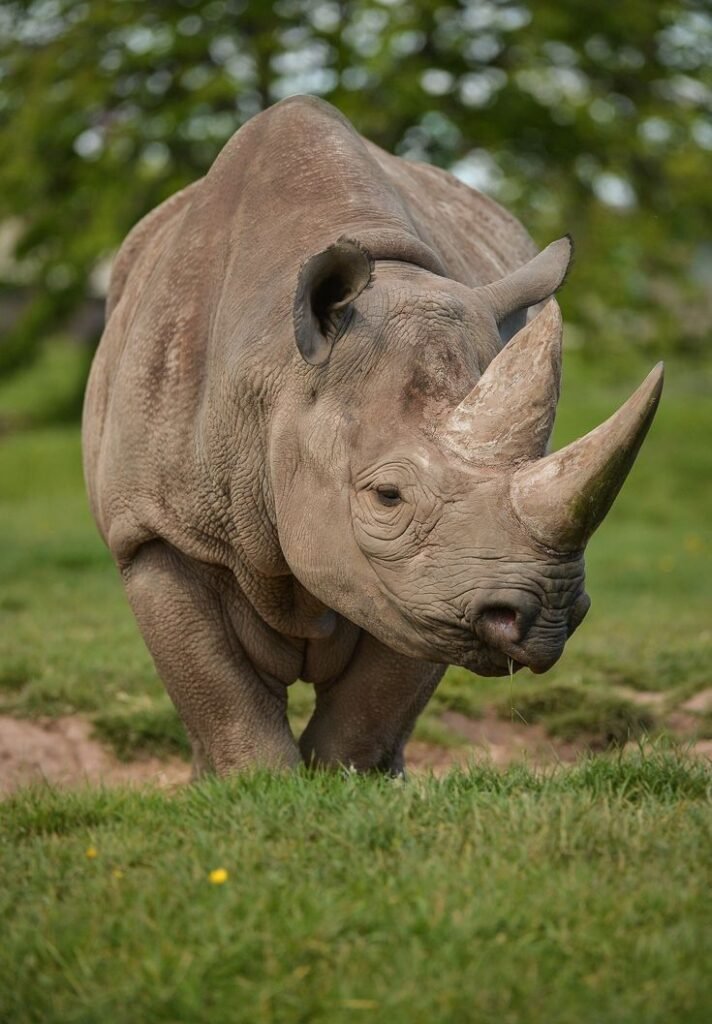
Cooch Behar, October 11: A dramatic Jaldapara rhino rescue unfolded this week when floods in the Torsa river swept a one-horned rhinoceros out of Jaldapara National Park and into Cooch Behar district of West Bengal. Forest officials and wildlife teams tranquilized the displaced rhino and safely returned it to its natural habitat.
Jaldapara Rhino Rescue After Flooding
Heavy rainfall over the past few days caused the Torsa river to overflow, flooding the grasslands of Jaldapara National Park. During the deluge, one adult rhino was carried several kilometers downstream into Khumani Tea Estate near Cooch Behar.
Locals spotted the animal early Thursday morning and quickly informed the Alipurduar Forest Division. A forest team rushed to the area, keeping onlookers away to prevent distress to the animal.
“We acted fast once reports came in,” said Nilanjan Banerjee, Chief Wildlife Warden of West Bengal. “The Jaldapara rhino rescue was successful because our team coordinated perfectly with local residents.”
How Forest Officials Saved the Rhino
The rescue operation lasted nearly four hours. Veterinarians and forest rangers surrounded the rhino, using tranquilizer darts to subdue it without harm. Once immobilized, the rhino received medical checks and hydration before being loaded into a rescue vehicle.
A convoy of forest trucks transported the animal back to Jaldapara National Park, about 25 kilometers away. Officials confirmed that the rhino regained consciousness inside a holding enclosure and was released into the wild the next morning.
“The animal is healthy and safe now,” said Amit Roy, Deputy Field Director, Jaldapara. “Our goal was to ensure zero injury and minimal stress.”
Why Floods Threaten Rhinos in Jaldapara
The Torsa river, flowing through Bhutan and North Bengal, often floods during heavy monsoon rain. The floods force animals such as rhinos, elephants, and deer to leave the forest in search of dry land.
Wildlife experts say such displacement is becoming more frequent due to climate change.
“Flood intensity has increased over the last decade,” explained Dr. Soumitra Ghosh, a conservationist. “Rhinos are strong swimmers, but when currents get too powerful, they can be swept far away.”
The Jaldapara rhino rescue highlights how natural disasters continue to threaten India’s wildlife habitats despite ongoing conservation efforts.
Inside Jaldapara National Park
Situated in Alipurduar district, Jaldapara National Park spans 216 square kilometers and is home to over 270 Indian one-horned rhinos. It has the second-largest population in India after Kaziranga National Park in Assam.
The park’s landscape of grasslands and riverine forests makes it rich in biodiversity but vulnerable to flooding from rivers like Torsa, Hollong, and Bania. Besides rhinos, the park shelters elephants, bisons, deer, leopards, and over 300 bird species.
Forest officials are now preparing new flood-response measures to protect animals during the monsoon.
Cooperation Made the Jaldapara Rhino Rescue Successful
Local communities played a crucial role in the rescue. Villagers immediately reported the sighting, helped control crowds, and guided the rescue team through flooded terrain.
“The locals deserve credit,” said Banerjee. “Without their quick action, the rhino could have wandered into a populated area.”
The operation involved coordinated support from the West Bengal Forest Department, WWF-India, and the Cooch Behar Forest Division.
Such collaboration reflects a growing culture of human-wildlife coexistence in West Bengal’s forest zones.
Need for Better Flood Preparedness
Experts urge improved flood forecasting and wildlife corridor development to prevent future displacements. Installing early-warning systems and tracking collars on rhinos could help officials respond faster when floods occur.
“Floods will remain part of the ecosystem,” Dr. Ghosh added. “But we can minimize risks through planning and technology.”
Efforts are already underway to strengthen embankments and plant more flood-resistant vegetation near the Torsa river to slow water flow into the forest.
Public Awareness Can Support Rhino Protection
The Jaldapara rhino rescue serves as a reminder that protecting wildlife requires community awareness and vigilance. Locals living near forest areas are often the first to notice when animals stray into villages or farmland.
“Rhinos are symbols of India’s ecological pride,” said Roy. “Each successful rescue shows how humans and wildlife can coexist with care and respect.”
Residents are urged to report any sightings to forest authorities instead of approaching the animals themselves.
A Hopeful Outcome for the Jaldapara Rhino
The rescued rhino has safely rejoined its herd inside Jaldapara National Park, marking another success in India’s ongoing conservation story. The park authorities plan to review flood mitigation systems to prevent similar incidents in the future.
This Jaldapara rhino rescue stands as proof that coordinated action between government bodies, conservationists, and citizens can save endangered animals even in extreme natural conditions.
READ MORE: Northeast India Growth Story: PM Modi Highlights Arunachal’s Rise