


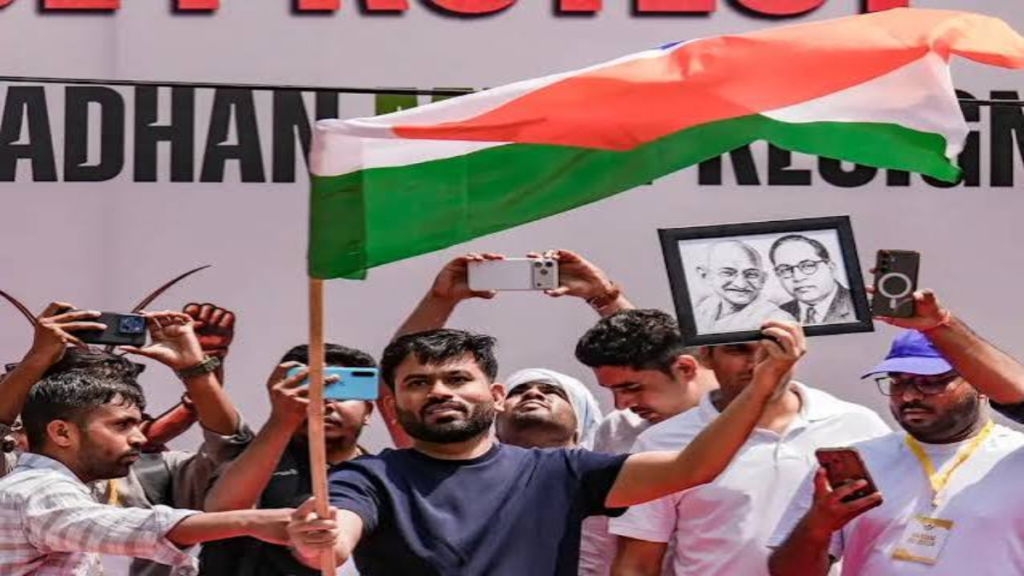
The Jantar Mantar protest debate has drawn attention after a Meghalaya Bharatiya Janata Party (BJP) legislator stressed that demonstrations must remain within the constitutional framework. The remarks underline the need to balance the right to peaceful protest with the responsibility to maintain public order.
The statement comes amid renewed scrutiny of demonstrations in New Delhi and questions over police restrictions, protest permissions and citizens’ democratic rights. The issue has brought the relationship between peaceful dissent and lawful public assembly into focus.
The Jantar Mantar protest issue has gained prominence as authorities and political groups debate the limits of public demonstrations in the national capital. The Meghalaya BJP MLA’s position highlights the importance of following established rules while expressing political disagreement.
Jantar Mantar has traditionally served as a venue for demonstrations on political, social and public interest issues. However, authorities regulate gatherings to address security concerns, traffic disruption and public order.
The debate intensified following recent protests in Delhi linked to demands for the resignation of Chief Election Commissioner Gyanesh Kumar. Protesters raised allegations of irregularities in electoral roll revisions, while the Election Commission has maintained that its procedures follow established rules.
Delhi Police denied permission for a planned demonstration by the Cockroach Janta Party on October 10, citing procedural concerns and potential law and order risks. The restrictions have renewed discussions about how authorities should manage public assemblies.
Jantar Mantar protest and the right to dissent
The Indian Constitution protects citizens’ rights to freedom of speech and peaceful assembly. Articles 19(1)(a) and 19(1)(b) provide these protections, subject to reasonable restrictions permitted under the Constitution.
Therefore, the Jantar Mantar protest debate involves two important considerations: citizens’ ability to express dissent and the state’s responsibility to maintain public order.
Peaceful demonstrations allow people to raise concerns, question government decisions and seek accountability. Moreover, public protests can bring attention to issues that citizens believe require urgent action.
However, these rights do not remove the need to follow lawful restrictions. Authorities can regulate gatherings under applicable rules, particularly when security risks or significant public disruptions arise.
The challenge lies in ensuring that restrictions remain lawful and proportionate. While governments must address genuine security concerns, citizens must also retain meaningful opportunities to express their views peacefully.
Jantar Mantar protest draws attention to police rules
Permission procedures have become a central part of the ongoing debate. Organisers generally need to comply with the applicable requirements before holding demonstrations at designated public venues.
In the recent Delhi case, police cited the short notice given by the organisers as one reason for refusing permission. Authorities also referred to concerns about possible disruptions and compliance with existing directions governing assemblies.
The Ministry of Home Affairs subsequently urged states and Union Territories to coordinate with Delhi Police over the proposed mobilisation. The move reflected the authorities’ concerns about maintaining public order during the planned demonstration.
Meanwhile, the restrictions drew criticism from opposition leaders and other groups, who questioned the handling of protests and raised concerns about democratic freedoms.
These contrasting positions underline the need for clear procedures. Authorities must communicate the applicable rules, while organisers should understand their responsibilities before announcing public gatherings.
Meghalaya BJP’s position highlights public responsibility
The Meghalaya BJP MLA’s remarks place constitutional compliance at the centre of the discussion. The position stresses that political expression and public demonstrations must operate within the country’s legal framework.
At the same time, the wider debate requires careful consideration of the rights protected by the Constitution. Lawful restrictions should not automatically be treated as a complete denial of the right to protest.
Furthermore, organisers, participants and law enforcement agencies each have responsibilities during demonstrations. Organisers must follow permission requirements, participants should avoid violence, and authorities must enforce the law within its limits.
A balanced approach can help prevent unnecessary confrontations. It can also ensure that public gatherings remain peaceful while allowing citizens to communicate their concerns.
The issue is particularly significant because protests often involve competing claims about public interest, security and democratic accountability. Clear rules and consistent enforcement can help reduce uncertainty for both demonstrators and authorities.
Jantar Mantar protest debate remains significant
The Jantar Mantar protest debate reflects a wider question about how India manages peaceful dissent while protecting public order. The Meghalaya BJP MLA’s stated position adds to the discussion over the relationship between constitutional rights and legal responsibilities.
Going forward, the handling of demonstrations will remain important for political parties, civil society groups and government authorities. Transparent permission procedures and proportionate enforcement can help protect both public safety and democratic participation.
Ultimately, the Constitution provides a framework for citizens to express their views while allowing reasonable restrictions in the public interest. Respect for both principles remains essential to ensuring that protests are peaceful, lawful and meaningful.
West Tripura Bans High-Volume DJ Systems in Crowded Areas During Durga Puja