


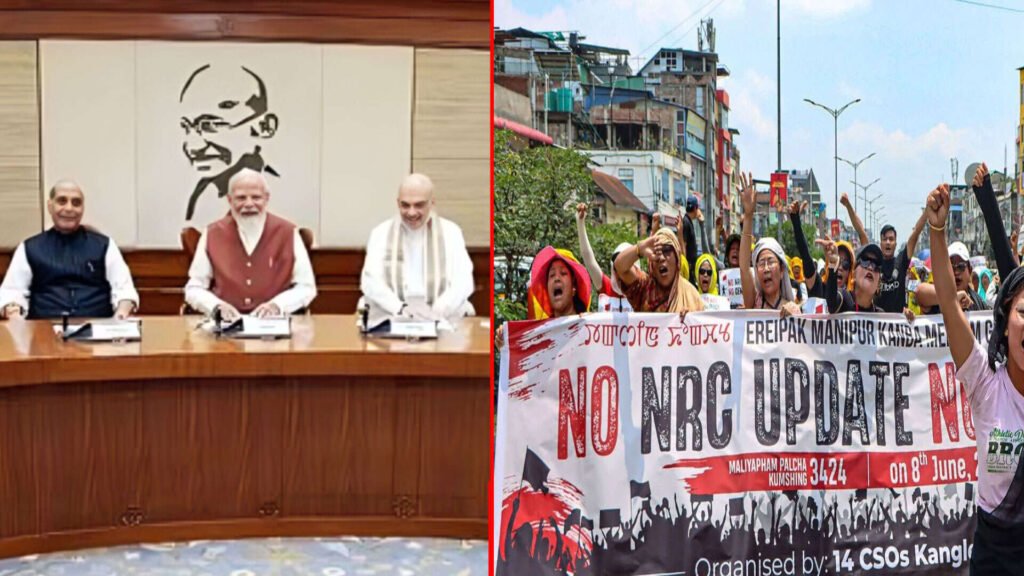
The Union Home Ministry has reportedly deferred the 2026 Census operations in Manipur, following protests by civil society groups opposing the exercise under the slogan “No NRC, No Census.”
The development comes amid continuing concerns over population documentation and the proposed National Register of Citizens (NRC). Moreover, the protests have added another layer of complexity to the census process in the violence-affected state.
The decision could affect the timing and implementation of census-related administrative work in Manipur.
Tripura: Tipra Motha Likely to Hold Talks with BJP Over TTAADC Village Committee Polls
Manipur Census Operations Deferred
The Centre’s decision to defer the 2026 Census operations in Manipur represents a significant administrative development.
Census exercises require extensive coordination between government departments, field officials, and local communities. Furthermore, conducting such an exercise in a sensitive environment can create additional logistical and administrative challenges.
The deferment provides authorities with additional time to address concerns surrounding the process.
“No NRC, No Census” Protests
Civil society groups have opposed the census exercise through protests centred on the slogan “No NRC, No Census.”
The protests reflect concerns over the relationship between population enumeration and potential citizenship documentation measures. Additionally, the opposition highlights the sensitivity surrounding demographic and identity-related issues in Manipur.
The demonstrations have consequently become an important factor in the debate surrounding the census.
NRC Concerns Drive Opposition
The National Register of Citizens (NRC) has remained a contentious subject in parts of Northeast India.
Concerns about citizenship verification, migration, and demographic changes can influence public reactions to population documentation exercises. Moreover, civil society organisations in Manipur have expressed apprehension about conducting census-related activities without clarity on the broader policy framework.
The protests therefore extend beyond the census itself.
Administrative Challenges in Manipur
Manipur has faced significant administrative and security challenges in recent years.
These circumstances can make large-scale field exercises more difficult to organise. Furthermore, census operations require officials to reach households across urban, rural, and geographically challenging areas.
The Centre’s decision to defer the exercise could allow authorities to reassess the practical conditions required for implementation.
Census and Population Data
A census provides governments with important information about population size and demographic characteristics.
Such data can support planning for public services, infrastructure, education, healthcare, and welfare programmes. However, successful enumeration requires cooperation from communities and effective coordination among officials.
The current situation demonstrates how political and social concerns can affect large-scale data-collection exercises.
Civil Society’s Role
Civil society organisations have played an active role in raising concerns about population-related policies in Manipur.
Their protests have brought public attention to questions surrounding the census and NRC. Moreover, organised civic participation can influence how governments communicate and implement sensitive administrative measures.
The latest developments demonstrate the importance of dialogue between authorities and community representatives.
Need for Clarity and Consultation
The controversy highlights the importance of clear communication before implementing sensitive population exercises.
Authorities may need to explain the purpose, scope, and safeguards surrounding census operations. Additionally, consultation with civil society groups could help address concerns and reduce misunderstandings.
A transparent approach could make future implementation more manageable.
Implications for Governance
Delaying census operations can have administrative consequences because governments rely on population information for planning.
However, conducting an enumeration exercise amid significant opposition can also create practical difficulties. Furthermore, authorities must balance the need for accurate demographic information with local concerns surrounding documentation and identity.
The challenge will be finding a workable approach that maintains public confidence.
What Happens Next?
The deferment gives authorities an opportunity to assess the situation and determine the next steps for census operations in Manipur.
The government may need to engage with civil society representatives and address concerns surrounding the NRC. Moreover, any revised implementation plan will need to consider security, logistics, public cooperation, and administrative preparedness.
The timing of future census operations will depend on subsequent government decisions.
Conclusion
The reported deferral of the 2026 Census in Manipur follows intense civil society protests under the slogan “No NRC, No Census.”
Moreover, the development highlights the sensitivity surrounding population enumeration, citizenship documentation, and demographic concerns in the state. At the same time, authorities face the challenge of balancing accurate population data with public confidence and community concerns.
Overall, the census deferment underscores the need for careful consultation, transparent communication, and appropriate administrative preparation before the exercise resumes in Manipur.
FAQs
1. Why was the Manipur Census deferred?
The 2026 Census operations were reportedly deferred amid civil society protests opposing the exercise through the “No NRC, No Census” campaign.
2. What does “No NRC, No Census” mean?
The slogan expresses opposition to conducting the census while concerns remain over the National Register of Citizens and related documentation policies.
3. Why is the census important?
Census data helps governments plan public services, infrastructure, welfare programmes, education, and healthcare.
4. What challenges does Manipur face in conducting the census?
Authorities must consider security, logistics, public cooperation, and concerns raised by civil society organisations.
5. What could happen next?
The government may review the situation, consult stakeholders, and determine a suitable timeline and framework for resuming census operations.